
Image Source: media.cheggcdn.com
Why Pulse Rate Drops 5 Min Post-Exercise: The Science
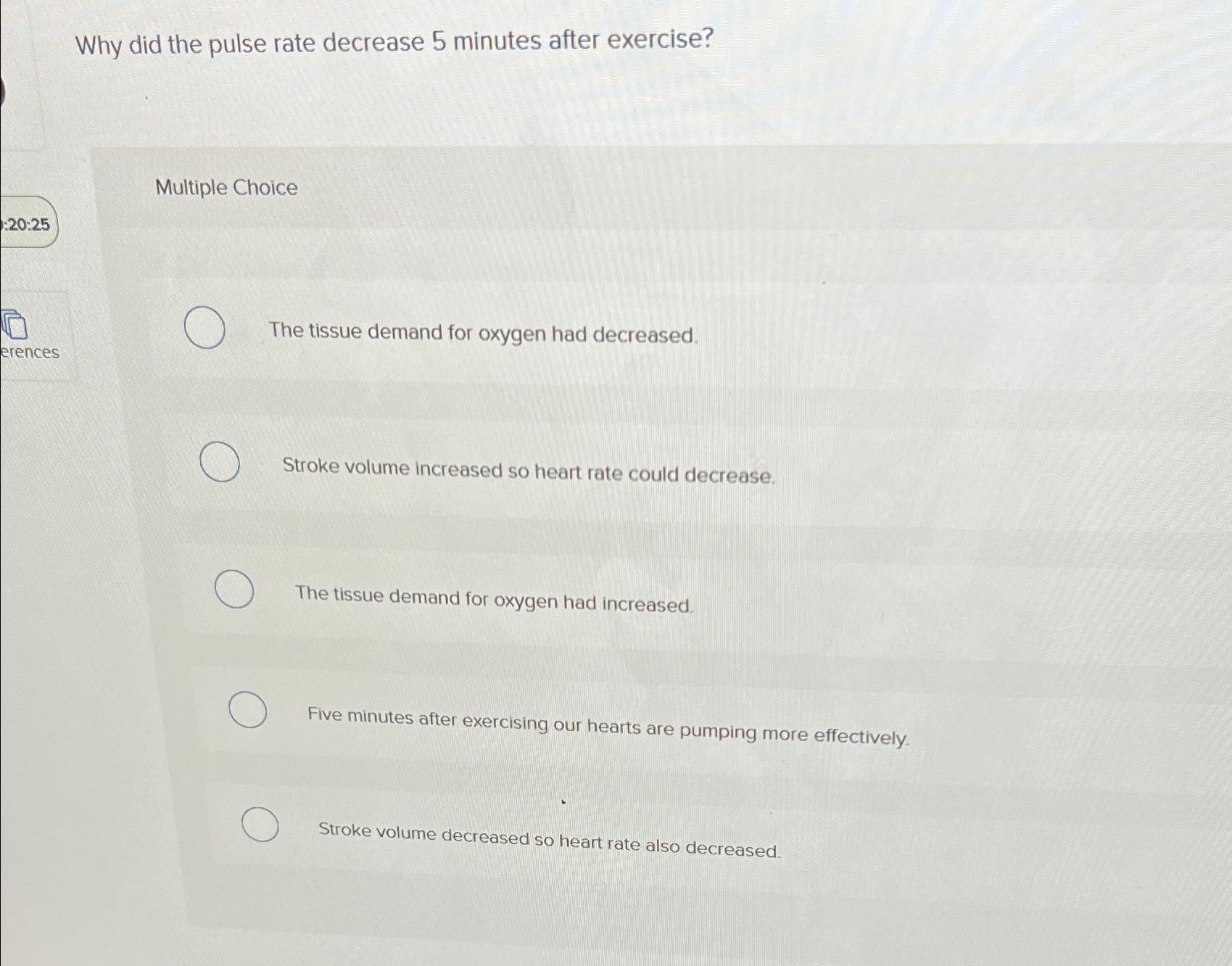
Your pulse rate decreases about 5 minutes after exercise due to a swift return of your body’s systems to their normal, resting state. This happens because your heart, which worked hard during exercise, no longer needs to pump blood as quickly. Your body’s automatic nervous system, specifically the parasympathetic system, becomes more active, slowing down your heart rate.
The Body’s Rapid Reset After Physical Activity
When you exercise, your heart pumps faster to send more oxygen-rich blood to your muscles. Muscles need this extra fuel to work. As soon as you stop exercising, your body starts to wind down. This is a natural and efficient process.
- Immediate Changes: The moment you stop, the demand for oxygen from your muscles drops. Your heart doesn’t need to work as hard.
- Nervous System Shift: Your body’s “fight or flight” response (sympathetic nervous system) that was active during exercise begins to calm down. The “rest and digest” response (parasympathetic nervous system) takes over.
- Blood Flow Adjustment: Blood vessels that were widened to supply more blood to muscles start to narrow again.
This coordinated effort helps your body return to its normal state, or resting heart rate after exercise, efficiently. The noticeable heart rate decline after workout is a key sign of this recovery.
Deciphering the Physiological Response to Exercise Cessation
The shift from exercise to rest triggers a complex but rapid series of bodily adjustments. This physiological response to exercise cessation is orchestrated by your autonomic nervous system.
The Autonomic Nervous System’s Balancing Act
Your autonomic nervous system controls involuntary bodily functions like heart rate, breathing, and digestion. It has two main branches:
- Sympathetic Nervous System (SNS): This is your “accelerator.” It kicks in during stress or physical activity, increasing heart rate, blood pressure, and breathing.
- Parasympathetic Nervous System (PNS): This is your “brake.” It becomes more active during rest, slowing heart rate and promoting digestion.
During exercise, the SNS is dominant. It tells your heart to beat faster and stronger. When you stop exercising, the SNS activity decreases, and the PNS becomes more dominant. This shift is crucial for recovery.
The Vagus Nerve’s Role
A key player in the PNS is the vagus nerve. This nerve acts like a thermostat for your heart rate. When it’s stimulated, it tells your heart to slow down. During the initial stages of exercise recovery heart rate, the vagus nerve becomes more active, directly contributing to the quick drop in pulse. This increased influence of the vagus nerve is often referred to as an increase in vagal tone and exercise recovery.
Blood Vessel Dynamics
During exercise, your blood vessels, especially those supplying your working muscles, widen (vasodilation). This allows more blood to flow. When exercise stops:
- These vessels begin to constrict or narrow (vasoconstriction).
- This reduces the volume of blood pooling in your extremities.
- The combination of a slower heart rate and narrowing blood vessels helps to quickly normalize blood pressure and circulation.
Examining Heart Rate Recovery Patterns
The speed at which your heart rate returns to normal after exercise is a significant indicator of your fitness level. This is often called exercise recovery heart rate. A faster recovery typically means your cardiovascular system is more efficient.
Factors Influencing Heart Rate Recovery
Several factors influence how quickly your heart rate drops after exercise:
- Exercise Intensity: Higher intensity workouts generally lead to a more pronounced initial drop in heart rate, but the overall recovery time can also depend on fitness. While anaerobic threshold and heart rate recovery are complex topics, pushing closer to your anaerobic threshold can lead to a slower initial drop as your body works to clear metabolic byproducts.
- Fitness Level: Fitter individuals have a more efficient cardiovascular system. Their heart muscle is stronger and can pump more blood with each beat. This means it doesn’t need to beat as often to meet the body’s needs.
- Age: Heart rate recovery can slow slightly with age.
- Hydration and Nutrition: Dehydration and poor nutrition can hinder recovery.
- Stress and Sleep: High stress levels or lack of sleep can negatively impact recovery.
The Significance of a Rapid Heart Rate Decline
A rapid heart rate decline after workout is a positive sign. It suggests:
- Efficient Cardiovascular System: Your heart is able to quickly adjust to reduced demand.
- Good Autonomic Nervous System Balance: Your parasympathetic nervous system is effectively taking over from the sympathetic system.
- Improved Aerobic Fitness: Regular training leads to cardiovascular adaptation to exercise, making your heart and blood vessels more responsive and efficient.
Understanding the Concept of Post-Exercise Bradycardia
Post-exercise bradycardia refers to a slower than normal heart rate after physical activity. While it might sound alarming, it’s a normal physiological response as your body recovers. The key is that this bradycardia is temporary and your heart rate should return to your individual resting heart rate after exercise within a reasonable timeframe.
When is Bradycardia a Concern?
While a slight dip in heart rate post-exercise is normal, excessively slow heart rates (e.g., below 40 beats per minute for a fit individual, or even slower if not accustomed to intense exercise) that persist for a long time, or are accompanied by symptoms like dizziness or fainting, could indicate an issue. However, for most people, the temporary slowing is simply part of the recovery process.
The Role of Exercise Intensity and Heart Rate Recovery
The intensity of your exercise plays a crucial role in how your heart rate recovers.
- Low to Moderate Intensity Exercise: For lighter activities like a brisk walk or light jog, your heart rate will likely return to near resting levels quite quickly, often within a few minutes.
- High Intensity Interval Training (HIIT) and Intense Aerobic Exercise: These workouts place a greater demand on your cardiovascular system. While your heart rate will peak higher, a well-conditioned individual will still see a significant drop shortly after stopping. The initial few minutes are critical for clearing lactic acid and restoring oxygen levels. The relationship between anaerobic threshold and heart rate recovery is that exceeding your anaerobic threshold means your body has accumulated more metabolic byproducts that need clearing, which can influence the rate of heart rate decline.
What is the Anaerobic Threshold?
Your anaerobic threshold is the point during exercise at which your body starts to rely more on anaerobic metabolism (energy production without oxygen) to fuel your muscles. This leads to the buildup of lactic acid. Exercising at or above this threshold means your body is working very hard. When you stop, it takes time to process these byproducts and return to an aerobic state.
Cardiovascular Adaptation to Exercise: Building a Resilient System
Regular physical activity leads to significant cardiovascular adaptation to exercise. This means your heart and blood vessels become stronger, more efficient, and better at handling stress.
- Enlarged Heart Chambers: The heart muscle can become thicker and the chambers larger, allowing it to pump more blood per beat.
- Increased Stroke Volume: This is the amount of blood pumped out of the left ventricle of the heart during one contraction.
- Improved Capillary Density: More small blood vessels develop in your muscles, improving oxygen delivery.
- Enhanced Autonomic Nervous System Control: Your heart becomes more responsive to signals from both the sympathetic and parasympathetic nervous systems, allowing for quicker adjustments.
These adaptations contribute to a lower resting heart rate after exercise and a faster exercise recovery heart rate.
Heart Rate Variability After Exercise: A Deeper Look
Heart rate variability after exercise (HRV) refers to the natural fluctuation in the time intervals between heartbeats. A higher HRV is generally associated with better health and fitness, and a more resilient nervous system.
- HRV and Recovery: After exercise, a rapid increase in HRV can indicate that your parasympathetic nervous system is actively taking control and your body is recovering well.
- Measuring HRV: HRV can be measured using specialized devices and software. It provides insights into the balance between your sympathetic and parasympathetic nervous systems.
- HRV as a Fitness Indicator: Tracking HRV before and after workouts can help you gauge your training load and recovery status. A consistently improving HRV pattern suggests positive cardiovascular adaptation to exercise.
The Science Behind the Five-Minute Mark
The five-minute mark post-exercise is significant because it represents a period where the initial surge of sympathetic activity has largely subsided, and the parasympathetic system has had time to exert its influence.
- Initial Drop (0-1 minute): You’ll see the most dramatic fall in heart rate in the first minute after stopping. This is due to the immediate reduction in muscular demand and the withdrawal of sympathetic stimulation.
- Continued Decline (1-5 minutes): During this phase, the parasympathetic system’s influence grows stronger, further slowing the heart. Blood vessels begin to constrict, redirecting blood flow.
- Stabilization (5+ minutes): By five minutes, your heart rate is typically well on its way to returning to your individual resting heart rate. The rate of decline slows considerably as your body finds a new equilibrium.
The heart rate decline after workout during these five minutes is a dynamic process reflecting the body’s sophisticated internal regulation.
Table: Typical Heart Rate Changes Post-Exercise
| Time After Exercise | Expected Heart Rate Change | Primary Physiological Reason |
|---|---|---|
| 0-1 minute | Significant, rapid drop. | Withdrawal of sympathetic drive, reduced metabolic demand. |
| 1-5 minutes | Continued, but slower, decline. | Increased parasympathetic (vagal) tone, gradual return of blood vessel tone. |
| 5-10 minutes | Approaching or reaching resting heart rate. | Autonomic nervous system balance restored, metabolic byproducts cleared. |
| 10+ minutes | Stable at resting heart rate (unless performing cool-down). | Full recovery to baseline physiological state. |
Note: These are typical patterns and individual responses may vary based on fitness, intensity, and other factors.
Factors Affecting the Five-Minute Mark
While the five-minute mark is a useful benchmark, the exact number can vary.
- Dehydration: Can lead to a slower heart rate recovery as blood volume is reduced.
- Environmental Heat: Exercising in hot conditions can prolong recovery.
- Medications: Certain medications can affect heart rate.
- Emotional State: High levels of stress or anxiety can delay recovery.
Conclusion: A Sign of a Healthy, Adaptable Body
The noticeable drop in your pulse rate about five minutes after you finish exercising is a testament to your body’s incredible ability to adapt and recover. It showcases the efficient interplay of your nervous and cardiovascular systems, driven by your cardiovascular adaptation to exercise. This rapid return to a lower heart rate is a positive indicator of your fitness level and the health of your cardiovascular system. By paying attention to your exercise recovery heart rate, you gain valuable insights into your body’s response to physical stress.
Frequently Asked Questions (FAQ)
Q1: Is it normal for my heart rate to drop significantly 5 minutes after exercise?
A: Yes, it is very normal. This signifies your body is effectively recovering from the exertion.
Q2: What is considered a good exercise recovery heart rate?
A: A good exercise recovery heart rate is typically a drop of 15-20 beats per minute (bpm) within the first minute after stopping exercise, and returning close to your resting heart rate within 5-10 minutes. For fitter individuals, this recovery can be even faster.
Q3: Why does my heart rate drop so fast initially, then slower?
A: The fastest drop occurs immediately as the demand for oxygen plummets. The subsequent slower decline is due to the gradual rebalancing of your autonomic nervous system, with the parasympathetic system increasingly taking over.
Q4: Can my resting heart rate after exercise be lower than my normal resting heart rate?
A: Not usually. Your heart rate should return to your typical resting heart rate after exercise. If it drops significantly below your normal resting rate and you feel unwell, it’s a good idea to consult a doctor.
Q5: Does high exercise intensity affect how quickly my heart rate drops?
A: Yes. While high intensity exercise makes your heart rate peak higher, a well-conditioned individual’s heart rate will still recover quickly. However, if you’ve gone beyond your anaerobic threshold, the initial drop might be slightly less dramatic compared to lower intensity exercise, as your body works to clear metabolic byproducts.
Q6: What is post-exercise bradycardia?
A: Post-exercise bradycardia is a temporary slowing of the heart rate after physical activity. It’s a normal part of recovery as the parasympathetic nervous system becomes more dominant.
Q7: How does vagal tone relate to exercise recovery?
A: Increased vagal tone and exercise recovery are closely linked. A stronger vagal tone means your vagus nerve has a greater influence, which helps to effectively slow down your heart rate and promote relaxation and recovery after exercise.
Q8: What is heart rate variability after exercise and why is it important?
A: Heart rate variability after exercise refers to the changes in time between heartbeats post-activity. An increase in HRV after exercise generally indicates good recovery and a balanced autonomic nervous system, reflecting positive cardiovascular adaptation to exercise.