
Can you take body measurements to track fitness progress? Yes, absolutely! Taking body measurements is a powerful way to see how your fitness journey is unfolding, even when the scale doesn’t budge. It gives you tangible proof of your hard work and helps you fine-tune your approach.
Fitness isn’t just about what the scale says. While weight loss or gain can be a goal, changes in your body shape and size tell a much bigger story about your progress. Taking body measurements is a simple yet effective method for tracking these changes. It helps you monitor fat loss, muscle gain, and overall toning.
This guide will walk you through the essentials of taking accurate body measurements, what each measurement signifies, and how to use this information to stay motivated and informed about your fitness journey.
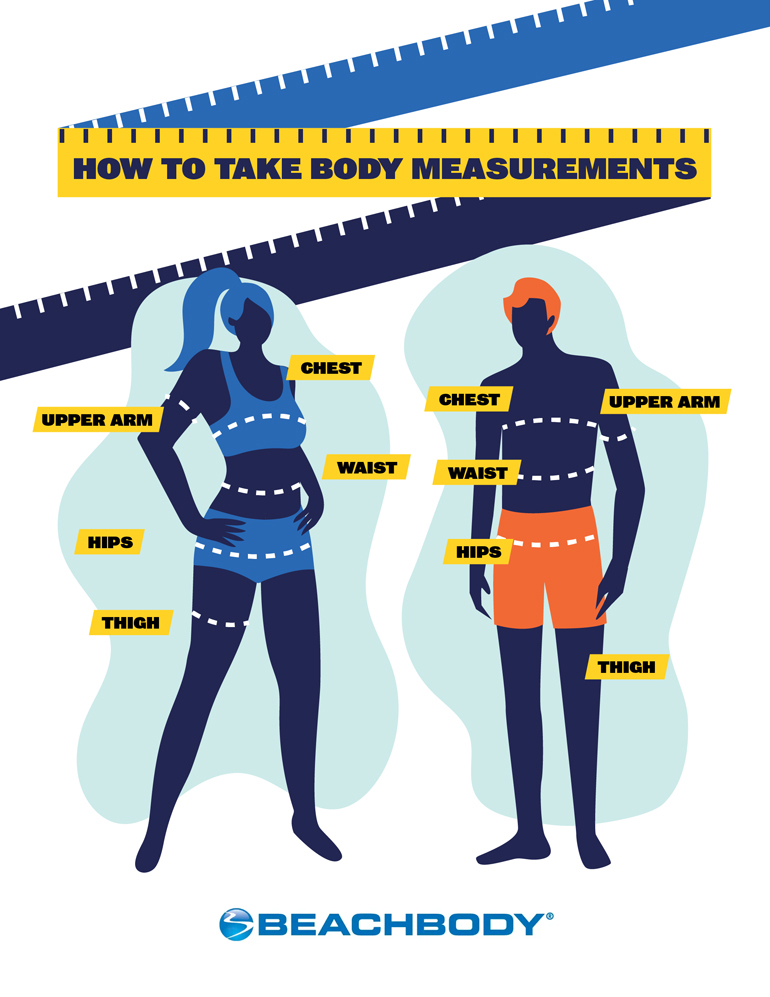
Image Source: bod-blog-assets.prod.cd.beachbodyondemand.com
Why Measure Your Body?
The scale can be a fickle friend. Sometimes, you might be losing fat and gaining muscle, resulting in no significant change in your overall weight. In these cases, body measurements become your hero. They provide a more nuanced view of your body composition.
Here’s why regularly measuring your body is crucial for tracking fitness progress:
- Gauging Fat Loss: As you lose fat, your body circumference measurements in areas like your waist, hips, and thighs will decrease, even if your weight remains stable.
- Monitoring Muscle Gain: Building muscle can add weight. Measurements can show that even if your weight increases, your waist size might be decreasing, indicating a positive shift towards a more muscular physique.
- Identifying Progress in Specific Areas: You might be working on strengthening your arms or building your glutes. Measuring your bicep measurement or hip measurement allows you to see progress in those targeted areas.
- Boosting Motivation: Seeing concrete numbers change is incredibly motivating. It confirms that your efforts are paying off and encourages you to keep going.
- Adjusting Your Fitness Plan: If a particular measurement isn’t changing as you’d hoped, it might be a sign to adjust your workout routine or nutrition.
Essential Tools for Measuring
You don’t need fancy equipment. A few simple tools will get the job done:
- Flexible Measuring Tape: This is your primary tool. Choose one made of cloth or plastic that doesn’t stretch. A tailor’s tape measure is ideal.
- Pen and Paper or a Digital Tracking App: To record your measurements accurately.
- Full-Length Mirror (Optional): To help you position the tape correctly.
- Body Composition Scale (Optional): For a more comprehensive overview of your body fat percentage.
How to Take Key Body Measurements
Consistency is key. Measure yourself at the same time of day, ideally in the morning before eating or drinking, and wearing similar clothing (or no clothing) each time. This minimizes variations and ensures your data is reliable for tracking fitness progress.
1. Waist Size
This is one of the most important measurements for health and fitness. A larger waist size can be linked to increased health risks.
How to Measure:
- Stand with your feet together, relaxed.
- Find the narrowest part of your torso, which is usually just above your belly button.
- Wrap the measuring tape around your waist, ensuring it is snug but not digging into your skin.
- Make sure the tape is parallel to the floor.
- Breathe out naturally and record the measurement.
2. Hip Measurement
This measurement helps track changes in your lower body, particularly fat distribution.
How to Measure:
- Stand with your feet together.
- Wrap the tape measure around the fullest part of your hips and buttocks.
- Ensure the tape is parallel to the floor and sits snugly against your skin without being too tight.
- Record the measurement.
3. Bust Size (for Women)
This measurement is important for tracking changes in the upper body, including breast tissue and rib cage expansion.
How to Measure:
- Wrap the tape measure around the fullest part of your bust.
- Ensure the tape is level around your back and under your arms.
- Do not pull the tape too tight or leave it too slack.
- Record the measurement.
4. Underbust/Rib Cage Measurement (for Women)
This provides a baseline for your upper body’s frame.
How to Measure:
- Wrap the tape measure directly under your bust.
- Keep the tape level around your torso.
- Record the measurement.
5. Thigh Circumference
This measurement is excellent for tracking lower body muscle development and fat loss in the legs.
How to Measure:
- Stand with your feet about 6-12 inches apart.
- Locate the largest part of your thigh, usually about halfway between your hip and knee.
- Wrap the tape measure around the fullest part of your thigh.
- Ensure the tape is parallel to the floor.
- Record the measurement.
6. Bicep Measurement
This is a great indicator of upper arm strength and muscle growth.
How to Measure:
- Extend one arm out to the side, keeping it straight or slightly bent.
- Find the largest part of your bicep muscle.
- Wrap the tape measure around your bicep.
- Flex your bicep gently to find the widest point, or keep your arm relaxed depending on your goal (flexed for muscle gain, relaxed for overall size). For consistent tracking, choose one method and stick to it.
- Record the measurement.
7. Calf Measurement
This helps track changes in your lower legs, which can be influenced by strength training and overall body fat.
How to Measure:
- Stand with your feet about hip-width apart.
- Find the largest part of your calf muscle.
- Wrap the tape measure around the widest point of your calf.
- Ensure the tape is parallel to the floor.
- Record the measurement.
8. Other Useful Measurements
Depending on your fitness goals, you might also want to measure:
- Chest: Around the fullest part of your chest, at nipple level.
- Shoulders: Around the fullest part of your shoulders, across your upper back.
- Forearm: Around the widest part of your forearm.
- Neck: Around the base of your neck.
Frequency of Measurement
How often should you take these measurements?
- For Active Fitness Programs: Every 2-4 weeks is generally recommended.
- For Significant Weight Loss/Gain: Weekly measurements might be helpful, but be mindful of daily fluctuations.
- For General Health Monitoring: Monthly measurements can be sufficient.
It’s crucial to be consistent. If you measure your waist on a Monday, measure it again on a Monday.
Creating a Measurement Log
A measurement log is essential for tracking fitness progress. You can use a simple notebook, a spreadsheet, or a dedicated fitness app.
Here’s a sample table structure:
| Date | Waist (in/cm) | Hips (in/cm) | Bust (in/cm) | Thigh (in/cm) | Bicep (in/cm) | Calf (in/cm) | Notes (e.g., How I felt, diet) |
|---|---|---|---|---|---|---|---|
| 2023-10-27 | 32.5 | 40.0 | 36.0 | 24.0 | 13.0 | 15.5 | Felt good, ate healthy |
| 2023-11-24 | 32.0 | 39.5 | 35.5 | 23.5 | 13.2 | 15.3 | Little tired, good workout |
| 2023-12-22 | 31.5 | 39.0 | 35.0 | 23.0 | 13.5 | 15.0 | Great energy, consistent diet |
Deciphering Your Measurements: What Do They Mean?
Seeing numbers change is one thing; knowing what those changes signify is another.
Interpreting Waist Circumference
- Decreasing Waist Size: Generally indicates fat loss, especially visceral fat (the dangerous fat around your organs). This is a very positive sign for health.
- Increasing Waist Size: Could indicate fat gain, particularly in the abdominal area, even if other measurements are stable.
Interpreting Hip Measurement
- Decreasing Hip Measurement: Suggests fat loss in the hips and buttocks area.
- Increasing Hip Measurement: Might indicate muscle gain in the glutes or fat accumulation in the hips.
Interpreting Bust and Underbust Size
- Decreasing Bust Size: Can be due to overall fat loss.
- Decreasing Underbust Size: Might reflect a reduction in rib cage size, which can happen with improved posture and core strength, or fat loss around the rib cage.
- Increasing Bust Size: Often due to muscle development in the chest and upper back area, or hormonal changes.
Interpreting Thigh Circumference
- Decreasing Thigh Circumference: Points to fat loss in the legs or a reduction in water retention.
- Increasing Thigh Circumference: Usually means muscle growth in the thighs, a great sign if you’re doing leg exercises.
Interpreting Bicep Measurement
- Increasing Bicep Measurement: A clear indicator of muscle growth in your arms.
- Decreasing Bicep Measurement: Could be due to overall fat loss.
Interpreting Calf Measurement
- Increasing Calf Measurement: Suggests muscle development in the calves.
- Decreasing Calf Measurement: Likely a result of overall fat loss.
Beyond Circumference: Body Fat Percentage
While circumference measurements are excellent, they don’t directly tell you your body fat percentage. This metric provides a more direct insight into your body composition.
What is Body Fat Percentage?
It’s the total weight of fat in your body divided by your total body weight, expressed as a percentage.
Methods to Estimate Body Fat Percentage:
- Body Composition Scales: Many home scales use bioelectrical impedance analysis (BIA) to estimate body fat. They send a mild electrical current through your body to gauge fat mass. Accuracy can vary.
- Skinfold Calipers: A trained professional uses calipers to measure the thickness of subcutaneous fat at various sites on your body. This is a more accurate method if done correctly.
- DEXA Scan: This is considered the gold standard for measuring body composition, providing highly accurate data on bone density, lean mass, and fat mass.
Why is Body Fat Percentage Important?
Knowing your body fat percentage helps you:
- Assess Health Risks: High body fat, especially visceral fat, is linked to various health issues like heart disease, type 2 diabetes, and certain cancers.
- Set Realistic Goals: Instead of just aiming for a number on the scale, you can aim for a healthy body fat percentage.
- Track True Fat Loss: It helps differentiate between weight loss from fat versus muscle.
Common Mistakes to Avoid When Measuring
- Inconsistent Measurement Times/Conditions: Always measure at the same time of day, under similar conditions.
- Tape Measure Stretching: Use a tape that doesn’t stretch.
- Measuring Too Tightly or Too Loosely: The tape should be snug but comfortable.
- Not Keeping the Tape Level: Ensure the tape is parallel to the floor around your body.
- Comparing Different Measurement Methods: Stick to one method for consistency.
- Obsessing Over Daily Fluctuations: Body measurements can fluctuate slightly due to hydration and other factors. Look at trends over weeks and months.
- Ignoring Non-Measurement Progress: Don’t forget how your clothes fit, your energy levels, your strength gains, and how you feel overall. These are also vital parts of tracking fitness progress.
Integrating Measurements into Your Fitness Routine
Your measurements are a tool to guide your fitness journey. Here’s how to use them effectively:
- Establish Baseline Measurements: Take all your measurements before you start a new fitness program or when you decide to focus more intensely on your health.
- Set Realistic Goals: Based on your baseline and your objectives (fat loss, muscle gain), set achievable targets for your measurements. For instance, aim to reduce your waist by 1 inch every 4-6 weeks.
- Schedule Regular Check-ins: Mark your measurement days in your calendar. Treat them like important appointments.
- Analyze Your Progress: After each measurement session, compare your new numbers to your baseline and previous measurements.
- Adjust Your Plan:
- If your waist, hips, and thigh measurements are decreasing, and your muscle measurements (like biceps or calves) are stable or increasing, you’re likely losing fat and building muscle – a great combination!
- If your waist is increasing while other measurements are decreasing, you might need to re-evaluate your diet or exercise for abdominal fat.
- If all circumference measurements are increasing, and you’re also trying to gain muscle, this could be positive. However, monitor your body fat percentage to ensure you’re not gaining excessive fat.
- Celebrate Milestones: Acknowledge your progress! Lost an inch from your waist? Bought a smaller size jeans? Celebrate these wins.
Fathoming Body Composition for Holistic Health
Comprehending body composition goes beyond just measuring fat and muscle. It’s about the balance of these components and how they affect your overall health and performance.
- Lean Body Mass (LBM): This includes muscles, bones, organs, and water. Increasing LBM is a sign of improved strength and metabolism.
- Fat Mass: This is the total amount of fat in your body. Reducing fat mass is often a primary goal for health and fitness.
As you engage in strength training and cardiovascular exercise, your body composition will shift. You might see an increase in lean body mass and a decrease in fat mass, even if your total weight stays the same or increases slightly. This is why relying solely on the scale can be misleading. Your measurements and body fat percentage provide a clearer picture.
Frequently Asked Questions (FAQ)
Q1: How often should I measure my body?
A: For most people actively pursuing fitness goals, measuring every 2 to 4 weeks is a good balance. If you’re undergoing significant changes, weekly might be acceptable, but avoid daily checks to prevent discouragement from normal fluctuations.
Q2: What is the best time of day to take body measurements?
A: The best time is generally in the morning after waking up, before eating or drinking, and after using the restroom. This ensures the most consistent and accurate readings.
Q3: Can I measure myself accurately alone?
A: Yes, you can. Using a flexible tape measure and a mirror can help ensure you’re placing the tape correctly and keeping it level. However, for maximum accuracy, especially with skinfold calipers, a trained professional is ideal.
Q4: What if my weight is the same, but my measurements are changing?
A: This is often a positive sign! It typically means you are losing body fat and gaining muscle mass. Muscle is denser than fat, so you can lose inches without a significant change in weight. This is a key reason to use measurements for tracking fitness progress.
Q5: Should I measure my body before or after a workout?
A: It’s best to measure before a workout. Exercise can cause temporary changes like water retention or muscle pump, which can skew your measurements if taken immediately after.
Q6: How do I know if my body fat percentage is healthy?
A: Healthy body fat ranges vary by age and sex. Generally, for women, a healthy range is 21-33%, and for men, it’s 8-20%. However, these are general guidelines, and consulting a healthcare professional or certified trainer for personalized advice is always recommended.
Q7: I’m a man and my waist size is increasing, but my hip measurement is decreasing. What does this mean?
A: This pattern often indicates fat loss in the hips and buttocks, which is positive. However, the increasing waist size suggests fat accumulation around your midsection. This highlights the importance of monitoring different body circumference measurements individually to get a complete picture of your body composition changes.
Q8: What are “complex words” in readability formulas?
A: Complex words are typically defined as words with three or more syllables (e.g., “measurement,” “understanding,” “consistency”). Readability formulas penalize articles that use too many of these words, aiming for simpler language.
By consistently and accurately taking your body measurements, you gain valuable insights into your fitness journey, moving beyond the limitations of the scale and truly tracking fitness progress in a comprehensive way.