
Can you open a gym business without prior experience? Yes, you can, but it requires careful planning, dedication, and a willingness to learn. This comprehensive guide will walk you through every step of starting a fitness center, from developing a robust gym business plan to the grand opening. We’ll cover everything from gym startup costs to fitness business marketing and beyond.
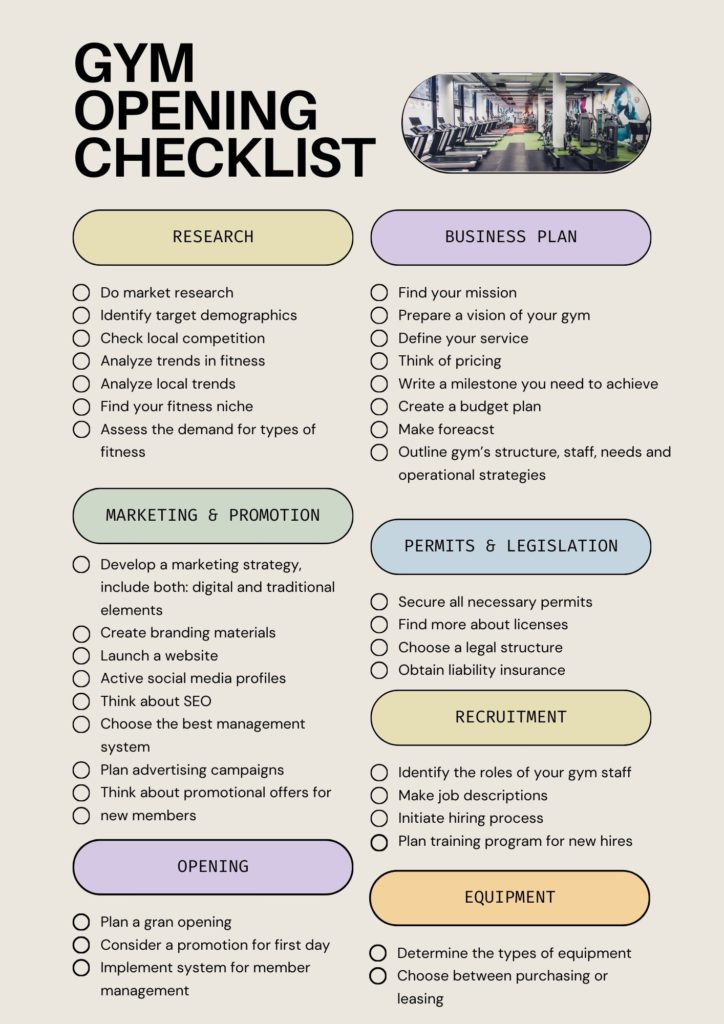
Image Source: wod.guru
Laying the Foundation: Your Gym Business Plan
A well-crafted gym business plan is your roadmap to success. It’s not just a document for investors; it’s your personal blueprint. What should this plan include? It must detail your business concept, target market, marketing and sales strategies, operational plan, management team, and financial projections.
Defining Your Niche and Target Market
Who are you serving? Identifying your ideal client is crucial. Are you aiming for bodybuilders, yoga enthusiasts, busy professionals seeking quick workouts, or a general fitness audience?
- Niche Examples:
- High-Intensity Interval Training (HIIT) studio
- Powerlifting gym
- Boutique cycling studio
- Functional fitness facility
- Yoga and Pilates studio
- CrossFit box
- Women-only gym
- Senior fitness center
Your target market will influence your facility design, equipment selection, class offerings, pricing, and marketing efforts.
Competitive Analysis
Research your local competition. What are their strengths and weaknesses? What are their pricing structures? What kind of classes do they offer? This analysis will help you identify gaps in the market and opportunities to differentiate your gym.
Mission, Vision, and Values
Clearly articulate what your gym stands for. Your mission statement should explain your purpose, while your vision outlines your long-term aspirations. Your values will guide your business decisions and company culture.
Services and Amenities
Beyond standard cardio and weight equipment, what will you offer?
- Group fitness classes (Zumba, spin, yoga, Pilates, martial arts, etc.)
- Personal training sessions
- Nutritional counseling
- Towel service
- Locker rooms with showers
- Sauna or steam room
- Juice bar or cafe
- Childcare services
Financial Planning: Gym Startup Costs and Funding
Gym startup costs can vary significantly based on location, size, and services offered. Accurate budgeting is essential.
Estimating Startup Expenses
Here’s a breakdown of common startup costs:
| Category | Estimated Cost Range | Notes |
|---|---|---|
| Leasehold Improvements | \$10,000 – \$100,000+ | Renovations, flooring, paint, lighting, soundproofing. |
| Gym Equipment | \$20,000 – \$250,000+ | Treadmills, ellipticals, weight machines, free weights, etc. |
| Rent/Lease Deposit | 1-3 Months Rent | Varies greatly by location. |
| Licenses & Permits | \$500 – \$5,000 | Business license, health permits, etc. |
| Insurance | \$1,000 – \$5,000 (Annual) | Liability, property, workers’ compensation. |
| Marketing & Branding | \$1,000 – \$10,000 | Website, signage, initial advertising. |
| Software & Technology | \$500 – \$5,000 | Membership management, scheduling, POS system. |
| Initial Staffing Costs | Varies | Hiring and training employees. |
| Working Capital | 3-6 Months Operating Expenses | Covers rent, utilities, salaries, etc. before profitability. |
| Contingency Fund | 10-20% of Total Costs | For unexpected expenses. |
Total Estimated Startup Costs: \$50,000 – \$500,000+
Securing Gym Business Funding
Where will the money come from?
- Personal Savings: Using your own capital demonstrates commitment.
- Friends and Family: Can be a source of early-stage funding, but set clear terms.
- Small Business Loans: Banks and credit unions offer loans for startups. You’ll need a solid business plan.
- SBA Loans: The Small Business Administration guarantees loans, often with favorable terms.
- Angel Investors/Venture Capital: Suitable for ambitious, high-growth potential businesses, but requires giving up equity.
- Crowdfunding: Platforms like Kickstarter or Indiegogo can help raise funds and build early buzz.
- Equipment Financing: Leasing or financing specialized gym equipment can spread out costs.
It’s crucial to have a clear understanding of your financial needs and how you plan to meet them. Consider if you’ll need gym business funding beyond your initial investment to cover initial operating losses.
The Legal Landscape: Gym Legal Requirements
Navigating the legalities is essential to avoid future complications.
Business Structure and Registration
Choose a legal structure for your business:
- Sole Proprietorship: Simple, but personal assets are at risk.
- Partnership: Shared ownership and responsibilities.
- Limited Liability Company (LLC): Offers liability protection for owners.
- Corporation: More complex, but provides strongest liability protection.
Register your business name and obtain an Employer Identification Number (EIN) from the IRS.
Licenses and Permits
The specific licenses and permits you need will vary by state and local municipality. Common requirements include:
- Business License: General permission to operate.
- Occupancy Permit: Ensures your facility meets building codes.
- Health Permits: May be required if you offer food or beverages.
- Signage Permits: For exterior signage.
- Music Licensing: If you play copyrighted music (e.g., ASCAP, BMI, SESAC).
Insurance Coverage
Adequate insurance is non-negotiable for a gym.
- General Liability Insurance: Covers accidents and injuries that occur on your premises.
- Professional Liability Insurance (Errors & Omissions): Protects against claims of negligence related to personal training or advice.
- Property Insurance: Covers your building, equipment, and other assets.
- Workers’ Compensation Insurance: Covers employees injured on the job.
- Umbrella Insurance: Provides an extra layer of liability protection.
Waivers and Contracts
Develop comprehensive liability waivers that all members and guests must sign. These waivers aim to protect your business from lawsuits arising from injuries sustained during workouts. Membership agreements should clearly outline terms, conditions, payment schedules, and cancellation policies.
Location, Location, Location: Finding the Right Space
The physical location of your gym significantly impacts its success.
Site Selection Criteria
Consider these factors when scouting for a location:
- Visibility and Accessibility: Is it easy to find and get to?
- Demographics: Does the area match your target market?
- Parking: Ample and convenient parking is a must.
- Foot Traffic: High foot traffic can increase brand awareness.
- Competition: Proximity to similar businesses.
- Lease Terms: Favorable rent, lease duration, and any restrictions.
- Zoning Laws: Ensure the location is zoned for commercial fitness facilities.
Leasehold Improvements
Once you secure a space, you’ll likely need to customize it. This can include:
- Layout Design: Planning the flow of the gym for optimal use of space.
- Flooring: Durable, shock-absorbent flooring for weight areas and softer surfaces for studios.
- Lighting: Bright, inviting, and task-specific lighting.
- Ventilation and HVAC: Crucial for comfort and air quality.
- Restrooms and Locker Rooms: Clean, functional, and well-equipped.
- Soundproofing: For studios and high-impact areas.
Gym Equipment Sourcing and Selection
Choosing the right equipment is a major investment.
Types of Equipment
Consider a mix of:
- Cardiovascular Equipment: Treadmills, ellipticals, stationary bikes, rowers, stair climbers.
- Strength Training Equipment:
- Weight Machines: Selectorized and plate-loaded machines for targeted muscle groups.
- Free Weights: Dumbbells, barbells, weight plates, kettlebells.
- Racks and Cages: Squat racks, power racks, Smith machines.
- Functional Training Equipment: TRX suspension trainers, battle ropes, medicine balls, resistance bands, plyometric boxes.
- Cardio and Strength Accessories: Mats, stability balls, foam rollers, agility ladders.
- Specialty Equipment: Based on your niche (e.g., Olympic lifting platforms, boxing equipment).
Gym Equipment Sourcing Strategies
- New Equipment: Offers warranties and the latest technology but is more expensive.
- Used Equipment: Can significantly reduce startup costs, but inspect thoroughly for wear and tear. Look for reputable used equipment dealers.
- Leasing Equipment: A way to get high-quality equipment without a large upfront investment, but costs more over time.
- Financing: Many manufacturers offer financing options.
When sourcing, prioritize durability, versatility, and user-friendliness. Read reviews and seek recommendations.
Staffing Your Fitness Center
Your team is the face of your business.
Key Staff Roles
- Gym Manager: Oversees daily operations, staff, and member relations.
- Personal Trainers: Certified professionals who provide one-on-one or small group training. A strong personal training business component can be a significant revenue stream.
- Group Fitness Instructors: Lead various classes.
- Front Desk Staff: Handle member check-ins, inquiries, and sales.
- Cleaning and Maintenance Staff: Ensure a clean and safe environment.
Hiring and Training
Look for individuals who are passionate about fitness, possess strong customer service skills, and are reliable. Comprehensive training on your gym’s policies, procedures, and brand culture is essential.
Fitness Business Marketing and Membership Sales
Attracting and retaining members is key to gym membership sales.
Developing a Marketing Strategy
- Branding: Create a strong brand identity with a memorable logo and consistent messaging.
- Online Presence:
- Website: Professional, informative, and mobile-friendly. Include class schedules, trainer bios, and membership options.
- Social Media: Engage with your target audience on platforms like Instagram, Facebook, and TikTok. Share workout tips, motivational content, and member success stories.
- Local SEO: Optimize your online listings (Google My Business) to appear in local searches.
- Offline Marketing:
- Local Partnerships: Collaborate with complementary businesses (e.g., health food stores, sports apparel shops).
- Community Events: Sponsor or participate in local health fairs and fitness events.
- Flyers and Posters: Distribute in relevant locations.
- Referral Programs: Incentivize current members to bring in new clients.
- Promotions and Discounts: Offer introductory specials for new members.
Driving Gym Membership Sales
- Tours and Consultations: Offer free gym tours and introductory fitness consultations to prospective members.
- Membership Tiers: Provide different membership options (e.g., basic, premium, class packages) to cater to various needs and budgets.
- Bundled Services: Offer packages that combine gym access with personal training or specialized classes.
- Customer Relationship Management (CRM): Use software to track leads, manage member communications, and identify opportunities for upselling.
- Retention Strategies: Focus on member satisfaction through excellent service, engaging classes, and community building. Regular check-ins and feedback surveys can help identify areas for improvement.
Fitness Studio Operations and Management
Efficient fitness studio operations ensure smooth day-to-day functioning.
Membership Management Software
Invest in software to:
- Track member sign-ups and renewals.
- Manage class schedules and bookings.
- Process payments securely.
- Communicate with members.
- Generate reports on key performance indicators (KPIs).
Customer Service Excellence
Provide a welcoming and supportive environment for all members. Address inquiries and concerns promptly and professionally. Create a positive atmosphere that encourages repeat visits.
Class Scheduling and Programming
Offer a diverse range of classes to appeal to different interests and fitness levels. Ensure instructors are qualified and motivating. Monitor class attendance to adjust schedules and offerings as needed.
Maintaining Equipment and Facilities
Regular cleaning and maintenance of equipment and the entire facility are paramount for safety and member satisfaction. Implement a schedule for equipment servicing and deep cleaning.
Frequently Asked Questions (FAQ)
Q1: What are the biggest challenges when starting a gym?
The biggest challenges often include high startup costs, intense competition, member acquisition and retention, managing operational expenses, and staying up-to-date with fitness trends.
Q2: How much money do I need to start a gym?
This varies greatly, but a rough estimate for a small to medium-sized gym can range from \$50,000 to \$500,000 or more, covering leasehold improvements, equipment, initial marketing, and operating capital.
Q3: Can I start a gym with just personal training?
Yes, you can start a business focusing solely on personal training. This often begins as a personal training business operating out of a rented space or even a client’s home before potentially expanding into a larger fitness studio.
Q4: What type of insurance is most important for a gym?
General Liability Insurance and Professional Liability Insurance are critical for protecting your business from claims related to accidents and advice given.
Q5: How long does it take to become profitable?
Profitability timelines vary, but many gyms take 12-24 months to reach consistent profitability, depending on their business model, marketing effectiveness, and operational efficiency.
Conclusion: Your Journey to Opening a Gym
Opening a gym is a demanding but rewarding venture. By meticulously developing your gym business plan, securing adequate gym business funding, navigating gym legal requirements, making smart gym equipment sourcing decisions, mastering fitness business marketing, and focusing on excellent fitness studio operations, you can lay a strong foundation for a successful fitness center. Remember that consistent effort in gym membership sales and providing exceptional member experiences are key to long-term growth and making your dream of owning a gym a reality.