
If you have a broken foot, you might wonder how you can possibly stay active. You can exercise with a broken foot safely by focusing on movements that do not put weight on the injured foot, such as chair exercises, upper body workouts, and certain types of cardio like swimming or using an arm bike. The key is to protect your broken foot, listen to your body, and always follow your doctor’s or physical therapist’s instructions. Staying fit with a broken foot is possible with the right approach.
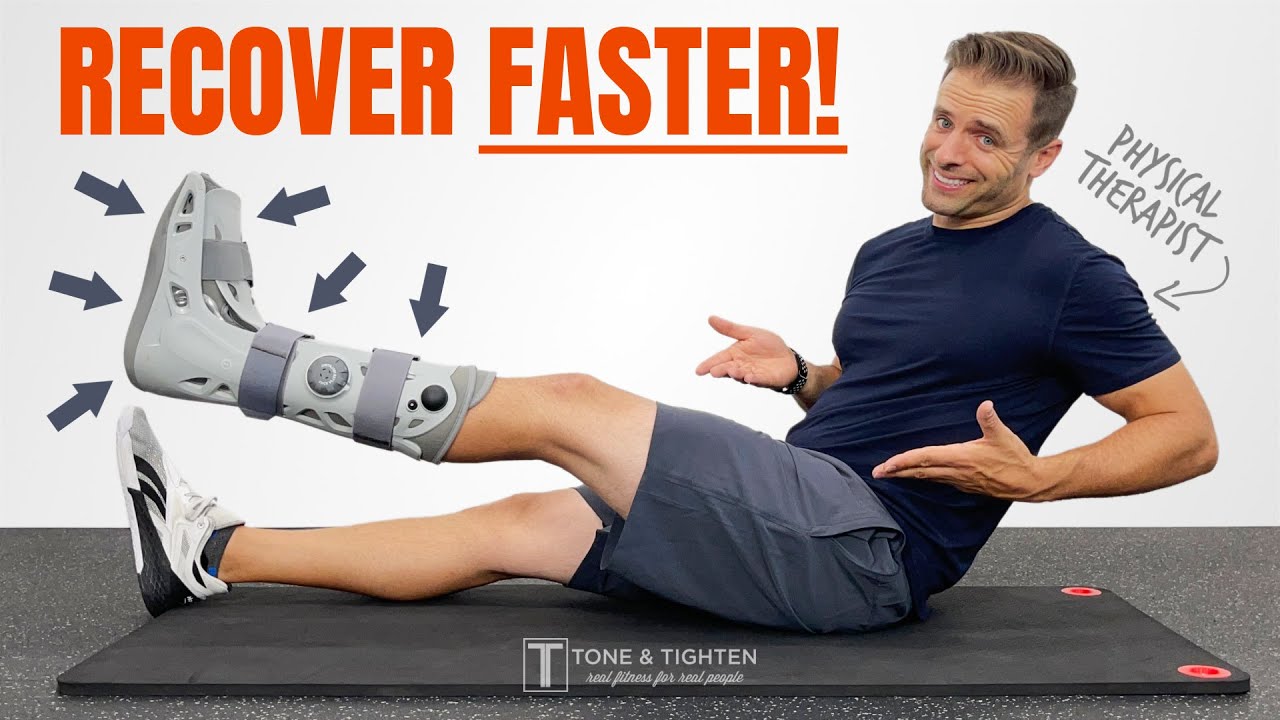
Image Source: i.ytimg.com
Grasping the Need to Stay Active
Breaking a foot is tough. It stops you from doing many normal things, especially moving around. But staying active is still very important for your body and your mind, even when you have a broken foot.
Why Keeping Fit Matters Now
- Keeps blood moving: Moving helps blood flow. This is good for healing your broken foot. It also helps prevent blood clots.
- Holds onto muscle: When you can’t use your foot, you might lose muscle in your leg. Exercising other parts helps keep muscles strong.
- Boosts your mood: Being hurt can make you feel down. Exercise helps your body make feel-good chemicals. This can lift your spirits.
- Manages your weight: It is easy to gain weight when you move less. Staying active helps keep your weight in check.
- Prepares for healing: Staying strong in your upper body and core makes it easier to use crutches or a scooter. It also helps when you start walking again.
The main rule is: Protect your broken foot. Do not put weight on it unless your doctor says you can. Always check with your doctor or a physical therapist before you start any exercise plan. They can tell you what is safe for you.
Safe Exercise Starts Here
Your exercise plan will depend on how bad the break is and what your doctor allows. Most broken feet need time with no weight on them at all. This is called non-weight bearing. You might be in a cast or a walking boot.
Listening to Your Body
Pain is a sign to stop. If an exercise hurts your foot or makes the pain worse, do not do it. It is better to do less now than to hurt your foot more.
The Role of Your Medical Team
Your doctor knows about your specific break. They will guide you on when you can start moving and what kind of movement is safe. A physical therapist is also key. Physical therapy for a broken foot helps you heal right. They show you safe ways to move and get strength back.
Exercise Types for a Broken Foot
Since you cannot use your broken foot, you need to work other parts of your body. This means focusing on your upper body, core, and maybe non-weight bearing cardio.
Upper Body Exercises Broken Foot
You can work your arms, chest, back, and shoulders. This can be done sitting down or standing if you can balance without putting weight on your broken foot (like leaning on a counter or chair).
Here are some upper body exercises:
- Arm Curls: Hold weights (cans, water bottles work too). Sit in a chair. Bend your elbows to bring the weights up to your shoulders. Lower them slowly.
- Overhead Press: Sit tall. Hold weights at your shoulders, palms facing forward. Push the weights straight up over your head. Lower them slowly.
- Seated Rows: Sit in a chair. If you have an exercise band, loop it around your feet (with the broken foot elevated) or a sturdy object in front of you. Hold the ends. Pull the band back, squeezing your shoulder blades together. Keep your back straight.
- Chest Press (Seated or Lying): If you can lie on your back and keep your foot safe, do chest presses with weights. Or sit in a chair, hold weights at your chest, and push them straight out in front of you. Bring them back to your chest.
- Lateral Raises: Sit or stand safely. Hold weights at your sides. Keep your arms mostly straight and lift them out to the sides until they are level with your shoulders. Lower slowly.
- Front Raises: Sit or stand safely. Hold weights at your sides. Lift your arms straight out in front of you until they are level with your shoulders. Lower slowly.
Use light weights at first. Do 10-15 times for each exercise. You can do 2 or 3 sets.
Non-Weight Bearing Exercises
These exercises work parts of your body without putting any weight on your broken foot.
- Leg Raises (for the good leg): Lie on your back. Keep the good leg straight. Lift it up off the floor a few inches. Hold for a few seconds. Lower slowly. Repeat.
- Hip Abduction (for the good leg): Lie on your side (the good side down). Keep the good leg bent. Keep the injured leg straight and lift it up towards the ceiling. Be careful not to move your body. Lower slowly. Repeat. You can also do this lying on your back and sliding the good leg out to the side and back.
- Core Work (lying or seated):
- Seated Knee Lifts: Sit tall in a chair. Lift one knee towards your chest. Put it down. Lift the other knee. You can do this with the good leg only or both if it feels okay and does not stress your foot.
- Seated Twists: Sit tall. Hold your hands together or hold a light weight. Twist your upper body gently to one side. Twist back to the middle. Twist to the other side.
- Plank (Modified): If you can safely get down, hold a plank on your forearms and knees. Make sure your broken foot is supported and not taking weight. Keep your body in a straight line from head to knees.
Chair exercises for a broken foot are excellent because they keep you stable and safe. You can do many of these upper body and core moves while sitting.
Cardio with Broken Foot
You need to get your heart rate up. But you cannot run or walk. Here are safe ways to do cardio:
- Arm Bike (Upper Body Ergometer): This machine is like a bike for your arms. Sit down and pedal with your arms. It gets your heart pumping and works your upper body. This is great for cardio with a broken foot.
- Rowing Machine (with care): You can use a rowing machine. Keep your injured foot resting safely on the footplate, but push mainly with your good leg and pull with your arms and back. You must be very careful not to push off with the broken foot.
- Swimming with Broken Foot: Water is your friend! If your doctor says it’s okay for the cast or boot to get wet (or if you are out of the cast and allowed in water), swimming is fantastic. You can swim using only your arms or use a pull buoy between your legs to keep your lower body afloat. This is great cardio with broken foot and non-weight bearing. Check if your pool allows boot covers if the boot needs to stay dry.
- Seated Punching: Sit in a chair. Punch the air in front of you. Move your arms quickly. This simple movement can raise your heart rate.
- Seated Marching/Knee Lifts: As mentioned in core exercises, lift your knees while sitting. Doing this faster can become a light cardio activity.
Aim for 20-30 minutes of cardio most days. Work at a level where you can talk but not sing.
Exercising with Walking Boot
If you are in a walking boot, it means your foot needs support, but you might not be allowed to put full weight on it yet. Exercising with a walking boot needs extra thought.
- Balance: The boot changes your balance. Be extra careful when moving around, even for exercises.
- Protection: The boot protects your foot. Do not take it off for exercises unless your doctor or PT says so.
- Footwear: Wear a shoe on your good foot that makes its height closer to the height of the boot. This helps your hips and back.
- Non-Weight Bearing is Key: If you are told not to put weight on the boot, all exercises must be non-weight bearing. This means chair exercises broken foot, lying down exercises, or using equipment like an arm bike.
- Partial Weight-Bearing: If your doctor says you can put some weight on the boot, your physical therapist will show you how to do this safely. They will guide you on exercises like gentle standing, perhaps with crutches or parallel bars. These are low impact exercises for broken foot recovery.
Never push through pain when exercising with a walking boot. The boot is there to help you heal, not to let you do everything you did before.
How to Stay Fit Broken Foot: A Complete Picture
Staying fit is more than just exercise. When you have a broken foot, think about your whole well-being.
Food Matters
Eat healthy foods. Your body needs good nutrition to heal bones and muscles. Make sure you get enough protein, calcium, and Vitamin D. Drink plenty of water.
Rest is Part of Healing
Do not overdo it. Your body is working hard to fix your bone. Get enough sleep. Rest your foot often by keeping it up (elevated).
Keep Your Mind Strong
It can be frustrating not being able to move freely. Find ways to relax and manage stress. Read a book, listen to music, talk to friends and family. Maybe try meditation or deep breathing. Staying positive helps.
Set Small, Real Goals
Do not try to do too much too soon. Set small goals for your exercise each week. Celebrate what you can do, not what you cannot. This is part of how to stay fit with a broken foot over time.
The Path to Recovery: Safe Exercises Broken Foot Recovery
Healing takes time. Your exercise plan will change as your foot gets better. This is where safe exercises for broken foot recovery come in.
Early Stage: Protecting the Break
- Focus: Upper body exercises broken foot, core, non-weight bearing cardio (arm bike).
- Movement around the foot: Gentle ankle pumps or toe wiggles might be allowed if your doctor says so. These help keep blood flow and prevent stiffness. Do these only if cleared and they cause no pain.
- Goal: Keep other muscles strong, maintain fitness, keep blood flowing.
Middle Stage: Starting Movement (with Medical OK)
- Focus: Continue upper body and core. Maybe start gentle, non-weight bearing lower body exercises for the injured leg as shown by a PT.
- Physical therapy for broken foot becomes even more important now. A PT will guide you on simple movements for the foot if appropriate.
- Examples: Small, controlled movements of the foot or ankle while non-weight bearing, done very slowly and carefully.
Later Stage: Adding Weight (Only When Cleared)
- Focus: Gradually adding weight under strict guidance from your doctor and physical therapist. This is the start of partial weight-bearing and then full weight-bearing.
- Low impact exercises broken foot are introduced.
- Walking: Starting with short distances, maybe using crutches or a cane, then building up.
- Water Walking: Walking in a pool where the water helps support your weight.
- Stationary Bike: Starting with no resistance, then adding resistance slowly as tolerated. Your PT will tell you when your foot is ready for this circular motion.
- Strength exercises for the injured leg begin. These are gentle at first. Examples include calf raises (seated or standing with support), heel raises, toe raises, balance exercises. These are key physical therapy for broken foot moves.
Long-Term: Getting Back to Full Strength
- Focus: Making your foot and ankle strong and flexible again. Building back your overall fitness.
- Physical therapy for broken foot continues. Exercises become harder. You work on balance, agility, and strength needed for your daily life and sports if you play them.
- Gradually return to more demanding low impact exercises for broken foot recovery, like cycling, elliptical, or perhaps hiking on flat ground. Running and jumping are usually the last things you return to, only when fully cleared and ready.
Recovery is not a straight line. Some days might feel harder than others. Be patient with yourself.
More Detailed Exercise Ideas
Let’s look closer at some specific exercises you can do.
Chair Exercises Broken Foot for Strength and Mobility
Sitting down is safe. You can do a lot from a chair.
- Chair Squats (Partial): Stand in front of a sturdy chair. Lower your bottom back as if to sit, but only go down a little way. Keep your chest up. If you can’t put any weight on your broken foot, use your good leg to lower yourself, keeping the injured foot off the ground or only lightly touching if allowed partial weight. This works the good leg and core.
- Seated Leg Extensions: Sit tall. Straighten one leg out in front of you. Hold for a second. Lower slowly. Repeat with the other leg (good leg only if injured leg isn’t ready). Do not add ankle weights or resistance if your foot is still fragile. This is a quad exercise.
- Seated Hamstring Curls: Sit with feet flat. Slide one heel back under your chair as far as you can using the back of your leg. Straighten the leg again. Repeat with the other leg (good leg only).
- Ankle Pumps (Injured Foot – If Allowed): Sit and gently point your broken foot’s toes down, then pull them up towards your shin. Do this very slowly and only within a pain-free range if your doctor/PT approves.
- Ankle Circles (Injured Foot – If Allowed): Sit and gently move your broken foot in a circle at the ankle if your doctor/PT approves and it causes no pain. Go slowly in both directions.
Upper Body Exercises Broken Foot Using Simple Items
You don’t always need fancy weights.
- Water Bottle Bicep Curls: Use filled water bottles. Sit or stand safely. Do arm curls as described before.
- Soup Can Shoulder Press: Use soup cans as light weights for overhead presses or lateral/front raises.
- Towel Pulls: Hold a towel with both hands. Try to pull it apart as hard as you can while keeping your arms straight. This works chest and back muscles (isometric).
- Push-ups Against a Wall: Stand facing a wall. Place hands on the wall slightly wider than shoulders. Lean in towards the wall, bending elbows. Push back. This is a standing upper body exercise broken foot friendly.
Cardio with Broken Foot Details
Getting your heart rate up is key.
- Arm Ergometer Intensity: Start slow. Build up speed and resistance over time. Aim for a level that feels challenging but not impossible.
- Swimming Focus: Use just your arms and core with a pull buoy. Practice different strokes (freestyle, backstroke, breaststroke pull). If your foot is allowed to get wet but can’t kick, wear a fin on your good foot or simply let the injured foot trail behind safely.
- Seated Cardio Dance: Find online videos or create your own routine of fast arm movements, seated knee lifts (using the good leg), and trunk twists done quickly to music.
Remember, the goal of cardio with a broken foot is to work your heart and lungs, not your injured leg.
The Importance of Physical Therapy Broken Foot Care
Seeing a physical therapist is not just about getting strength back. It’s about healing properly and preventing future problems.
What a Physical Therapist Does
- Assesses your injury: They look at your movement, strength, and pain level.
- Creates a plan: They make a specific exercise program for you based on your injury and how you are healing. This plan includes safe exercises for broken foot recovery.
- Teaches you: They show you how to do exercises right. This is very important to avoid hurting yourself again.
- Guides progression: They tell you when it is safe to do more, like putting weight on your foot or trying new movements.
- Uses other methods: They might use massage, heat, ice, or other tools to help with pain and swelling.
- Helps with walking: They guide you on how to use crutches, a scooter, and eventually how to walk normally again. Exercising with a walking boot correctly is something they teach you.
Do not skip your physical therapy sessions. They are vital for a good recovery and getting back to your normal activities safely.
Low Impact Exercises Broken Foot: The Transition
When you are allowed to start putting weight on your foot, low impact exercises are next. Low impact means exercises where at least one foot is always on the ground or in contact with the equipment (like cycling). There is less force going through the bone than running or jumping.
Examples of Low Impact as You Heal
- Walking: Start very slowly and for short times. Use crutches or a cane as needed. Gradually walk longer distances.
- Stationary Cycling: This is excellent low impact. Start with no resistance. Focus on smooth circles. Add resistance slowly over time. This is a key low impact exercise for broken foot recovery.
- Elliptical Trainer: This machine provides a gliding motion. It is usually safe once you can put full weight on your foot and have good range of motion. Start slow and for short periods.
- Water Aerobics/Walking: The water supports your body, reducing stress on the foot. This is very gentle and great for building strength and movement back.
Your physical therapist will tell you when you are ready for these and how to start them safely.
Risks and Red Lights
Even when doing safe exercises for broken foot recovery, you must be careful.
- Pain: Sharp or increasing pain in your broken foot means stop immediately.
- Swelling: If an exercise makes your foot swell more, stop. Elevate your foot and use ice if needed (check with doctor).
- Warmth/Redness: Signs of possible infection or other problems. Call your doctor.
- Ignoring Instructions: Doing too much too soon or ignoring your doctor/PT is the biggest risk. You could re-break the bone or slow down healing.
Be patient. Healing a broken bone takes time. Listen to your body and the professionals helping you.
Bringing It All Together
Breaking a foot does not mean you have to stop being active completely. By focusing on upper body exercises, non-weight bearing movements, and safe cardio options like swimming or the arm bike, you can maintain fitness. Chair exercises are a stable way to work out. Remember that safe exercises for broken foot recovery are key at each stage. Physical therapy is essential for healing correctly and regaining strength. Exercising with a walking boot requires care and following rules. How to stay fit with a broken foot involves exercise, good food, rest, and a positive mindset. Always put the safety of your broken foot first and follow your medical team’s advice.
Frequently Asked Questions
h4 What type of exercise can I do with a broken foot?
You can do exercises that do not put weight on your broken foot. This includes upper body exercises, core exercises, and non-weight bearing cardio like using an arm bike or swimming. Chair exercises are also a safe option.
h4 Can I walk on a broken foot if I’m wearing a boot?
It depends on your doctor’s instructions. Some boot types are for non-weight bearing. Others allow partial or full weight. You must follow your doctor’s specific advice for your type of break and boot. Never put weight on it unless cleared.
h4 Is swimming okay with a broken foot?
Swimming with a broken foot is often a great option because it is non-weight bearing. However, you must ask your doctor if your foot can get wet or if your cast/boot allows it. If not, some pools have waterproof covers. You can swim using only your arms or a pull buoy.
h4 How can I do cardio without using my legs?
You can do cardio with your upper body. An arm ergometer (arm bike) is designed for this. Swimming is also great. Seated punching or fast arm movements while seated can also raise your heart rate.
h4 When can I start putting weight on my broken foot?
Only your doctor can tell you this. It depends on the type of break and how well it is healing. They will likely take X-rays to check. Do not put weight on it until you are cleared.
h4 What is physical therapy for a broken foot like?
Physical therapy helps you regain movement, strength, and balance after a broken foot heals. A therapist will give you specific exercises for your foot and ankle, teach you how to walk normally again, and guide you safely back to activities.
h4 What are low impact exercises for a broken foot?
Low impact exercises put less stress on your bone than high impact ones. Once cleared by your doctor, these might include walking, stationary cycling, or using an elliptical machine. They are important steps in safe exercises for broken foot recovery.
h4 How can I keep my leg muscles from getting weak?
While you can’t work the injured leg much at first, keep the muscles strong in your other leg with exercises like single-leg squats (using support), leg raises, and calf raises (on the good leg). Work your core muscles too, as they help with stability. Your physical therapist will introduce gentle exercises for the injured leg when safe.