
Can you do Nordic curls at the gym to build strength? Absolutely! The Nordic curl is a highly effective exercise for developing hamstring strength and power.
The hamstrings are crucial muscles for athletic performance and everyday movements. They help with running, jumping, and even simple actions like walking. Strong hamstrings not only improve your physical capabilities but also play a vital role in preventing injuries, particularly hamstring strains. Many people struggle with weak hamstrings, which can lead to imbalances and pain. This is where exercises like Nordic hamstring curls come in.
This guide will walk you through how to perform Nordic curls at the gym, covering different variations, common mistakes, and how to progress safely. We’ll also touch on why this exercise is so beneficial for hamstring strengthening exercises.
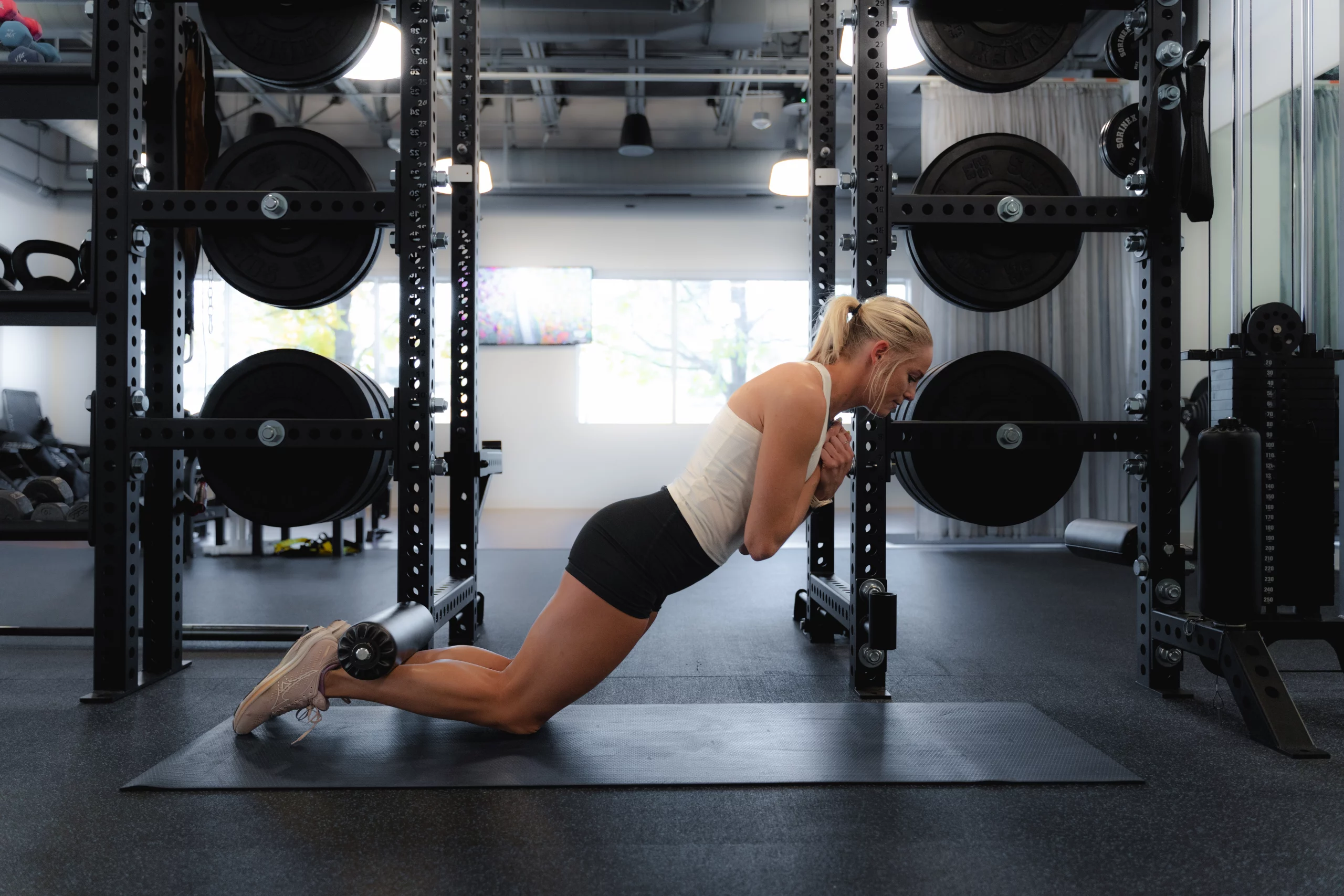
Image Source: www.trainheroic.com
Why Nordic Curls Are King for Hamstring Development
The Nordic curl is an advanced exercise that targets the hamstrings in a unique way. Unlike many other hamstring exercises, the Nordic curl emphasizes the eccentric phase of muscle contraction. This is when the muscle lengthens under tension.
The Power of Eccentric Training
Eccentric hamstring exercises are incredibly effective for building muscle size and strength. During the eccentric phase, muscle fibers experience more micro-tears. This triggers a greater repair and growth response, leading to significant strength gains. The Nordic curl, by its very nature, forces a slow and controlled lengthening of the hamstrings. This makes it a potent stimulus for hamstring growth.
Beyond the Hamstring Curl Machine
While the hamstring curl machine is a common tool for isolating hamstrings, it primarily works them through knee flexion. This means the hamstrings are shortening. The Nordic curl, on the other hand, works the hamstrings through both knee flexion and hip extension, making it a more functional and complete hamstring exercise. It also heavily involves the glutes and calves, acting as a more compound movement for the posterior chain.
The Glute-Ham Raise (GHR) Connection
Often compared to the glute-ham raise (GHR), the Nordic curl is similar in its focus on the posterior chain. However, the GHR typically uses a specialized machine that supports the feet and allows for greater range of motion, including hip extension. The Nordic curl, when performed with proper setup, focuses more purely on the hamstring’s eccentric control.
Setting Up for Success: How to Do Nordic Curls At Gym
The most common setup for Nordic curls at the gym involves using a stable anchor point for your feet.
Essential Equipment:
- A sturdy bench or leg curl machine: You need something to brace your feet against securely.
- An anchor point: This could be a power rack, a sturdy barbell secured in the rack, or even a strong partner.
- Ankle pad or soft surface: To rest your shins comfortably.
Step-by-Step Guide to Performing a Basic Nordic Curl:
- Kneel on the floor: Place a soft pad or folded towel under your knees for comfort.
- Anchor your feet: This is crucial. Have a training partner hold your ankles firmly. Alternatively, secure your feet under a leg curl machine’s foot pad, or loop your feet under the bar of a power rack. Ensure the anchor is stable and won’t slip.
- Position your body: Your knees should be on the floor, and your shins should be vertical. Your torso should be upright, with your hips fully extended.
- Begin the descent: Slowly lean forward from your knees, keeping your body in a straight line from head to knees. Your hamstrings will resist this forward motion. The goal is to control the descent as much as possible.
- Lower yourself until your chest touches the floor: Or as low as you can maintain control. Your hamstrings will be under immense tension.
- Return to the starting position: This is the hardest part. Use your hamstrings to pull yourself back up. If you can’t pull yourself up using only your hamstrings, you can use your hands to push off the floor to assist.
Visualizing the Movement:
Imagine your hamstrings acting like a brake. As you lean forward, they are actively slowing your body down, preventing you from falling. When you come back up, they are pulling you back into position.
Variations to Build Your Nordic Curl Strength
If performing a full Nordic curl is too challenging, there are several ways to build up to it. This progressive approach is key for preventing hamstring injuries and ensuring continuous improvement.
1. Resistance Band Hamstring Curls:
This is an excellent at-home hamstring curl variation and a great stepping stone.
- Setup: Loop a strong resistance band around a stable anchor point (like a sturdy piece of furniture or a pull-up bar). Lie on your back with your feet on the floor, knees bent. Loop the other end of the band around your ankles.
- Execution: Keeping your hips pressed into the floor, curl your heels towards your glutes against the band’s resistance. Slowly extend your legs back out. This is more of a concentric movement but still activates the hamstrings effectively.
2. Bodyweight Hamstring Curls (with assistance):
These can be done at home or the gym.
- Setup: You’ll need a partner to hold your ankles or a stable object to brace them against. Lie on your back with your knees bent and feet flat on the floor.
- Execution: Extend your legs, lifting your hips slightly off the ground. Then, with your feet anchored, bend your knees to pull your heels back towards your glutes, keeping your hips elevated. This is a more traditional hamstring curl motion but with bodyweight.
3. Partial Nordic Curls:
This is about reducing the range of motion of the full Nordic curl.
- Setup: Same as the basic Nordic curl.
- Execution: Instead of lowering yourself until your chest touches the floor, lower yourself only as far as you can maintain control, then push back up. Gradually increase the range of motion as you get stronger.
4. Assisted Nordic Curls (Using a Spotter or Machine):
- Setup: Same as the basic Nordic curl.
- Execution: Have a partner lightly push your upper back to help you lower yourself and, more importantly, to help you pull yourself back up. You can also use lighter weights on a leg curl machine to mimic the eccentric loading and practice the movement pattern.
5. Elevated Nordic Curls:
This variation increases the leverage and difficulty.
- Setup: Kneel with your shins on a raised surface (like a bench or a plyo box). Your feet should hang off the edge.
- Execution: Perform the Nordic curl as described previously. The elevation allows for a greater range of motion and more challenging eccentric loading.
Progressing Your Nordic Curl Training
Once you can perform a few repetitions with good form, you can start increasing the challenge.
Table: Progression Strategies for Nordic Curls
| Progression Method | Description | When to Implement |
|---|---|---|
| Increase Repetitions | Aim for more reps per set (e.g., from 3-5 to 6-8). | When you can comfortably complete the current rep range. |
| Increase Sets | Add an extra set to your workout (e.g., from 2 sets to 3 sets). | When you’ve mastered the rep range for current sets. |
| Decrease Assistance | If using a spotter or bands, gradually reduce the help you receive. | As your hamstring strength improves. |
| Increase Eccentric Tempo | Slow down the lowering phase even further (e.g., 5-second eccentric instead of 3 seconds). | Once you have good control over the full range of motion. |
| Add Weight (Advanced) | Place a dumbbell or weight plate across your chest or upper back. | Only when you can perform full Nordic curls with good form. |
| Increase Range of Motion | If using partial reps, aim for a deeper range of motion each week. | When you find your current range too easy. |
| Elevate Shins/Ankles | As described in the variations, this increases leverage and difficulty. | As a more advanced progression. |
Key Coaching Cues for Proper Nordic Curl Form
Achieving proper Nordic curl form is paramount to maximizing benefits and minimizing risk.
- Hinge at the Knee: The primary movement should come from your knees bending and straightening, not your hips bending.
- Maintain a Straight Line: Keep your body rigid from head to knees. Avoid breaking at the hips or arching your back.
- Control the Descent: The lowering phase should be slow and controlled. Don’t just let gravity take over.
- Engage Your Glutes: Squeeze your glutes throughout the movement. This helps stabilize your hips and ensures the hamstrings are doing the work.
- Breathe: Exhale as you lower yourself and inhale as you pull yourself back up.
Common Mistakes to Avoid
Even with the best intentions, beginners often make mistakes when learning the Nordic curl. Being aware of these can help you correct them early.
- Using Too Much Hip Flexion: Allowing your hips to bend during the movement shifts the stress away from the hamstrings and onto your hip flexors and lower back.
- Dropping Too Fast: Not controlling the eccentric phase reduces the effectiveness of the exercise and increases injury risk.
- Not Anchoring Feet Securely: This is a safety hazard. If your feet slip, you could fall awkwardly.
- Arching the Back: This indicates a lack of core and hamstring engagement. It also puts unnecessary strain on your spine.
- Rushing the Movement: Nordic curls are about quality, not quantity. Take your time with each repetition.
Integrating Nordic Curls into Your Training Program
The Nordic curl is a demanding exercise, so it’s important to place it strategically in your workout.
When to Perform Nordic Curls:
- At the beginning of your leg workout: If you want to prioritize them when you’re fresh and have the most energy.
- After compound leg exercises: Such as squats or deadlifts, but before isolation exercises like traditional hamstring curls.
Frequency:
- 1-2 times per week is generally sufficient for most people. Your hamstrings need time to recover from this intense stimulus.
Volume:
- 2-4 sets with a rep range of 3-8 repetitions is a good starting point. Focus on quality over quantity.
The Benefits of Strong Hamstrings
Beyond just looking good, strong hamstrings offer significant advantages.
- Improved Athletic Performance: Essential for sprinting, jumping, and changing direction.
- Enhanced Running Economy: Efficient hamstring use leads to better stride length and less energy expenditure.
- Better Posture: Strong hamstrings help balance the pull of the quadriceps and glutes, improving pelvic alignment.
- Reduced Risk of Injury: Strong hamstrings are more resilient to strains and tears, especially during high-speed activities. This directly relates to preventing hamstring injuries.
Nordic Curls vs. Other Hamstring Exercises
Let’s see how the Nordic curl stacks up against other popular hamstring exercises.
Table: Comparing Hamstring Strengthening Exercises
| Exercise | Primary Muscle Focus | Type of Contraction Emphasized | Potential Benefits | Considerations |
|---|---|---|---|---|
| Nordic Hamstring Curls | Hamstrings | Eccentric | Superior hamstring strength, power, injury prevention | High intensity, requires proper setup, can be difficult to start |
| Glute-Ham Raise (GHR) | Hamstrings, Glutes | Eccentric & Concentric | Full posterior chain development, strength | Requires specialized GHR machine, still quite demanding |
| Leg Curl Machine | Hamstrings | Concentric | Hamstring isolation, muscle hypertrophy | Less functional, doesn’t work hips, can be less effective for power |
| Romanian Deadlifts (RDLs) | Hamstrings, Glutes | Eccentric | Hamstring length and strength, glute activation | Also works lower back, requires good form to avoid injury |
| Good Mornings | Hamstrings, Glutes | Eccentric | Posterior chain strength, hip hinge development | High risk of lower back injury if done incorrectly |
Frequently Asked Questions (FAQ)
Q: How many Nordic curls should I do to build strength?
A: Start with what you can manage with good form, aiming for 3-5 repetitions per set for 2-3 sets. Focus on the quality of each rep rather than the number. As you get stronger, you can gradually increase reps, sets, or decrease assistance.
Q: Is it normal to feel a lot of pain after Nordic curls?
A: Some muscle soreness (DOMS – Delayed Onset Muscle Soreness) is normal, especially when you’re new to the exercise. However, sharp or persistent pain is not. If you experience this, you may be pushing too hard or have poor form. Rest and proper recovery are crucial.
Q: Can I do Nordic curls without a gym?
A: Yes! You can perform at-home hamstring curls using various methods. Partner-assisted ankle holds are common, or you can use heavy furniture, a sturdy bed frame, or even a strong door (with caution) to anchor your feet for bodyweight hamstring curls. Resistance bands are also excellent for resistance band hamstring curls at home.
Q: How long does it take to get good at Nordic curls?
A: This varies greatly depending on your current hamstring strength and consistency. For some, it might take a few weeks of dedicated practice, while for others, it could take a few months to achieve full range of motion with good control. Patience and consistency are key.
Q: What muscles do Nordic curls work?
A: Primarily, Nordic curls target the hamstrings (biceps femoris, semitendinosus, semimembranosus). They also engage the glutes for hip stability and extension, and the calves to a lesser extent. The core is also activated to maintain a rigid torso.
Q: Can Nordic curls help prevent hamstring injuries?
A: Yes, absolutely. By strengthening the hamstrings eccentrically, which is often the phase where injuries occur, Nordic curls improve the muscle’s ability to withstand high forces, thus preventing hamstring injuries. They also help balance muscle strength between the hamstrings and quadriceps.
Q: Is there a difference between Nordic curls and a glute-ham raise?
A: While both are excellent posterior chain exercises, there’s a difference. The glute-ham raise often uses a dedicated machine that supports the feet and allows for greater hip extension. The Nordic curl, typically performed with feet anchored, focuses more purely on the hamstring’s eccentric strength at the knee joint. Some consider the Nordic curl a more accessible version of the GHR.
By incorporating Nordic curls into your training routine, you are investing in stronger, more resilient hamstrings. Remember to start slow, prioritize form, and listen to your body. Happy curling!