
Can you build a home gym on a budget? Yes, you absolutely can! This guide will walk you through affordable steps to create your own dedicated workout space, no matter your financial limitations. We’ll cover everything from choosing the right home gym equipment to optimizing your workout space for maximum benefit.
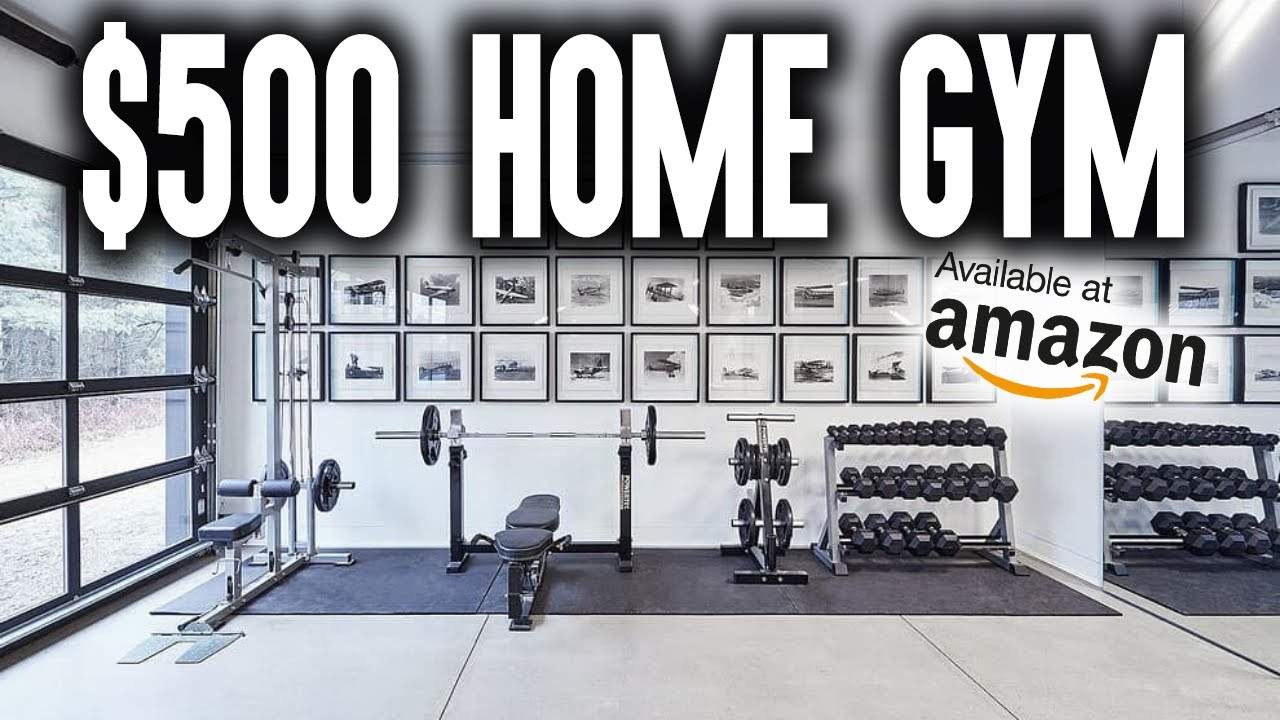
Image Source: i.ytimg.com
Building Your Foundation: Essential Considerations
Creating a successful home gym setup starts with careful planning. You need to think about your goals, the space you have available, and of course, your budget.
Defining Your Fitness Goals
What do you want to achieve with your home gym? Knowing your goals will help you choose the right home gym essentials.
- Strength Training: If you aim to build muscle or increase your strength, you’ll need strength training equipment like dumbbells, resistance bands, or a pull-up bar.
- Cardiovascular Health: For improving heart health and endurance, cardio equipment such as a jump rope, stationary bike, or even just open space for bodyweight exercises is key.
- Flexibility and Mobility: Yoga mats, foam rollers, and resistance bands are excellent for improving flexibility and reducing muscle soreness.
- Overall Fitness: A mix of equipment catering to different fitness types is often ideal for well-rounded fitness.
Assessing Your Space
The size of your workout space will greatly influence your choices. Even a small home gym can be incredibly effective.
Maximizing a Small Space
Living in a smaller home doesn’t mean you can’t have a great gym. Think vertically and about multi-functional items.
- Vertical Storage: Use wall-mounted shelves or racks for weights and accessories.
- Foldable Equipment: Opt for equipment that can be folded away, like adjustable benches or some cardio machines.
- Multi-Purpose Tools: Resistance bands and kettlebells offer a wide range of exercises in a compact form.
Utilizing Larger Spaces
If you have more room, you have more flexibility. Consider dedicating a specific area for your gym.
- Zone Creation: Divide your space into zones for different types of workouts (e.g., weight lifting area, cardio corner).
- Open Floor Space: Ensure enough clear space for movements like squats, lunges, and yoga.
Budgeting Your Home Gym
A budget home gym is entirely achievable. The key is to prioritize and invest wisely.
- Start Small: You don’t need everything at once. Begin with a few essential pieces and add more over time.
- Secondhand Deals: Look for used home gym equipment in good condition. This is a fantastic way to save money.
- DIY Solutions: Some simple equipment can even be made at home.
Essential Home Gym Equipment on a Budget
Let’s dive into the specific home gym essentials that offer great value for money.
Core Strength and Resistance
These are the building blocks of most home gyms.
Resistance Bands
- Why they’re great: Inexpensive, versatile, portable, and suitable for all fitness levels. They provide variable resistance and can be used for a full-body workout.
- What to look for: A set with varying resistance levels (light, medium, heavy). Loop bands and tube bands with handles are both good options.
- Cost: Typically $15-$40 for a good set.
Dumbbells
- Why they’re great: Fundamental for strength training equipment, allowing for a vast array of exercises.
- Budget-friendly options:
- Adjustable Dumbbells: A bit pricier upfront but save space and money in the long run compared to buying multiple fixed-weight dumbbells. (e.g., Bowflex SelectTech, PowerBlock).
- Fixed Weight Dumbbells: Start with a few pairs of essential weights (e.g., 5 lbs, 10 lbs, 15 lbs) and add more as needed. Look for used ones.
- Cost: Varies greatly. A few pairs might cost $50-$150, while adjustable sets can range from $150-$400+.
Kettlebells
- Why they’re great: Excellent for dynamic movements, cardio, and strength. They engage multiple muscle groups.
- Budget-friendly options: Similar to dumbbells, starting with one or two key weights (e.g., 10 lbs, 20 lbs) is a smart approach.
- Cost: Around $20-$50 per kettlebell depending on weight.
Pull-Up Bar
- Why they’re great: A fantastic tool for upper body strength, particularly back and biceps.
- Types:
- Doorway Pull-Up Bars: Easy to install, remove, and relatively cheap. Ensure your door frame is sturdy.
- Wall-Mounted/Ceiling-Mounted: More permanent and secure but require installation.
- Cost: $25-$75 for doorway bars, $50-$150+ for mounted ones.
Bodyweight and Flexibility Aids
You don’t always need heavy weights to get a great workout.
Yoga Mat
- Why it’s great: Provides cushioning and grip for floor exercises, yoga, and stretching. Essential for comfort and preventing slips.
- What to look for: Thickness for comfort, good grip material.
- Cost: $15-$40.
Foam Roller
- Why it’s great: Aids in muscle recovery, reduces soreness, and improves flexibility.
- What to look for: Density – firmer rollers offer a deeper massage.
- Cost: $15-$30.
Cardio Options
Getting your heart rate up is crucial for overall health.
Jump Rope
- Why it’s great: An incredibly effective and portable cardio tool. A single jump rope workout can burn a lot of calories.
- What to look for: Adjustable length for proper sizing. Speed ropes are good for faster workouts.
- Cost: $10-$30.
Suspension Trainer (e.g., TRX)
- Why it’s great: Uses bodyweight and gravity to work your entire body. Highly versatile and excellent for core strength.
- Budget tip: While official TRX systems can be pricey, many excellent and affordable alternatives are available.
- Cost: $50-$200+, with good alternatives often found for $40-$80.
Optional but Beneficial Additions
Once you have the basics, consider these for enhanced training.
Adjustable Bench
- Why it’s great: Increases the variety of exercises you can do, especially with dumbbells. Allows for incline, decline, and flat presses, as well as seated exercises.
- Budget tip: Look for a sturdy, flat bench first if budget is extremely tight, then add an adjustable one later.
- Cost: $80-$200+.
Resistance Bands with Attachments
- Why they’re great: These often come with door anchors, ankle straps, and exercise bars, turning resistance bands into a more versatile workout system, sometimes even mimicking cable machine exercises.
- Cost: $30-$60.
Creating Your Home Gym Environment
The home gym design is as important as the equipment itself for motivation and efficiency.
Flooring: Protecting Your Space and Gear
Proper home gym flooring is crucial for safety, comfort, and protecting your subfloor.
Affordable Flooring Options
- Interlocking Foam Mats:
- Pros: Easy to install, provides cushioning, relatively inexpensive.
- Cons: Can shift, may not be durable enough for very heavy weights if dropped.
- Cost: $20-$40 per pack (covering 24 sq ft).
- Rubber Floor Tiles:
- Pros: More durable than foam, better shock absorption, good grip.
- Cons: Can be heavier and more expensive.
- Cost: $3-$6 per sq ft.
- Outdoor Carpet/Artificial Turf:
- Pros: Affordable for larger areas, can look nice.
- Cons: Less cushioning, can be harder to clean.
- Cost: $1-$3 per sq ft.
Tips for Flooring
- Measure Your Space: Calculate the square footage needed.
- Consider Weight: If you plan to drop weights, invest in thicker, more durable rubber flooring.
- Placement: Focus on areas where you’ll be lifting weights or doing high-impact movements.
Organizing Your Equipment
Good organization makes your gym more inviting and functional.
Storage Solutions
- Wall-Mounted Racks: Excellent for storing dumbbells, kettlebells, and even stability balls.
- Shelving Units: Versatile for storing resistance bands, jump ropes, yoga mats, and smaller accessories.
- Storage Bins/Baskets: Keep smaller items like grip strengtheners or bands tidy.
- Weight Tree: If you invest in multiple dumbbells or kettlebells, a weight tree is a worthwhile purchase.
Tips for Organization
- Accessibility: Store frequently used items within easy reach.
- Safety: Ensure weights are stored securely to prevent them from falling.
- Aesthetics: Keep the space clean and clutter-free for a more motivating atmosphere.
Lighting and Ambiance
The right lighting can significantly impact your mood and energy levels.
- Natural Light: If possible, set up your gym in an area with natural light.
- Bright Artificial Light: Ensure your workout space is well-lit. LED bulbs are energy-efficient.
- Mirrors: A large mirror can help you check your form and make the space feel larger.
Building Your Home Gym: Step-by-Step Affordable Plan
Here’s a practical approach to building your budget home gym:
Phase 1: The Absolute Essentials (Under $150)
This phase focuses on maximum versatility with minimal cost.
- Resistance Band Set: ($20-$40) Provides a full-body workout.
- Jump Rope: ($10-$20) For effective cardio.
- Yoga Mat: ($15-$30) For comfort and floor exercises.
- Doorway Pull-Up Bar: ($25-$50) For upper body strength.
- One Kettlebell (moderate weight): ($30-$50) For dynamic strength and cardio.
Total Estimated Cost: $100 – $190
Phase 2: Adding Versatility (Under $300-$400 Total)
Build on your essentials with these additions.
- Adjustable Dumbbells OR a Few Pairs of Fixed Dumbbells: ($50-$150, depending on choice) Crucial for progressive overload.
- Foam Roller: ($15-$30) For recovery.
- Suspension Trainer (budget-friendly): ($40-$80) Adds a whole new dimension to bodyweight training.
Total Estimated Cost: $205 – $320 (adding to Phase 1)
Phase 3: Enhancing Your Workout (Under $600-$800 Total)
These items elevate your home gym experience.
- Adjustable Bench: ($80-$200) Greatly expands exercise options.
- More Kettlebells/Dumbbells: Add weights that match your strength progression.
- Interlocking Foam Mats: ($80-$150 for a decent area) Protect your floors and provide better cushioning.
Total Estimated Cost: $365 – $670 (adding to previous phases)
Popular Affordable Home Gym Equipment Choices
Let’s look at some specific types of home gym equipment and their cost-effectiveness.
Dumbbells: A Comparative Look
| Type of Dumbbell | Pros | Cons | Typical Price Range (per pair) |
|---|---|---|---|
| Fixed Weight | Affordable upfront, simple to use | Can get expensive to collect multiple weights, takes up space | $1.00-$3.00/lb |
| Adjustable | Space-saving, cost-effective long-term | Higher initial cost, can be slower to change weights | $100-$400+ |
| Cast Iron Hex Dumbbells | Durable, won’t roll, good grip | Can be a bit pricier than basic rubber coated ones | $1.50-$3.50/lb |
Cardio on a Dime
| Cardio Equipment | Pros | Cons | Approximate Cost |
|---|---|---|---|
| Jump Rope | Extremely cheap, portable, high calorie burn | Requires good technique, can be hard on joints if done improperly | $10 – $30 |
| Bodyweight Exercises | Free, no equipment needed, highly adaptable | Can be less engaging for some, may require creativity for progression | Free |
| Stairs | Free, great for cardio and leg strength | Requires access to stairs, weather dependent if outdoors | Free |
| Resistance Bands | Can be used for cardio circuits, low impact | Primarily strength-focused, but can be adapted for cardio | $15 – $40 (for a set) |
Building Your Small Home Gym Effectively
Even a corner of a room can become your personal fitness sanctuary.
Optimizing Layout for Small Spaces
- Wall Storage is Your Friend: Mount shelves for weights and accessories.
- Foldable or Collapsible Equipment: Prioritize items that can be stored away easily.
- Multi-Functional Items: Resistance bands, kettlebells, and adjustable benches offer the most bang for your buck in a small area.
- Clear Floor Space: Keep the main workout area as clear as possible.
Multi-Purpose Equipment for Small Gyms
- Adjustable Bench: Transforms dumbbell exercises and allows for a variety of movements.
- Suspension Trainer: Anchors to a door or ceiling mount, providing a full-body workout without taking up floor space.
- Kettlebell/Dumbbell Set: A few well-chosen weights can cover a vast range of exercises.
Maintaining Motivation and Progression
Having a home gym is the first step; using it consistently is the real challenge.
Tips for Staying Motivated
- Set Realistic Goals: Small, achievable goals lead to bigger victories.
- Create a Schedule: Treat your workouts like important appointments.
- Track Your Progress: Log your weights, reps, and workout times. Seeing improvement is a powerful motivator.
- Vary Your Workouts: Keep things interesting by trying new exercises or routines.
- Find a Workout Buddy (Virtual): Connect with friends online for accountability.
- Invest in Good Music/Podcasts: Create an energizing environment.
Progressive Overload on a Budget
- Increase Reps: Add a few more repetitions to your sets.
- Increase Sets: Add an extra set to your exercises.
- Decrease Rest Time: Shorten the rest periods between sets.
- Improve Form: Focus on controlled movements and mind-muscle connection.
- Add Resistance Bands: Use them with dumbbells or bodyweight exercises to increase difficulty.
- Buy Heavier Weights Gradually: As you get stronger, invest in the next weight increment.
Frequently Asked Questions (FAQ)
Q1: What is the single most important piece of home gym equipment for a beginner?
A: For a beginner building a budget home gym, a good set of resistance bands is arguably the most important. They are incredibly versatile, affordable, and allow for a full-body workout suitable for all fitness levels, helping you build a base before investing in heavier strength training equipment.
Q2: Can I build a home gym without spending a lot of money?
A: Absolutely! By focusing on versatile, affordable home gym essentials like resistance bands, a jump rope, and perhaps a set of adjustable dumbbells or kettlebells, you can create an effective budget home gym. Prioritizing secondhand equipment and DIY solutions can further reduce costs.
Q3: How much space do I really need for a home gym?
A: You can build a functional small home gym in surprisingly little space. Even a 6×6 foot area can accommodate basic home gym equipment and a clear workout space. The key is efficient organization and choosing compact, multi-functional items.
Q4: What are the best affordable cardio equipment options for a home gym?
A: The best affordable cardio equipment for home use are a jump rope, bodyweight exercises (like burpees, jumping jacks, high knees), and utilizing stairs if available. These require minimal investment but offer significant cardiovascular benefits.
Q5: Is it worth investing in professional home gym flooring for a budget setup?
A: For a budget home gym, start with what you can afford. If you’re not lifting extremely heavy weights or dropping them, basic interlocking foam mats can protect your floor and provide cushioning. If you plan on heavy lifting, investing in thicker rubber tiles for your primary workout space is advisable for safety and durability, though it’s an expense that can be deferred until later phases.