
What is the best way to adjust a bench at the gym? The best way to adjust a bench at the gym is to understand its different settings and how they benefit various exercises. This guide will walk you through each adjustment, offering expert tips for optimal setup and performance. Can I adjust any bench? Not all benches are adjustable; many gyms have a mix of flat benches and adjustable bench units. Who is responsible for bench adjustments? Ultimately, you are responsible for adjusting the bench to your needs, but gym staff can assist if you have trouble.
Getting the most out of your gym workout often comes down to the details. One crucial but sometimes overlooked detail is how you set up your gym equipment adjustment, particularly the versatile adjustable bench. This piece of equipment is a cornerstone for countless exercises, from the classic bench press to intricate dumbbell movements. However, simply hopping onto any bench won’t cut it. Proper adjustment is key to safety, effectiveness, and injury prevention. This in-depth guide will equip you with the knowledge to master your weight bench settings, transforming your workouts from good to great.
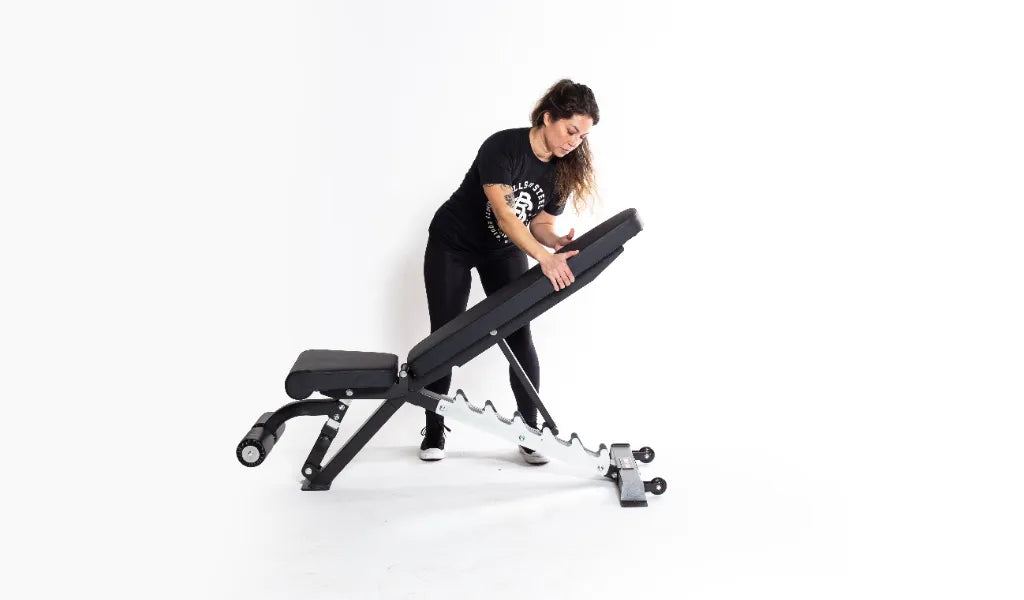
Image Source: bellsofsteel.us
The Versatility of the Adjustable Bench
The adjustable bench is a marvel of fitness engineering. Unlike a static flat bench, its ability to change angles unlocks a vast array of training possibilities. This adaptability allows you to target different muscle groups with precision and introduce variety into your routine, preventing plateaus and keeping your workouts engaging.
Why Adjusting Matters
- Muscle Targeting: Different angles emphasize different parts of a muscle. For example, an incline chest press targets the upper chest more than a flat press.
- Range of Motion: Proper adjustment ensures you can achieve a full, safe range of motion for each exercise.
- Stability: A correctly adjusted bench provides a stable platform, crucial for lifting heavier weights and maintaining form.
- Injury Prevention: Incorrect bench settings can lead to shoulder impingement, back strain, or other injuries.
Decoding the Adjustable Bench: Key Settings
Most adjustable bench models share common features that allow for modification. Familiarizing yourself with these will be your first step towards mastering your exercise bench angle.
Backrest Adjustments
This is the most common adjustment. Typically, you’ll find a pin or lever system that allows you to raise or lower the backrest to various angles.
-
Flat Bench Setting: This is the foundational setting. The backrest is completely horizontal. It’s essential for exercises like the standard bench press setup, dumbbell flyes, and many core exercises.
- How to Adjust: Locate the pin or lever at the base of the backrest. Pull it out or slide it, then reposition the backrest to the flat position. Ensure the pin locks securely.
- Expert Tip: Always double-check that the backrest is firmly locked in place before you begin. Give it a gentle push and pull to confirm it won’t shift.
-
Incline Bench Setting: This setting elevates the backrest, creating an upward angle. This is fantastic for targeting the upper chest, shoulders, and triceps.
- How to Adjust: Lift the backrest and select your desired angle by aligning the pin with the corresponding hole in the support bracket. Common incline angles range from 15 to 75 degrees.
- Expert Tip: For chest exercises like the incline dumbbell press, a good incline bench setting is typically between 30-45 degrees. Steeper angles engage the shoulders more. Experiment to find what feels best and targets your intended muscles.
-
Decline Bench Position: Some benches offer a decline bench position, where the seat is lower than the backrest. This can be used for lower chest development and abdominal exercises.
- How to Adjust: This often involves adjusting both the seat and the backrest. You might need to adjust a separate pin for the seat or detach and reattach the backrest to a lower slot.
- Expert Tip: Decline exercises can be intense. Start with lighter weights and focus on controlled movements. For abdominal work, the decline position provides increased resistance.
Seat Adjustments
Some advanced adjustable bench models also allow you to adjust the seat. This can be useful for stabilizing yourself, especially during incline exercises, and for customizing the gym bench height for leg exercises.
- How to Adjust: Similar to the backrest, there’s usually a pin or lever system to adjust the seat angle or length.
- Expert Tip: For incline work, slightly angling the seat upward can provide better support and prevent you from sliding backward.
Optimizing Your Bench Setup for Common Exercises
Knowing how to adjust is one thing; knowing why and when to adjust is another. Let’s dive into specific exercises and their ideal weight bench settings.
Bench Press Variations
The bench press setup is perhaps the most common use of the adjustable bench.
Flat Bench Press
- Bench Setting: Flat.
- Why: This provides the most balanced resistance across the pectoralis major, hitting the mid-chest effectively.
- Setup Tips:
- Ensure the bench is stable and not wobbly.
- Adjust the bench height so your feet are firmly planted on the floor when lying down. Your knees should be bent at roughly 90 degrees.
- Position yourself so your eyes are directly under the barbell.
- Grip the bar slightly wider than shoulder-width.
Incline Bench Press
- Bench Setting: Incline (30-45 degrees typically).
- Why: This angle shifts the emphasis to the clavicular head of the pectoralis major (upper chest).
- Setup Tips:
- Set the exercise bench angle appropriately. Too steep, and your shoulders will take over; too shallow, and it’s almost like a flat press.
- Ensure your feet are planted firmly for stability.
- You might find it helpful to have a spotter, especially when pushing heavier weight.
Decline Bench Press
- Bench Setting: Decline (slight decline is usually sufficient).
- Why: This targets the sternal head of the pectoralis major (lower chest).
- Setup Tips:
- Be cautious with the angle; a slight decline is often enough.
- Ensure you have a secure grip and that your body is stable on the bench.
- This exercise is often performed with dumbbells for greater control.
Dumbbell Bench Exercises
The adjustable bench is a playground for dumbbell bench exercises.
Flat Dumbbell Press
- Bench Setting: Flat.
- Why: Offers a greater range of motion and independent arm movement compared to the barbell bench press, allowing for better muscle activation and correction of strength imbalances.
- Setup Tips:
- Sit on the bench, place dumbbells on your thighs.
- Kick the dumbbells up and back as you lie down, supporting them with your knees.
- Press them straight up, then slowly lower them with control, feeling a stretch in your chest.
Incline Dumbbell Press
- Bench Setting: Incline (30-45 degrees).
- Why: Excellent for upper chest development. The independent arm movement allows for a deep stretch and contraction.
- Setup Tips:
- Similar setup to the incline barbell press, focusing on planting your feet and achieving the right exercise bench angle.
- Control the descent; don’t let the dumbbells drop quickly.
Flat Dumbbell Flyes
- Bench Setting: Flat.
- Why: Primarily isolates the chest muscles, focusing on the stretch and contraction.
- Setup Tips:
- Lie flat with dumbbells above your chest, arms slightly bent.
- Lower the dumbbells out to the sides in a wide arc, keeping a slight bend in your elbows.
- Imagine hugging a large tree as you bring them back up.
Incline Dumbbell Flyes
- Bench Setting: Incline (30-45 degrees).
- Why: Targets the upper chest.
- Setup Tips:
- Maintain the slight bend in your elbows throughout the movement.
- Focus on squeezing your chest muscles at the top.
Decline Dumbbell Press/Flyes
- Bench Setting: Decline.
- Why: Targets the lower chest.
- Setup Tips:
- Keep the movement controlled and avoid overextending.
Shoulder and Triceps Exercises
The adjustable bench isn’t just for chest!
Seated Overhead Press (with Dumbbells)
- Bench Setting: Upright (90 degrees).
- Why: Provides back support, allowing you to focus on your shoulders.
- Setup Tips:
- Ensure the backrest is vertical.
- Sit with your back firmly against the support.
- Press the dumbbells straight overhead.
Incline Dumbbell Triceps Extension
- Bench Setting: Incline (typically 45-60 degrees).
- Why: This angle can offer a better stretch on the triceps long head.
- Setup Tips:
- Lie back with the dumbbell(s) held overhead.
- Lower the dumbbell(s) behind your head by bending your elbows, keeping your upper arms relatively stationary.
- Extend your arms back up, squeezing your triceps.
Core Exercises
-
Decline Crunches:
- Bench Setting: Decline.
- Why: The decline angle increases the resistance for abdominal exercises.
- Setup Tips: Secure your feet, lift your torso towards your knees, focusing on contracting your abs.
-
Russian Twists (seated):
- Bench Setting: Can be done on a flat or slightly inclined bench.
- Why: Holding onto the bench provides stability while performing rotational movements.
- Setup Tips: Sit on the edge, lean back slightly, and twist your torso from side to side, holding a weight if desired.
Fine-Tuning Your Gym Bench Height
While the adjustable bench offers angle variations, the overall gym bench height also plays a role. Generally, benches are standardized, but understanding how your body interacts with it is key.
- Foot Placement: Your feet should be flat on the floor, providing a stable base. If they don’t reach, you might need to adjust your position on the bench or find a bench that accommodates your height.
- Hip Alignment: When lying flat, your hips should naturally align with the bench without feeling overly stretched or compressed.
- Reach: Ensure you can comfortably reach the barbell or dumbbells without overextending or straining.
Common Mistakes to Avoid
Even with the right knowledge, mistakes can happen. Here are some to watch out for when adjusting your adjustable bench:
- Not Locking Pins Securely: The most dangerous mistake. Always ensure adjustment pins are fully engaged.
- Too Steep an Incline: Over-reliance on steep inclines can shift focus from chest to shoulders.
- Not Using Your Feet for Support: Unplanted feet lead to instability and can compromise your lift.
- Ignoring Body Cues: If an angle feels wrong or causes pain, adjust it. Your body is the best indicator.
- Over-Complicating Adjustments: Start with basic settings and gradually explore more complex ones as you gain experience.
Table: Common Bench Adjustments and Their Primary Uses
| Bench Setting | Primary Muscle Focus | Key Exercises | Notes |
|---|---|---|---|
| Flat | Mid-Chest, Triceps, Shoulders | Flat Bench Press, Flat Dumbbell Press, Dumbbell Flyes | Foundation for most pressing movements. |
| Incline (30-45°) | Upper Chest, Front Deltoids, Triceps | Incline Bench Press, Incline Dumbbell Press, Incline Flyes | Targets the clavicular head of the pectoralis major. |
| Incline (45-60°) | Shoulders, Upper Chest, Triceps | Steeper Incline Press, Shoulder Press variations | Greater emphasis on anterior deltoids. |
| Decline (Slight) | Lower Chest, Triceps | Decline Bench Press, Decline Dumbbell Press | Targets the sternal head of the pectoralis major. |
| Upright (90°) | Shoulders, Triceps (when seated) | Seated Overhead Press, Bicep Curls | Provides crucial back support for vertical pressing movements. |
| Flat with Feet Elevated | Core, Lower Chest (less common) | Decline Push-ups (bodyweight), some core exercises | Changes leverage for bodyweight exercises. |
Enhancing Your Workout with Proper Bench Settings
Mastering weight bench settings is more than just selecting an angle; it’s about optimizing your biomechanics for each specific lift. By paying attention to these details, you can unlock new levels of strength, muscle growth, and training efficiency.
Progressive Overload and Bench Adjustments
As you get stronger, you’ll naturally want to increase the weight. However, sometimes the key to continued progress lies in how you adjust your bench.
- Varying Angles: If your flat bench press has stalled, try a slightly different incline or even decline for a period. This can shock the muscles in new ways.
- Range of Motion: Ensure your adjustments allow for a full, safe range of motion. Sometimes, a slight tweak to the exercise bench angle can allow you to lift heavier or more effectively.
Injury Prevention Through Smart Adjustments
The adjustable bench is a tool, and like any tool, it can be misused.
- Shoulder Health: For shoulder presses, ensure the bench isn’t too steep. For chest presses, avoid extreme widths or depths that strain your shoulders.
- Lower Back Support: When performing exercises that involve lying on the bench, ensure your lower back has adequate support. This is where a well-adjusted backrest or even a slight seat incline can help.
- Listen to Your Body: If a particular weight bench setting causes discomfort, stop and readjust. Pain is a signal that something is wrong.
Frequently Asked Questions (FAQ)
Q1: What is the standard angle for an incline bench press?
A1: The standard and most common incline bench setting for chest exercises is typically between 30 and 45 degrees. This range effectively targets the upper chest without overemphasizing the anterior deltoids (front shoulders). Some people may go up to 60 degrees, but this increases shoulder involvement significantly.
Q2: Can I use a flat bench for all dumbbell exercises?
A2: While a flat bench is versatile for many dumbbell bench exercises, using an adjustable bench allows you to target muscles more effectively. For example, incline dumbbell presses are crucial for upper chest development, and decline variations can target the lower chest.
Q3: How do I know if my bench is set at the right height?
A3: When lying on the bench, your feet should be able to rest flat on the floor with your knees bent at roughly a 90-degree angle. This provides a stable base. If your feet don’t reach or your knees are too high, the gym bench height might not be ideal for your stature, or you may need to adjust your position on the bench.
Q4: What is the purpose of a decline bench position?
A4: The decline bench position is used to emphasize the lower portion of the chest muscles (sternal head of the pectoralis major). It also offers increased resistance for abdominal exercises like decline crunches.
Q5: How often should I change my weight bench settings?
A5: You should change your weight bench settings based on the specific exercise you are performing. For instance, you’ll use a flat bench for flat presses and an inclined bench for incline presses. Within a single workout, you might switch between flat and incline settings multiple times. Periodically changing the angles you use for variations of exercises can also help break through plateaus.
Q6: What’s the difference between an adjustable bench and a flat bench?
A6: A flat bench is stationary and can only be used in a horizontal position. An adjustable bench is a more versatile piece of gym equipment adjustment that allows the backrest (and sometimes the seat) to be moved to various angles, from flat to incline, and sometimes decline. This adjustability opens up a wider range of exercises and muscle targeting options.
By now, you should feel confident in your ability to adjust any adjustable bench like a pro. Remember, consistency and proper form are key. Take the time to set up correctly before each set, and you’ll reap the rewards of a safer, more effective, and more varied workout. Happy lifting!