
Thinking about opening your own gym? The big question on everyone’s mind is, “How much does it cost to start a gym?” The answer varies a lot, but you can generally expect to spend anywhere from $10,000 for a very small, specialized studio to over $1 million for a large, full-service fitness center. This blog post will break down all the costs involved so you can build a realistic gym startup budget.
Starting a gym is an exciting venture. It’s more than just a business; it’s about building a community and helping people achieve their health goals. But before you buy your first dumbbell, you need a solid plan and a clear picture of the investment required. We’ll dive deep into gym startup costs, from the initial investment to ongoing expenses, helping you make informed decisions.
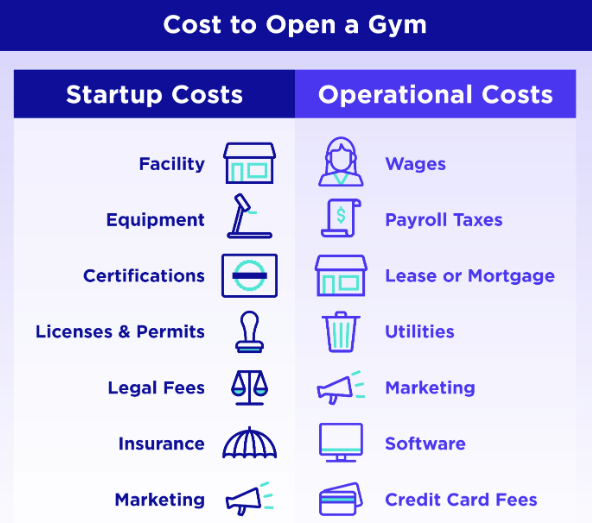
Image Source: wod.guru
Fathoming Your Initial Investment: The Big Picture
The initial investment for a gym is a significant hurdle. This is the money you’ll need to get the doors open. It covers everything from securing a location to buying the necessary equipment. A well-thought-out business plan for gym operations is crucial here, as it will guide your spending and help you secure funding.
Securing Your Space: Gym Space Rental Costs and Beyond
The location of your gym is paramount. You need a space that’s accessible to your target market, has enough room for your equipment and classes, and fits your brand.
Leasehold Improvements
Most commercial spaces require some work to be gym-ready. This includes painting, flooring, lighting, and potentially building out locker rooms and bathrooms.
- Basic renovations: Can range from $5,000 to $25,000.
- Significant build-outs: Including new walls, plumbing, and electrical work, can cost $50,000 to $200,000 or more.
Gym Space Rental Costs
This is a recurring monthly expense but also an initial one for security deposits and the first month’s rent.
- Rent: Varies wildly by location. Major cities can see rents of $20 to $60+ per square foot annually, while smaller towns might be $10 to $25 per square foot.
- Security Deposit: Typically one to three months’ rent.
- Lease Negotiation: Aim for a lease term that gives you stability but isn’t too long if you’re unsure of your long-term success.
Buying vs. Leasing
While buying a property offers equity, it significantly increases the upfront cost. Leasing is more common for startups, allowing for more flexibility.
The Heart of the Gym: Gym Equipment Pricing
This is often the largest chunk of your gym startup budget. The type and quantity of equipment you need depend on your gym’s focus.
Cardio Equipment
Treadmills, ellipticals, stationary bikes, and rowers are staples.
- New: A commercial-grade treadmill can cost $2,000 to $8,000. An elliptical can be $1,500 to $6,000.
- Used: You can save 30-60% by buying used, but ensure it’s well-maintained.
Strength Training Equipment
Free weights (dumbbells, barbells, plates), weight machines, and resistance bands are essential.
- Dumbbell sets: A full set from 5 lbs to 100 lbs can cost $2,000 to $5,000.
- Weight machines: Each machine can cost $1,000 to $5,000, depending on its complexity.
- Barbells and plates: A set of Olympic bars and plates can be $500 to $1,500.
Functional Training Equipment
Kettlebells, medicine balls, resistance bands, and open space for bodyweight exercises.
- Kettlebells: Cost $20 to $100 each, depending on weight.
- Medicine balls: $30 to $80 each.
Specialty Equipment
Depending on your niche, you might need rowing machines, squat racks, lifting platforms, or specific machines for sports training.
- Power racks/Squat racks: $500 to $2,000 each.
- Plate-loaded machines: $1,000 to $3,000 each.
Gym equipment pricing Summary Table
| Equipment Type | Estimated Cost (New) | Estimated Cost (Used) | Notes |
|---|---|---|---|
| Treadmills | $2,000 – $8,000 | $1,000 – $4,000 | Commercial grade is essential |
| Ellipticals | $1,500 – $6,000 | $750 – $3,000 | Consider variety in models |
| Stationary Bikes | $500 – $3,000 | $250 – $1,500 | Recumbent vs. upright vs. spin |
| Weight Machines | $1,000 – $5,000 | $500 – $2,500 | Compound movement machines are popular |
| Dumbbells (full set) | $2,000 – $5,000 | $1,000 – $2,500 | Durability and grip are key |
| Barbells & Plates | $500 – $1,500 | $250 – $750 | Olympic sets are standard |
| Power Racks/Squat Racks | $500 – $2,000 | $250 – $1,000 | Crucial for free weight training |
| Functional Fitness Gear | $500 – $2,000 | $250 – $1,000 | Kettlebells, bands, medicine balls, battle ropes |
Total Equipment Investment: For a moderately sized gym with a good mix of cardio and strength equipment, expect to spend between $20,000 and $100,000+.
Technology and Software
You’ll need systems to manage your business effectively.
- Membership Management Software: Handles billing, scheduling, and member communication. Costs can range from $30 to $200+ per month, depending on features and member volume.
- Point of Sale (POS) System: For selling merchandise, supplements, or services. A basic system can cost a few hundred dollars upfront, plus transaction fees.
- Audio/Visual Systems: Music systems, TVs for ambiance or workout videos. $500 to $3,000+.
Initial Marketing and Branding
Getting the word out is critical.
- Website Development: $500 to $5,000+.
- Logo and Branding: $200 to $2,000+.
- Grand Opening Promotion: $500 to $5,000+.
Licenses, Permits, and Insurance
These are non-negotiable.
- Business Licenses: Vary by municipality, often a few hundred dollars.
- Health Permits: May be required depending on your services.
- Liability Insurance: Crucial to protect your business. Expect $1,000 to $5,000+ annually, depending on coverage.
Working Capital
You need cash reserves to cover expenses before your revenue streams are stable. This should ideally cover 3-6 months of operating expenses.
Comprehending Franchise Fees vs. Independent Gyms
The decision to go independent or join a franchise significantly impacts your gym startup costs.
Gym Franchise Fees
Franchises offer a proven business model, brand recognition, and ongoing support. However, they come with upfront franchise fees and ongoing royalties.
- Franchise Fee: This is a one-time payment to join the franchise. It can range from $20,000 to $100,000+, depending on the brand.
- Royalty Fees: A percentage of your gross revenue paid to the franchisor, typically 5-10%.
- Marketing Fees: Often a percentage of revenue or a flat fee for national marketing campaigns.
- Total Franchise Investment: A franchise can easily require an initial investment of $100,000 to $500,000+, sometimes much more. For example, a personal training studio costs under a franchise model can be higher due to the established brand.
Independent Gyms
Starting an independent gym gives you complete control and avoids royalty fees. However, you are responsible for developing everything from scratch.
- Lower Initial Fees: No franchise fees or royalties.
- Higher Personal Risk/Responsibility: You build your own brand, systems, and marketing strategies.
Deciphering Operational Expenses: The Ongoing Costs
Once your gym is open, the expenses don’t stop. These are the monthly costs to keep your business running.
Staff Salaries
- Gym Managers: $30,000 to $60,000+ annually.
- Personal Trainers: Often paid hourly or per session ($20-$60+ per hour). Some may work as independent contractors.
- Front Desk Staff/Customer Service: $25,000 to $40,000+ annually.
- Cleaning Staff: Can be outsourced for $500 to $2,000+ per month.
Utilities
Electricity, water, gas, and internet. These can be significant, especially with heavy equipment usage and climate control. Budget $500 to $3,000+ per month.
Marketing and Advertising
Ongoing efforts to attract and retain members.
- Digital Marketing: Social media ads, search engine optimization (SEO).
- Local Advertising: Flyers, partnerships with local businesses.
- Member Referral Programs.
Equipment Maintenance and Replacement
Machines wear out. Regular maintenance prevents costly breakdowns.
- Preventative Maintenance: Budget 1-2% of equipment cost annually.
- Replacement: Factor in replacing older or broken equipment over time.
Rent and Property Taxes
Your largest fixed monthly cost.
Insurance Premiums
Ongoing payments for your business insurance.
Software Subscriptions
Monthly or annual fees for membership management and other business software.
Supplies
Cleaning supplies, toiletries for locker rooms, office supplies.
Gym operational expenses Summary Table
| Expense Category | Estimated Monthly Cost | Notes |
|---|---|---|
| Rent/Lease | $2,000 – $20,000+ | Highly location-dependent |
| Utilities | $500 – $3,000+ | Depends on size, equipment, and usage |
| Staff Salaries | $5,000 – $30,000+ | Varies with staff size and roles |
| Marketing & Advertising | $300 – $2,000+ | Essential for growth |
| Equipment Maintenance | $200 – $1,000+ | Proactive care saves money |
| Insurance | $100 – $500+ | Crucial for protection |
| Software Subscriptions | $50 – $300+ | For management, scheduling, and billing |
| Cleaning & Supplies | $100 – $500+ | Maintaining a clean environment is vital |
| Loan Repayments | Varies | If financing was used for startup costs |
| Total Monthly Expenses | $8,250 – $67,300+ | This is a broad range; specific figures are key |
Specific Niche Considerations: Personal Training Studio Costs and Fitness Studio Investment
The type of gym you open will greatly influence your budget.
Personal Training Studio Costs
These often require less equipment than a full-service gym but focus on quality.
- Smaller Space: You might only need 500-1500 sq ft.
- Specialized Equipment: High-quality racks, benches, dumbbells, kettlebells, and perhaps some cardio.
- Trainer Costs: You might be the primary trainer, or you’ll hire a few. Personal training studio costs can be lower if you’re a solo operator.
- Initial Investment: Could range from $15,000 to $75,000.
Boutique Fitness Studios (e.g., Spin, Yoga, CrossFit)
These are highly specialized and can have unique equipment needs.
- Spin Studio: Requires a significant investment in quality spin bikes ($1,000-$3,000 each). A studio with 20-30 bikes means $20,000-$90,000 just for bikes.
- Yoga Studio: Primarily needs mats, blocks, straps, and a calming atmosphere. Fitness studio investment here is more about ambiance and the instructor’s quality. Costs can be $5,000-$25,000 initially.
- CrossFit Box: Needs specialized barbells, bumper plates, pull-up rigs, medicine balls, and open floor space. This can be equipment-intensive, with costs ranging from $25,000 to $100,000+.
Setting Your Gym Membership Pricing
Your pricing strategy is crucial for revenue generation and covering your gym operational expenses.
Factors Influencing Gym Membership Pricing
- Location: Prime real estate commands higher prices.
- Amenities: Pools, saunas, group classes, childcare.
- Competition: What are other gyms in your area charging?
- Target Market: Are you aiming for budget-conscious individuals or a premium clientele?
- Your Niche: Specialized studios might command higher prices.
Common Membership Models
- Monthly Unlimited: The most popular, typically $40-$100+ per month.
- Annual Contracts: Offer a discount for longer commitments.
- Class Packs: For boutique studios, e.g., 10 classes for $150-$250.
- Personal Training Packages: Vary widely based on the number of sessions and trainer experience.
- Drop-in Rates: Higher per-visit cost, typically $15-$30.
Creating Your Gym Startup Budget: A Step-by-Step Approach
- Define Your Concept: What kind of gym? Who is your target audience?
- Market Research: Analyze competitors, demographics, and local real estate.
- Develop a Detailed Business Plan: This is your roadmap. Include financial projections.
- List All Startup Expenses: Equipment, renovations, licenses, initial marketing, working capital.
- Estimate Ongoing Operational Expenses: Rent, utilities, salaries, marketing, maintenance.
- Project Revenue: Based on your gym membership pricing and expected member numbers.
- Determine Funding Needs: How much capital do you need to raise?
- Secure Funding: Loans, investors, personal savings.
Frequently Asked Questions (FAQ)
How much does it cost to start a small gym?
A small, specialized gym or personal training studio can cost anywhere from $10,000 to $50,000, focusing on essential equipment and a limited space.
Can I start a gym with no money?
While it’s extremely difficult, some people start by offering mobile training or working out of a park, building clients and saving money for a physical location. However, to open a dedicated facility, some capital is always required.
What is the average cost to rent gym space?
Gym space rental costs vary dramatically by location, but expect anywhere from $10 to $60+ per square foot per year, plus potential build-out expenses.
How much should I budget for gym equipment?
This is one of the largest expenses. For a mid-sized gym, budget $20,000 to $100,000+ for new equipment. Buying used can significantly reduce this cost.
What are the biggest hidden costs when starting a gym?
Hidden costs can include unexpected renovation needs, higher-than-anticipated utility bills, equipment repairs, and the need for more marketing than planned. Always buffer your budget.
Is a gym franchise a good investment?
A gym franchise can be a good investment if you choose a reputable brand with a solid business model and support system. However, the gym franchise fees and ongoing royalties add to your overall costs.
Starting a gym is a marathon, not a sprint. Thorough research, a robust business plan for gym operations, and a realistic gym startup budget are your most important tools for success. By carefully uncovering and planning for all gym startup costs and ongoing gym operational expenses, you can build a thriving fitness business.