
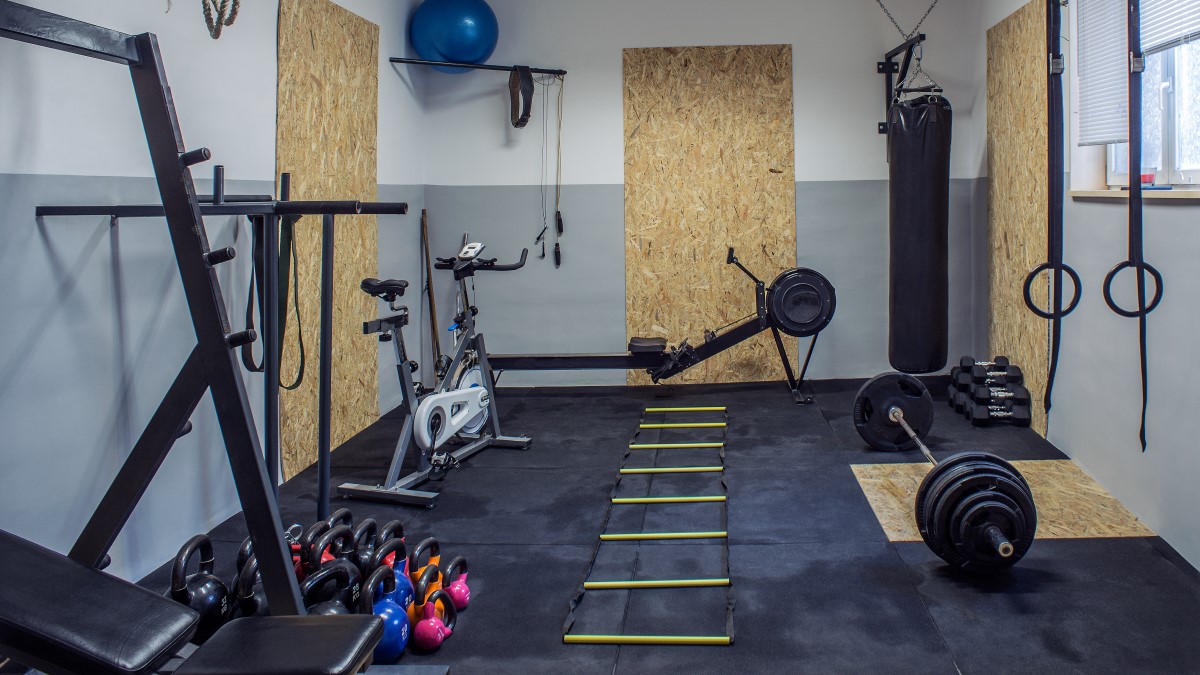
Image Source: www.tworepcave.com
Plan Your Gym: How Much Space Do You Need For A Home Gym?
How much space do you need for a home gym? The space you need for a home gym varies greatly. It depends on your fitness goals and the gear you want. A tiny spot might work for simple yoga. A big garage can fit many machines. Think about your goals first. Then, pick your gear. This helps you figure out the best home gym dimensions for your space.
A home gym can be a small corner or a whole room. The size often comes down to your fitness style. Do you love lifting heavy weights? Or do you prefer steady cardio? Maybe you want a mix of both. Each choice needs a different amount of room. Knowing your fitness path helps you find the right ideal gym room size. Let’s explore how much space different workout types and gear need.
Grasping Equipment Footprints
Every piece of workout gear takes up space. This is called its “footprint.” But you also need room around the gear. This extra space lets you move safely. It helps you get on and off machines. It also ensures you can lift weights without hitting walls.
Cardio Equipment Needs
Cardio gear is often bulky. It needs floor space for the machine itself. Then, you need more room for safe use.
Treadmill Footprint
A treadmill footprint is often larger than you think. A typical home treadmill is about 6 to 7 feet long and 3 feet wide. But you need more room.
* Length: Add at least 2 feet behind the treadmill. This is for safety if you slip or fall.
* Width: Add about 1 foot on each side. This lets you step on and off easily. It also gives you room to move your arms.
So, for a treadmill, you might need an area of about 9 feet long by 5 feet wide. Some models can fold up. This helps save floor space when not in use. But remember, you still need the full footprint when you are running on it.
Other Cardio Gear Space
Other cardio equipment space also needs careful thought.
* Elliptical: These machines are often long. They can be 6 to 7 feet long and 2 to 3 feet wide. You need room to step on and off. You also need space for the arm handles to swing. A 7×4 foot area is a good estimate.
* Stationary Bike: Upright and spin bikes are smaller. They usually need about 4 to 5 feet long and 2 to 3 feet wide. Recumbent bikes are longer. They might need 5 to 6 feet long and 2 to 3 feet wide.
* Rowing Machine: Rowers are long and narrow. They can be 7 to 8 feet long and 2 to 3 feet wide. You need this full length for the sliding seat. Some rowers fold. This helps with storage.
Table: Common Cardio Equipment Space
| Equipment Type | Footprint (Approx.) | Recommended Usable Space (Approx.) | Key Considerations |
|---|---|---|---|
| Treadmill | 6-7 ft L x 3 ft W | 9 ft L x 5 ft W | 2 ft clear space behind, 1 ft on sides for safety. |
| Elliptical | 6-7 ft L x 2-3 ft W | 7 ft L x 4 ft W | Room for arm swing, safe entry/exit. |
| Stationary Bike | 4-5 ft L x 2-3 ft W | 5 ft L x 4 ft W | Less side room needed, but safe mounting space matters. |
| Recumbent Bike | 5-6 ft L x 2-3 ft W | 6 ft L x 4 ft W | Longer frame requires more length. |
| Rowing Machine | 7-8 ft L x 2-3 ft W | 8 ft L x 4 ft W | Needs full length for slide, often folds for storage. |
| Stair Climber/Stepper | 4-5 ft L x 3 ft W | 6 ft L x 5 ft W | Taller unit, ensure ceiling clearance. |
Weightlifting Area Size
Free weights and weight machines need a dedicated weightlifting area size. This area must be safe and big enough for full range of motion.
Free Weights (Dumbbells, Barbells, Benches)
- Dumbbells: You need floor space for the rack. Then, you need enough clear space to pick them up and use them. This is usually about a 4×4 foot clear zone.
- Weight Bench: A flat or adjustable bench is a must. A bench is about 4-6 feet long and 1-2 feet wide. When you use it, you need space for your body. You also need room for movement. A 6×3 foot area is a good start.
- Barbell and Rack: This is where space truly matters. A standard barbell is 7 feet long. When it’s in a squat rack or power cage, you need room at each end. You also need space to step in and out of the rack.
- A squat rack or power cage is about 4-5 feet deep and 4-6 feet wide.
- You need at least 2-3 feet of clear space in front of the rack. This is for exercises like squats or bench presses.
- You also need about 2 feet on each side of the barbell. This allows for loading plates safely.
- So, a minimum space for a barbell and rack is about 7-8 feet wide and 7-8 feet deep.
Weight Machines
Machines like leg presses or cable crossovers are very space-hungry. Each machine has a fixed footprint. You cannot move much around it. They also need extra room for the weight stacks and moving parts. Check the exact dimensions of the machine you want. Then add 1-2 feet of clear space around it for safe use.
Table: Common Weightlifting Equipment Space
| Equipment Type | Footprint (Approx.) | Recommended Usable Space (Approx.) | Key Considerations |
|---|---|---|---|
| Dumbbell Rack | 2-4 ft L x 1-2 ft W | 4 ft L x 4 ft W | Clear space to pick up and use weights safely. |
| Weight Bench (Flat/Adj.) | 4-6 ft L x 1-2 ft W | 6 ft L x 3 ft W | Room for body and full range of motion. |
| Squat Rack/Power Cage | 4-6 ft L x 4-5 ft W | 8 ft L x 8 ft W | Must have 2-3 ft clear in front, 2 ft on sides of bar. |
| Barbell (Olympic) | 7 ft L | Included with rack space | Ensure enough width for the bar within the rack area. |
| Plate Tree/Storage | 2 ft L x 2 ft W | 3 ft L x 3 ft W | Easily accessible, doesn’t block movement. |
| Cable Machine (Dual) | 6-8 ft L x 3-4 ft W | 8 ft L x 6 ft W | Large footprint, needs room for cable pulls. |
| Leg Press Machine | 6-7 ft L x 3-4 ft W | 8 ft L x 5 ft W | Very specific motion path, check height for ceiling. |
Functional Fitness Area Size
A functional fitness area size is more about open space than specific gear. This space is for bodyweight workouts, yoga, or using small items.
* Yoga/Mat Work: A yoga mat is about 6 feet long and 2 feet wide. You need enough space to stretch your arms and legs. An 8×4 foot area is good for one person.
* Resistance Bands/Kettlebells/Medicine Balls: These small items need floor space to move around. You might swing a kettlebell or throw a medicine ball. A 6×6 foot clear area is usually enough for a wide range of movements.
* Plyometrics/Jumping: If you plan to jump or do box jumps, you need open floor space. You also need high ceilings. A 10×10 foot area is a safe bet for dynamic movements.
This area is often multi-purpose. It can double as your warm-up or cool-down zone. It gives you room to move freely without bumping into gear or walls.
Selecting Your Ideal Gym Room Size
The ideal gym room size really depends on your goals. We can group home gyms into three main types. Each type needs a different amount of space.
1. Basic Home Gym (Small Space)
This is for quick workouts, light cardio, or bodyweight exercises.
* Goals: Stay active, do yoga, light cardio, strength with bands/dumbbells.
* Gear: Yoga mat, resistance bands, light dumbbells, jump rope. Maybe a foldable bike.
* Minimum Space Needed: About 50-80 square feet. This could be a 7×7 foot to an 8×10 foot area.
* Best Location: Corner of a bedroom, living room, small spare room, or a large closet. This is a perfect small home gym layout.
2. Mid-Range Home Gym (Medium Space)
This type of gym adds more dedicated machines.
* Goals: Regular cardio, full-body strength training, some free weights.
* Gear: Treadmill or elliptical, adjustable bench, a set of dumbbells, maybe a pull-up bar.
* Minimum Space Needed: About 100-150 square feet. This could be a 10×10 foot to a 10×15 foot room.
* Best Location: A spare bedroom, a portion of a garage, or a dedicated area in a basement.
3. Advanced Home Gym (Large Space)
This is for serious lifters or those who want a full gym experience.
* Goals: Heavy lifting, powerlifting, varied cardio, Olympic lifts, full machine circuit.
* Gear: Power rack or squat rack, Olympic barbell and plates, full dumbbell set, multiple cardio machines, specialized benches, potentially a cable machine.
* Minimum Space Needed: 200+ square feet. This could be a 15×15 foot room or larger.
* Best Location: A large basement gym space or dedicated garage gym dimensions. These often offer the high ceilings needed.
Table: Ideal Home Gym Room Sizes by Type
| Gym Type | Fitness Goals | Key Equipment | Recommended Minimum Space (Sq Ft) | Example Room Size (Feet) | Best Location |
|---|---|---|---|---|---|
| Basic | Light cardio, bodyweight, flexibility | Yoga mat, bands, light dumbbells, jump rope | 50-80 | 7×7 to 8×10 | Corner, spare room, large closet |
| Mid-Range | Regular cardio, full-body strength, free weights | Treadmill/elliptical, adjustable bench, dumbbells | 100-150 | 10×10 to 10×15 | Spare bedroom, part of garage, basement |
| Advanced | Heavy lifting, varied cardio, full gym | Power rack, Olympic weights, multiple cardio, machines | 200+ | 15×15+ | Large basement, dedicated garage |
Space Considerations for Specific Locations
Where you put your home gym greatly affects its size and what you can do.
Small Home Gym Layout: Apartment Gym Essentials
If you live in a small space, like an apartment, you need smart ideas. A small home gym layout means thinking vertically and multi-purpose.
* Foldable Gear: Look for treadmills, bikes, or benches that fold.
* Compact Equipment: Adjustable dumbbells save a lot of space compared to a full rack. Resistance bands, jump ropes, and exercise balls are tiny.
* Wall-Mounted Options: A wall-mounted pull-up bar saves floor space. Wall-mounted storage for bands or mats is also great.
* Bodyweight Focus: Use your own body weight. Push-ups, squats, lunges, and planks need very little room.
* Doorway Gyms: Some systems hang in a doorway. They allow for many exercises in a small spot.
* Minimize Clutter: Keep your gym area neat. Store items away when not in use. This makes a small space feel bigger.
For apartment gym essentials, think light, quiet, and small. You might need to consider noise levels for your neighbors too. Floor mats can help with this.
Basement Gym Space
Basements are often great for home gyms. They are usually big. They also tend to be cooler.
* Pros:
* Large Footprint: Basements often offer a lot of basement gym space. This allows for bigger gear. You can have a dedicated weightlifting area size.
* Noise Dampening: The concrete floor and walls help keep noise down. This is good for heavy weights.
* Ceiling Height: Check your ceiling height. This is very important. For overhead presses, box jumps, or pull-ups, you need at least 8-9 feet. Some basements have lower ceilings. Measure before you buy a power rack.
* Cons:
* Moisture: Basements can be damp. This can harm equipment. You might need a dehumidifier.
* Flooring: Concrete is hard. You will need good gym flooring. Rubber mats protect both your floor and your gear. They also help with noise and impact.
* Lighting and Ventilation: Basements can be dark. Add good lights. Air can be stale. Think about fans or air purifiers.
Garage Gym Dimensions
Garages are another top choice for a home gym. They often have high ceilings and concrete floors.
* Pros:
* Generous Space: Garage gym dimensions are often very good. You can fit large items. Power racks, multiple cardio machines, and a functional fitness area size are all possible.
* High Ceilings: Most garages have high ceilings. This is perfect for overhead lifts and pull-ups.
* Durability: Concrete floors are tough. They can handle heavy weights. You still need protective flooring.
* Noise Tolerance: Noise is less of a problem here. You are usually not right next to living areas.
* Cons:
* Temperature Control: Garages can get very hot or cold. You might need a fan, heater, or even insulation.
* Dust/Dirt: Garages can be dusty. Keep your gym area clean.
* Vehicle Sharing: If you share the garage with a car, plan your layout carefully. You might need foldable or movable gear.
* Odors: Be aware of car exhaust or gas smells. Ensure good ventilation.
Core Factors When Mapping Out Your Gym Space
Beyond just equipment size, several other things play a big role in your gym’s layout.
Ceiling Height
This is critical.
* Minimum: 7 feet (84 inches) is the bare minimum for most cardio.
* Better: 8 feet (96 inches) allows for most standing exercises. You can do some overhead presses.
* Ideal: 9-10+ feet (108-120+ inches) is best. This lets you do overhead barbell presses, pull-ups on a rack, and jump training safely. If your ceiling is lower, you might need a special short power rack or pull-up bar.
Flooring
The right flooring protects your floor, your gear, and you.
* Protection: Rubber mats are best. They protect the floor from drops. They also reduce impact.
* Stability: Good flooring keeps gear from slipping. It provides a stable base for lifting.
* Noise: Rubber helps lessen noise from dropped weights. This is good for any home gym.
Ventilation and Air Quality
Working out makes you sweat. You need good air flow.
* Fans: Simple fans can help.
* Windows: Open windows for fresh air.
* HVAC: If possible, link your gym space to your home’s heating and cooling system.
* Air Purifiers: If dust or allergies are an issue, an air purifier helps.
Lighting
Good lighting is not just for looks. It’s for safety.
* Bright and Even: Avoid dim or shadowy spots. You need to see clearly.
* Natural Light: If possible, use natural light from windows.
* Fixtures: Bright LED lights are good. Make sure they are placed where they won’t be hit by equipment.
Storage Solutions
Even the most basic gym needs storage.
* Racks: For dumbbells, kettlebells, and plates.
* Shelves: For smaller items like bands, jump ropes, or yoga blocks.
* Pegboards: Great for hanging small accessories.
* Vertical Storage: Use walls for storage to free up floor space.
Good storage makes your gym safer and more enjoyable. It keeps your space tidy. This is especially key in a small home gym layout.
Drawing Your Home Gym Layout
Before you buy any gear, measure your space. Then, draw a plan.
1. Measure: Measure the length, width, and height of your chosen room or area.
2. Sketch: Draw your room on paper or use an online tool. Use graph paper for accuracy.
3. Add Doors and Windows: Mark where doors open and windows are. You don’t want to block them.
4. Place Equipment: Cut out paper shapes for each piece of gear. Use the “recommended usable space” numbers, not just the footprint. Move them around until you find a good flow.
5. Pathways: Make sure you have clear paths to move around. You should not have to step over gear.
6. Future Growth: Think about what you might add later. Leave room for a new machine or more weights. This helps future-proof your home gym dimensions.
A good layout means a safe and fun workout space. It makes sure you use your ideal gym room size well.
Final Thoughts on Space Planning
Planning your home gym space is a big step. It’s not just about fitting gear. It’s about creating a place that makes you want to work out. Think about how you move. Think about what exercises you love.
Remember, even small spaces can become great gyms. A small home gym layout can be very effective with smart choices. Large spaces like basement gym space or garage gym dimensions give you more freedom. But they also need more planning for flooring, lighting, and climate control.
By taking the time to plan, measure, and think about your needs, you can build a home gym that perfectly fits your fitness goals and your home.
Frequently Asked Questions (FAQ)
Q1: How much space do I need for a full home gym?
A1: For a full home gym with cardio machines, a power rack, and free weights, you typically need at least 200 square feet (e.g., a 14×14 ft room or larger). This allows for safe movement and space around all equipment.
Q2: Can I put a home gym in a small apartment?
A2: Yes, absolutely! You can create a great home gym in a small apartment. Focus on apartment gym essentials like foldable equipment, adjustable dumbbells, resistance bands, and bodyweight exercises. Use vertical space for storage. A 50-80 square foot area can be enough.
Q3: What’s the minimum ceiling height for a home gym?
A3: The absolute minimum is 7 feet (84 inches), but 8 feet (96 inches) is much better for most exercises. If you plan to do overhead presses, use a power rack, or perform jumps, you will need 9-10+ feet (108-120+ inches) of ceiling height for safety.
Q4: Is a garage a good place for a home gym?
A4: Yes, garages are excellent for home gyms. Garage gym dimensions are often generous, and they usually have high ceilings and durable concrete floors. You will need to consider temperature control, cleaning, and potentially floor protection.
Q5: How do I plan a `small home gym layout` to maximize space?
A5: To maximize a small space, choose multi-functional equipment (e.g., adjustable dumbbells), foldable machines, and wall-mounted storage. Focus on bodyweight exercises and compact items like resistance bands. Keep the area tidy and use vertical space.
Q6: What’s the ideal `weightlifting area size`?
A6: For a serious weightlifting area size with a power rack and barbell, you need at least 8×8 feet. This includes space for the rack itself, plus ample room in front and on the sides of the barbell for safe lifting and plate changes. For dumbbells and a bench, a 6×6 foot clear zone is a good starting point.
Q7: How much space do I need around a treadmill?
A7: Beyond the treadmill footprint itself, you need about 2 feet of clear space behind the treadmill and 1 foot on each side. This provides a safe zone in case you need to step off or if you fall.