
Deciding whether to hire a gym trainer is a big step toward achieving your fitness goals. But before you sign up, you’re likely wondering, “How much does a gym trainer cost?” The answer varies significantly, but generally, expect to pay anywhere from $40 to $100 per hour for a personal trainer. However, this is just a starting point, as many factors influence the final price. This guide will help you decipher the typical personal trainer prices and explore the various options available to fit your budget.
Hiring a personal trainer can be a game-changer for your fitness journey. They provide personalized workout plans, expert guidance, and motivation to help you reach your targets safely and effectively. But the cost of a personal trainer can seem daunting. Let’s break down the typical gym trainer rates and explore what you get for your money.
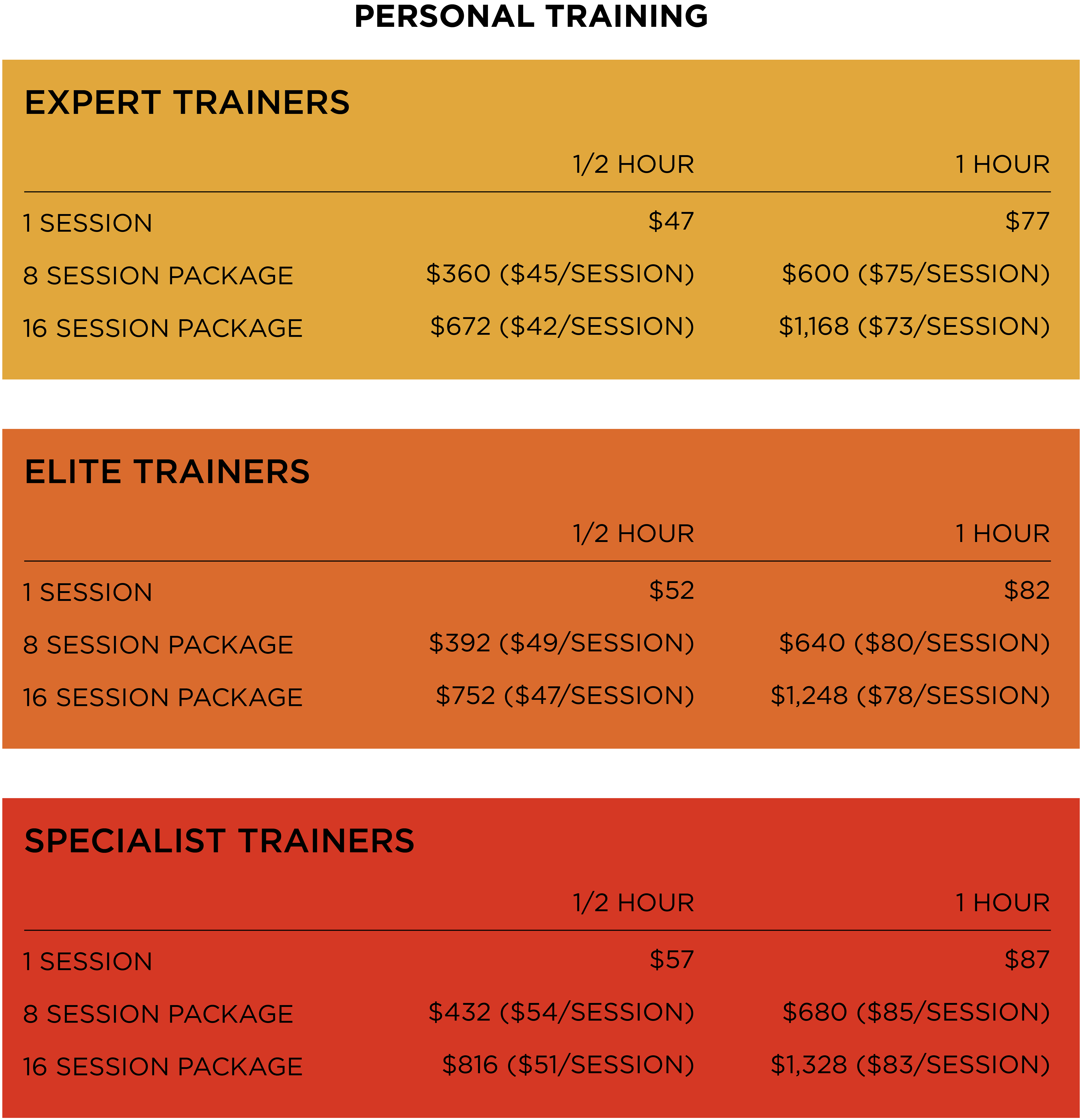
Image Source: www.chicagoathleticclubs.com
Factors Influencing Personal Trainer Prices
Several elements contribute to the overall cost of hiring a fitness trainer. Understanding these can help you make informed decisions and find the best value for your investment.
Trainer Experience and Qualifications
- Beginner Trainers: Those new to the profession or with less extensive certifications might charge less. Their rates reflect their developing client base and ongoing learning.
- Certified Trainers: Trainers holding recognized certifications from bodies like ACE (American Council on Exercise), NASM (National Academy of Sports Medicine), or NSCA (National Strength and Conditioning Association) often command higher rates. These certifications indicate a standardized level of knowledge and competence.
- Specialized Trainers: Trainers with expertise in specific areas, such as pre/post-natal fitness, corrective exercise, sports performance, or working with specific populations (e.g., seniors, individuals with disabilities), often charge more due to their niche skills.
- Years in the Industry: Seasoned trainers with a proven track record of success and a strong reputation typically have higher personal training packages. Their experience allows them to handle a wider range of client needs and achieve better results.
Location and Facility Type
- Geographic Location: Prices can vary dramatically based on the cost of living in your area. Trainers in major metropolitan areas with higher expenses often charge more than those in smaller towns or rural regions.
- Type of Gym:
- Large Chain Gyms: These often have standardized pricing structures. Some may include a certain number of sessions with a membership, while others offer sessions separately. The gym takes a percentage of the trainer’s earnings.
- Boutique Fitness Studios: Studios specializing in specific training styles (e.g., CrossFit, Pilates, yoga) or offering exclusive, high-end experiences may have higher trainer fees.
- Private Studios/Home Gyms: Independent trainers operating out of their own facilities or even clients’ homes might have different pricing models, potentially lower overhead leading to slightly different rates.
- Online Training: Virtual training sessions can often be more affordable than in-person sessions, as they eliminate travel costs and gym overhead for the trainer.
Session Length and Frequency
- Session Duration: Most personal training sessions are 60 minutes long. However, some trainers offer 30-minute or 45-minute sessions, which would naturally cost less per session.
- Frequency of Sessions: Hiring a trainer for multiple sessions per week will generally be more expensive overall than hiring them for one session a week. However, some trainers offer discounts for booking more frequent sessions.
Training Packages vs. Hourly Rates
- Hourly Trainer Cost: This is the most straightforward pricing method. You pay a set amount for each session. While flexible, it might be more expensive in the long run if you train consistently.
- Personal Training Packages: Many trainers offer discounted rates when you purchase multiple sessions in advance. These packages can range from 5 to 20 sessions or more. This encourages commitment and can offer significant savings per session. For example, a single session might be $80, but a package of 10 sessions could bring the per-session cost down to $70.
- Monthly Trainer Cost: Some trainers offer monthly retainer packages that might include a certain number of in-person sessions, online check-ins, and program design. This provides a predictable monthly expense.
Typical Gym Trainer Rates: A Breakdown
Let’s dive into what you can expect to pay based on different scenarios. These are general estimates and can vary widely.
Average Hourly Trainer Cost
- Entry-Level Trainers: $40 – $60 per hour
- Certified, Experienced Trainers: $60 – $90 per hour
- Highly Specialized or Celebrity Trainers: $100 – $200+ per hour
Cost of a Personal Trainer: Package Deals
When you look at personal training packages, you often get more for your money.
| Package Size | Average Cost Per Session | Total Package Cost (Approx.) |
|---|---|---|
| 5 Sessions | $70 – $90 | $350 – $450 |
| 10 Sessions | $60 – $80 | $600 – $800 |
| 20 Sessions | $50 – $75 | $1000 – $150 |
Note: These are estimates. Always inquire directly with the trainer or gym for their specific pricing.
Monthly Trainer Cost Options
A monthly trainer cost structure might look like this:
- Basic Package (e.g., 4 sessions/month): $240 – $360 ($60 – $90 per session)
- Standard Package (e.g., 8 sessions/month): $440 – $640 ($55 – $80 per session)
- Premium Package (e.g., 12 sessions/month + online support): $600 – $900+ ($50 – $75 per session)
These packages often bundle various services, making the monthly trainer cost more predictable and potentially offering better value per session.
Gym Membership with Trainer: Bundled Services
Many gyms offer bundled deals, combining a gym membership with trainer sessions.
- Pros:
- Convenience: Everything is in one place.
- Potential Savings: Gyms might offer discounts on personal training when you’re already a member.
- Access to Facilities: You get full use of the gym’s equipment and amenities.
- Cons:
- Less Flexibility: You’re tied to the gym’s trainers and their schedules.
- Potential for Hidden Fees: Ensure you understand all the costs associated with both the membership and the training.
- Trainer Turnover: Trainers at larger gyms can sometimes leave, meaning you might have to switch trainers mid-package.
The cost of a gym membership with a trainer can vary. A basic membership might cost $30-$70 per month, and adding a package of 8 personal training sessions could bring the total monthly bill to $300-$500 or more, depending on the trainer’s rates and the gym’s pricing.
What to Expect for Your Training Session Cost
When you pay for a training session cost, you’re not just paying for the time the trainer spends with you. You’re paying for:
- Personalized Program Design: The trainer creates a workout plan tailored to your specific goals, fitness level, and any physical limitations. This often happens outside of your paid session time.
- Expert Instruction and Form Correction: They guide you through exercises, ensuring proper technique to prevent injuries and maximize effectiveness.
- Motivation and Accountability: A good trainer pushes you beyond what you might do alone and keeps you accountable to your fitness commitments.
- Progress Tracking: They monitor your progress, adjust the plan as needed, and celebrate your successes.
- Nutritional Guidance (sometimes): Many trainers offer basic nutritional advice or can refer you to a registered dietitian for more in-depth plans.
- Education: They teach you about exercise physiology, biomechanics, and how to eventually train independently.
Exploring Different Trainer Fees and Options
Beyond the standard one-on-one sessions, there are other ways to access professional fitness guidance.
Group Personal Training
- What it is: Small group sessions (typically 3-6 people) where a trainer leads the workout.
- Cost: Significantly cheaper than one-on-one training, often ranging from $20-$40 per session.
- Pros: More affordable, still offers some personalized attention and motivation, good for social exercisers.
- Cons: Less individualized attention, pace might not be perfect for everyone in the group.
Online Personal Training
- What it is: Working with a trainer remotely via video calls, apps, and online platforms.
- Cost: Can be more affordable, with prices ranging from $100-$400 per month for structured programs and check-ins, or per-session rates similar to in-person.
- Pros: Highly convenient, often more budget-friendly, access to trainers worldwide.
- Cons: Requires self-discipline, less direct form correction, relies on technology.
Virtual Training Sessions
- What it is: Live, one-on-one sessions conducted via video conferencing.
- Cost: Generally less expensive than in-person sessions, perhaps $40-$70 per session.
- Pros: Convenience of home, still provides direct interaction and feedback.
- Cons: Requires a good internet connection and space to move.
Budgeting for a Personal Trainer
Figuring out how much you can realistically afford is key.
- Assess Your Financial Situation: Look at your monthly budget. How much can you allocate to fitness services without causing financial strain?
- Determine Your Goals and Needs: Are you training for a specific event, recovering from an injury, or aiming for general fitness? Your goals might dictate how often you need to see a trainer.
- Research Local Rates: Get quotes from several trainers or gyms in your area to compare personal trainer prices.
- Consider Package Deals: If you plan to train regularly, look into the savings offered by personal training packages.
- Prioritize Value Over Lowest Price: The cheapest trainer isn’t always the best. Look for a trainer whose expertise, communication style, and personality align with your needs. A trainer who helps you achieve your goals efficiently is worth the investment.
- Negotiate (Sometimes): In some cases, especially with independent trainers or if you’re committing to a large package, there might be room for negotiation.
Making the Most of Your Investment
Once you’ve hired a trainer, maximize your return on investment:
- Be Punctual and Prepared: Arrive on time for your sessions, having completed any pre-session tasks (like filling out a journal).
- Communicate Openly: Be honest about how you’re feeling, your energy levels, and any challenges you’re facing.
- Ask Questions: Don’t be afraid to ask for clarification on exercises or concepts. Learning is part of the process.
- Follow Through Between Sessions: Adhere to the workout plan and nutritional advice provided by your trainer. Consistency is crucial.
- Provide Feedback: Let your trainer know what’s working and what isn’t. This helps them refine your program.
Frequently Asked Questions (FAQ)
Q1: What is the average cost of a personal trainer per session?
A1: The average cost of a personal trainer per session typically ranges from $40 to $100. However, this can be lower for beginner trainers or in less expensive areas, and higher for highly experienced or specialized trainers in metropolitan areas.
Q2: Can I get a discount if I buy a personal training package?
A2: Yes, most trainers and gyms offer discounts when you purchase personal training packages that include multiple sessions. Buying in bulk often reduces the per-session cost significantly.
Q3: Is a gym membership with a trainer more expensive than hiring an independent trainer?
A3: It can be, or it can be comparable. Gyms have overhead costs they pass on, but they also offer the convenience of all-in-one access. Independent trainers might have lower overhead but could charge higher rates to cover their business expenses. It’s best to compare specific offerings.
Q4: What factors determine trainer fees?
A4: Trainer fees are determined by their experience level, certifications, specialization, location of the gym or training facility, the length and frequency of sessions, and whether you opt for individual or package deals.
Q5: How much does a monthly trainer cost typically?
A5: A monthly trainer cost can range from $200 to $800 or more, depending on the number of sessions included, the trainer’s rates, and any additional services like online support or program design.
Q6: Is an hourly trainer cost a good way to budget?
A6: An hourly trainer cost is a straightforward way to budget for individual sessions. However, if you plan to train consistently, purchasing personal training packages can offer better value and a more predictable overall expenditure than paying strictly by the hour each time.
Q7: What is included in typical fitness trainer costs?
A7: Fitness trainer costs typically cover personalized workout plans, exercise instruction and form correction, motivation, accountability, progress tracking, and sometimes basic nutritional guidance. The trainer’s expertise and program design time outside of sessions are also factored in.
Q8: What are the benefits of personal training packages?
A8: Personal training packages offer several benefits, including a lower cost per session compared to single sessions, encouragement for a consistent training commitment, and a clear structure for your fitness journey, often bundled for convenience.
The decision to hire a gym trainer is a significant investment in your health and well-being. By carefully considering the various factors that influence personal trainer prices and exploring different options like personal training packages and gym membership with trainer bundles, you can find a fitness professional who fits both your goals and your budget. Remember, the right trainer can provide invaluable guidance, support, and expertise to help you achieve lasting results.