
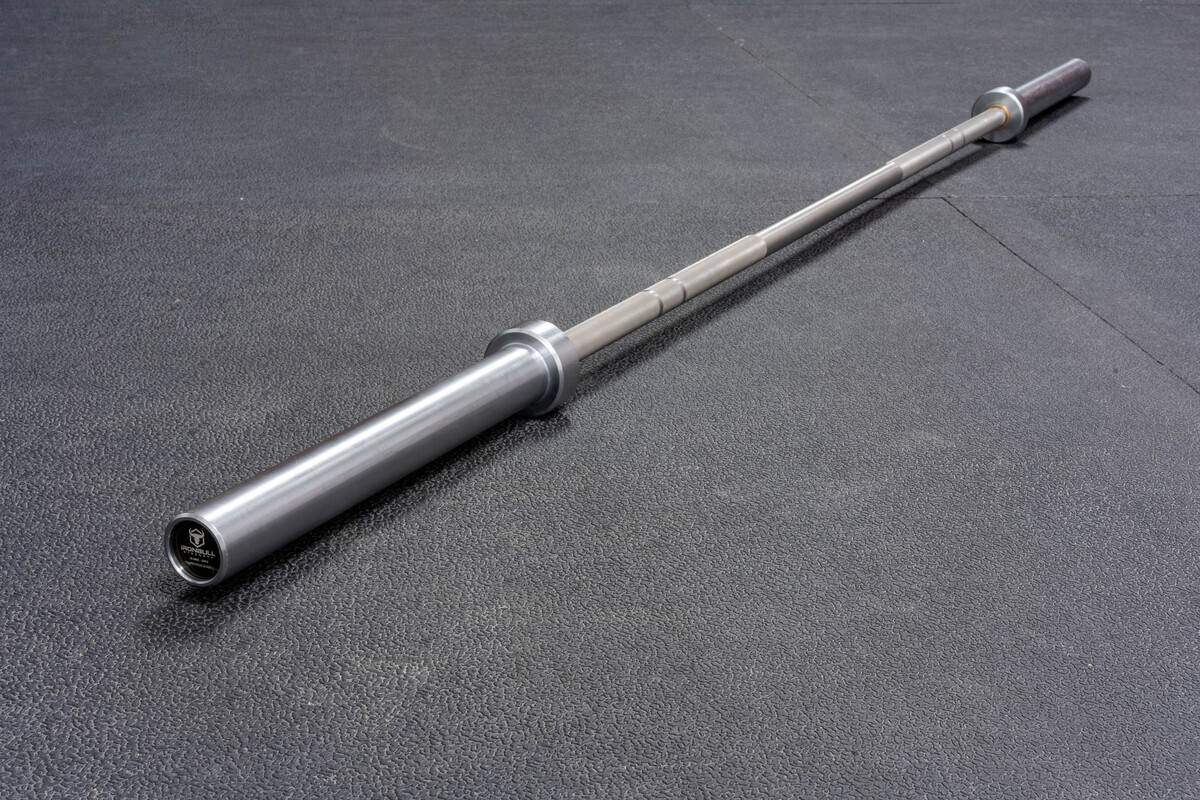
Image Source: ironbullstrength.com
Barbell Weight Explained: How Much Does A Bar Weigh At The Gym?
A standard Olympic barbell weighs 45 pounds (or 20 kilograms), and this is the most common weight you’ll find in most gyms.
Navigating the world of weightlifting can sometimes feel like learning a new language. Terms like “deadlift,” “snatch,” and “clean and jerk” might be familiar, but what about the tools themselves? Specifically, how much does a barbell actually weigh? This is a fundamental question for anyone stepping onto the gym floor, whether you’re a seasoned lifter or just beginning your fitness journey. In this comprehensive guide, we’ll delve deep into the weight of barbells, explore the different types you’ll encounter, and help you gain a clear picture of the equipment you’re using.
The Foundational Weight: The Olympic Barbell
When most people think of a “barbell” at the gym, they’re picturing the Olympic bar weight. This is the workhorse of the strength training world.
-
What is an Olympic barbell? An Olympic barbell is a long metal bar, typically 7 feet long, designed to hold weight plates. It’s characterized by its rotating sleeves at each end, which allow the plates to spin freely during exercises like Olympic lifts (snatch and clean and jerk). This rotation helps reduce stress on the wrists and shoulders.
-
How much does an Olympic bar weigh? The standard Olympic bar weight for men is 45 pounds (approximately 20 kilograms). This is a globally recognized standard and the most common weight for barbells used in competitive Olympic weightlifting and powerlifting.
-
How much does a 20kg bar weigh? As mentioned, a standard men’s Olympic barbell weighs 20 kilograms, which is equivalent to 44.09 pounds. For simplicity and standardization, it’s often rounded to 45 pounds.
Deciphering the Weight of a 45lb Bar
So, you’ve seen a 45lb bar on the rack. What exactly makes up that weight?
The empty barbell weight is the crucial starting point. This weight doesn’t include any of the plates you load onto it.
-
Men’s Olympic Bar: This is the 45-pound (20 kg) bar we’ve discussed. It’s typically 2.2 meters (about 86.6 inches) long.
-
Women’s Olympic Bar: While the men’s bar is the most prevalent, there’s also a women’s Olympic barbell. These bars are slightly shorter, usually around 6.8 feet (about 2.01 meters), and are lighter. A women’s Olympic weightlifting bar weight is 33 pounds (approximately 15 kilograms). This lighter weight is designed to be more appropriate for the average strength levels and biomechanics of female athletes.
The World of Weightlifting Bars
The weightlifting bar weight is a critical factor in how you approach your training. Different disciplines have slightly different specifications.
-
Olympic Weightlifting Bars: These bars are built to precise specifications for the sport of Olympic weightlifting. They are designed for speed, flexibility, and the ability to withstand the dynamic movements of the snatch and clean and jerk. The key features are:
- Sleeve rotation: High-quality bearings or bushings in the sleeves allow for smooth, rapid rotation when the bar is dropped or caught.
- Knurling: The grip pattern on the bar is designed for a secure hold without being overly aggressive.
- Weight: As established, 20 kg for men and 15 kg for women.
-
Powerlifting Bars: Powerlifting involves three lifts: squat, bench press, and deadlift. Powerlifting bars are generally stiffer and have a more aggressive knurling than Olympic bars to provide a superior grip for heavier lifts where explosive rotation isn’t a factor.
- Weight: A standard powerlifting bar also weighs 45 pounds (20 kg).
- Strength and Rigidity: Powerlifting bars are built to be incredibly strong and rigid to handle the immense weights used in powerlifting. They typically have a higher tensile strength and less whip (flexibility) compared to Olympic bars.
- Knurling: The knurling on powerlifting bars is often deeper and more pronounced, providing a very secure grip for maximal lifts. Some powerlifting bars also have a center knurl for added grip on the back during squats.
Beyond the Standard: Exploring Other Barbell Weights
While the 45lb bar is king in most commercial gyms, you’ll encounter other types of barbells, each with its own specific weight and purpose. Knowing the weight of a gym bar beyond the standard can be very helpful for programming and understanding your training.
-
Standard Barbells (Straight Bars): These are often what people refer to when they say “straight bar” or “E-Z bar.”
- How much does a standard barbell weigh? A standard straight barbell, often used for bicep curls or other isolation exercises, typically weighs 20 pounds (about 9 kg). These bars are shorter and lighter than Olympic bars.
- E-Z Curl Bars: These are characterized by their bent shape, designed to reduce stress on the wrists and elbows during curls. An E-Z curl bar usually weighs around 10-15 pounds (4.5-7 kg).
-
Trap Bars (Hex Bars): These bars have a hexagonal shape, allowing the lifter to stand inside the frame. This design can make deadlifts feel more like a squat and is often preferred by beginners or those with lower back issues.
- Weight: Trap bars vary in weight, but a common empty barbell weight for a trap bar is around 45-55 pounds (20-25 kg). It’s always best to check the specific weight of the trap bar at your gym.
-
Specialty Bars: The world of strength training is full of specialized bars for specific training goals.
- Safety Squat Bar (SSB): This bar has a padded yoke that rests on the shoulders and traps, allowing for a squat variation that puts less stress on the wrists, elbows, and shoulders. SSBs are significantly heavier, often weighing between 50-70 pounds (23-32 kg).
- Log Bars: Used in strongman competitions, log bars are thick, cylindrical bars that are lifted overhead. Their weight can vary greatly, but they are generally much heavier and more awkward to grip than standard barbells.
- Axle Bars: These bars have thicker diameters (often 2 inches or more) compared to the standard 1.1-inch Olympic bar. The thicker grip challenges grip strength immensely. They can weigh anywhere from 50-70 pounds (23-32 kg) or more depending on their length and construction.
Barbell Weight and Load Progression
Knowing the barbell weight is crucial for effective training. It allows you to:
-
Accurately Track Progress: When you log your workouts, knowing the starting weight of the bar is essential for accurately measuring your strength gains. If you always assume the bar is 45 pounds but it’s actually 55 pounds, your perceived progress might be inflated.
-
Set Realistic Goals: Understanding how much the bar itself weighs helps you set achievable weight targets for your lifts.
-
Calculate Total Volume: For hypertrophy or strength training programs, calculating total lifted volume (sets x reps x weight) is important. The weight of a gym bar must be included in this calculation.
-
Properly Load Plates: When you’re aiming for a specific weight, you need to know the base weight of the bar to accurately add plates. For example, if you want to deadlift 225 pounds and the bar is 45 pounds, you’ll need to add 180 pounds in plates (90 pounds on each side).
How Heavy is a Barbell? Answering the Core Question
The question “how heavy is a barbell?” is best answered by considering the context of the barbell you’re using.
-
Most Common Answer: For the vast majority of gyms and exercises, the answer is 45 pounds (20 kg) for an Olympic barbell.
-
For Women: The answer is typically 33 pounds (15 kg) for a women’s Olympic barbell.
-
For Shorter/Specialty Bars: The weight can range from 10 pounds (E-Z bar) to 70 pounds (specialty bars) or even more.
Always take a moment to check the markings on the sleeves of the barbell if you’re unsure. Most Olympic bars will have the weight stamped on the end of the sleeves, often in both pounds and kilograms.
Why the Standardization Matters
The standardization of the Olympic bar weight to 45 pounds (20 kg) is a cornerstone of modern strength training and competitive lifting.
-
Fair Competition: In sports like Olympic weightlifting and powerlifting, having a standardized bar ensures fair competition across different athletes and federations. Everyone is lifting against the same baseline equipment.
-
Global Communication: This standardization allows coaches, athletes, and gym-goers worldwide to communicate about weights effectively. When someone says they benched 135 pounds, it’s understood that this includes the 45-pound bar.
-
Training Program Simplicity: It simplifies the process of creating and following training programs. Programs often prescribe weights relative to your one-rep maximum (1RM), and the 45-pound bar is the assumed starting point.
Loading a Barbell: A Practical Guide
Let’s say you want to lift a total of 185 pounds. You’re using a standard men’s Olympic bar that weighs 45 pounds.
-
Subtract the Bar Weight: 185 pounds (total desired weight) – 45 pounds (bar weight) = 140 pounds (weight needed from plates).
-
Divide by Two: Since weight needs to be added equally to both sides of the bar, divide the plate weight by two: 140 pounds / 2 = 70 pounds of plates per side.
-
Assemble the Plates: You would load a 45-pound plate and a 25-pound plate on each side of the barbell.
- (45 lb plate + 25 lb plate) + 45 lb bar + (45 lb plate + 25 lb plate) = 70 lbs + 45 lbs + 70 lbs = 185 lbs.
It’s common practice to use pairs of plates when loading. This might mean using:
- Two 25 lb plates (50 lbs total)
- Two 10 lb plates (20 lbs total)
- Two 5 lb plates (10 lbs total)
- Two 2.5 lb plates (5 lbs total)
- And so on, depending on the weight increments available.
Weight Plate Variations and Their Impact
While the bar is a constant, the weight plates you add can also have variations that affect the total weight and even the feel of the lift.
-
Standard Iron Plates: These are the most common and densest plates. They come in various weights, typically starting from 2.5 lbs up to 100 lbs or more.
-
Bumper Plates: These are made of rubber and are designed to be dropped from overhead without damaging the bar or the floor. Olympic weightlifting uses bumper plates exclusively.
- Weight Consistency: Calibrated bumper plates are manufactured to be very close to their stated weight, ensuring accuracy for competition.
- Thickness: Bumper plates are generally thicker than iron plates, meaning you might not be able to fit as much weight onto a bar before the sleeves are full. This is especially true for heavier weights.
-
Calibrated Steel Plates: In powerlifting, calibrated steel plates are used. These are very thin and precise, allowing lifters to load incredibly high amounts of weight onto the bar. They are often colored differently based on weight.
Understanding the “How Much Does a 45lb Bar Weigh” Nuance
When you ask “how much does a 45lb bar weigh,” the implicit assumption is that the bar itself weighs 45 pounds. This is accurate for a standard men’s Olympic barbell. However, it’s important to remember that this is the empty barbell weight. The total weight of your lift will always be the bar weight plus the weight of all the plates loaded onto it.
For example, if you are performing a squat and your trainer tells you to “put 225 on the bar,” they mean the total weight, including the bar. So you would load 90 pounds of plates (45 pounds on each side) onto the 45-pound bar.
Frequently Asked Questions (FAQ)
Q1: How much does a standard barbell weigh at the gym?
A1: A standard men’s Olympic barbell, the most common type found in gyms, weighs 45 pounds (approximately 20 kilograms).
Q2: What is the weight of an Olympic bar?
A2: The Olympic bar weight for men is 45 pounds (20 kg), and for women, it is 33 pounds (15 kg).
Q3: How much does a 20kg bar weigh in pounds?
A3: A 20 kg bar weighs approximately 44.09 pounds, which is commonly rounded to 45 pounds.
Q4: What is the difference between a powerlifting bar and an Olympic weightlifting bar?
A4: While both typically weigh 45 pounds, powerlifting bars are usually stiffer, have more aggressive knurling for a stronger grip, and are built for extreme strength. Olympic weightlifting bars have more whip (flexibility) and smoother rotating sleeves for dynamic lifts.
Q5: Can I use any barbell for any exercise?
A5: While you can technically use any barbell, it’s best to use the appropriate type for the exercise. Olympic bars are ideal for Olympic lifts and most compound movements. E-Z bars are better for isolation curls. Trap bars are good for deadlifts and carries. Using the wrong bar can be less effective or even increase injury risk.
Q6: What is the weight of a typical straight bar used for curls?
A6: A standard straight barbell used for bicep curls typically weighs around 20 pounds (about 9 kg).
Q7: Do all gyms have 45lb barbells?
A7: Most commercial gyms will have multiple 45lb (20kg) Olympic barbells. However, some smaller gyms or specialized studios might have different setups. It’s always a good idea to check or ask.
Q8: What is the weight of a safety squat bar?
A8: A safety squat bar (SSB) is considerably heavier than a standard Olympic bar, typically weighing between 50 to 70 pounds (23 to 32 kg).
Q9: How do I know how much my barbell weighs if it’s not marked?
A9: Most Olympic barbells have their weight stamped on the end of the sleeves, usually in both pounds and kilograms. If you cannot find markings, you can weigh yourself, then weigh yourself holding the bar, and subtract the difference. Alternatively, ask gym staff or a more experienced lifter.
Q10: Is the 45lb weight for the bar a global standard?
A10: Yes, the 45lb (20kg) weight for a men’s Olympic barbell is a global standard in strength sports and most gyms worldwide.
By grasping the different weights and types of barbells available, you empower yourself to train more effectively, track your progress accurately, and make informed decisions about your strength development. Whether you’re aiming for a personal best on your deadlift or building muscle with curls, knowing your equipment is the first step.