
So, you’ve had cataract surgery and are eager to get back to your active lifestyle. A common question that arises is: How long after cataract surgery can you exercise? Generally, most people can resume light activities within a few days to a week, but a return to more strenuous workouts and heavy lifting requires more patience, typically several weeks. This guide will walk you through the cataract surgery recovery timeline and provide detailed post-surgery exercise guidelines to help you return to your favorite activities safely.
The impact of cataract surgery on exercise is significant, as it aims to restore clear vision, which is crucial for many physical activities. However, the healing process is vital, and rushing back into exercise too soon can lead to complications. This article will cover physical activity restrictions, resuming workouts post-ophthalmic surgery, and essential advice on exercise limitations cataract surgery may impose initially.
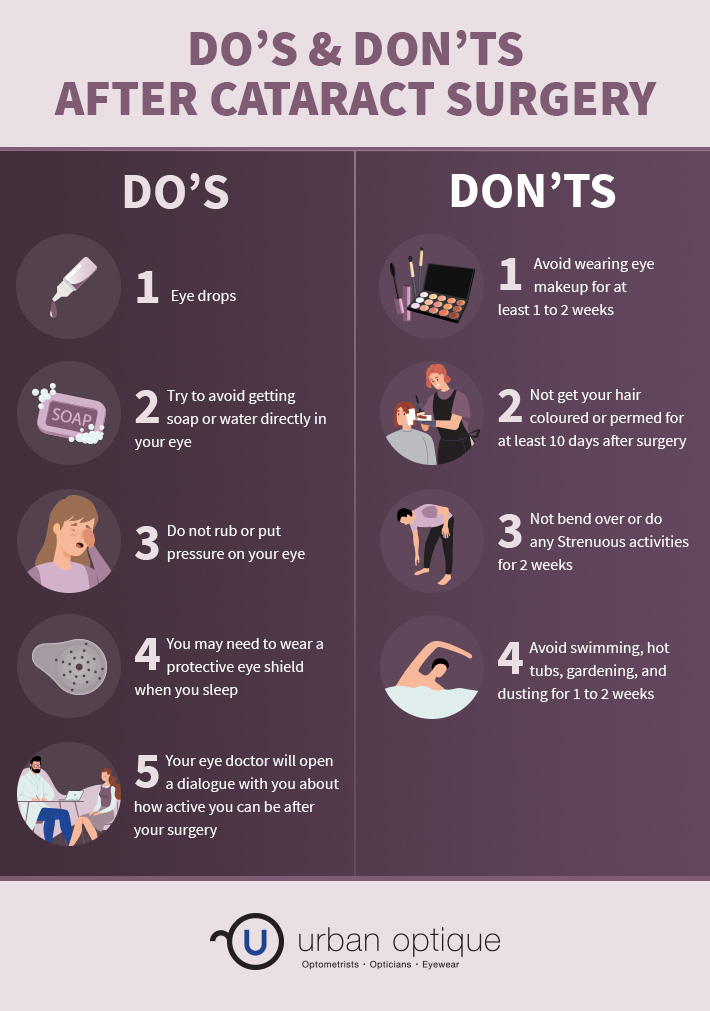
Image Source: urbanoptique.ca
The Initial Healing Phase: What to Expect
After cataract surgery, your eye needs time to heal. The incision is small, but it’s still a surgical site. During this initial period, your vision might be blurry or fluctuating as your eye adjusts. You’ll likely experience some mild discomfort, light sensitivity, and a feeling of dryness or grittiness.
Your ophthalmologist will provide specific instructions, but common recommendations include:
- Wearing a protective shield: This is especially important at night to prevent rubbing your eye.
- Using prescribed eye drops: These help prevent infection and reduce inflammation.
- Avoiding rubbing or pressing on your eye: This is critical to protect the surgical site.
- Keeping your eye clean: Avoid swimming or submerging your eye in water.
Immediate Post-Surgery (First Few Days)
During the first 24-48 hours, your primary focus should be on rest and allowing your eye to begin healing.
- Light movement: Gentle walking around your house is encouraged to promote circulation.
- Avoid strenuous activity: No heavy lifting, bending over deeply, or anything that could increase pressure in your head or eyes.
- Vision fluctuations: It’s normal for your vision to be a bit blurry or to see halos around lights. This usually improves quickly.
First Week Post-Surgery
By the end of the first week, most patients report significant improvement in comfort and vision.
- Continue avoiding strenuous activities: This includes jogging, weightlifting, or anything that causes you to exert yourself significantly.
- Gentle walking: Longer walks are usually fine, as long as you don’t feel any eye strain or discomfort.
- Limited bending: Try to avoid bending over from the waist, especially if it involves putting your head below your heart. This is to prevent increased intraocular pressure.
- Eye protection: Continue to wear your protective shield as advised by your doctor, especially when sleeping or in potentially dusty environments.
Gradually Reintroducing Physical Activity
The return to exercise after cataract operation is a gradual process. Your surgeon will monitor your healing at follow-up appointments and give you the go-ahead for specific activities. It’s crucial to listen to your body and not push yourself too hard.
Light Activities (First Week to Two Weeks)
After the first few days, you can typically start incorporating very light activities. The goal here is to maintain some level of physical activity without compromising your eye’s healing.
- Walking: Continue with comfortable walks. You can gradually increase the duration and pace as you feel able.
- Gentle stretching: Light stretching that doesn’t involve significant bending is usually permitted.
- Stationary cycling: If you can maintain an upright posture and avoid jarring movements, stationary cycling can be a good option.
Table 1: Recommended Light Activities Post-Cataract Surgery
| Activity | Frequency | Intensity | Duration | Precautions |
|---|---|---|---|---|
| Walking | Daily | Light | 15-30 minutes | Avoid steep hills or strenuous inclines. |
| Gentle Stretching | 3-4 times/week | Light | 10-15 minutes | Avoid deep bends or inversions. |
| Stationary Cycling | 2-3 times/week | Light | 15-20 minutes | Maintain an upright posture. |
| Yoga (modified) | 1-2 times/week | Very Light | 15-20 minutes | Avoid poses that put the head below the heart. |
Moderate Activities (Two Weeks to Four Weeks)
As your eye continues to heal and your vision stabilizes, you can start to introduce more moderate forms of exercise.
- Increased walking pace: You can walk faster or for longer periods.
- Light jogging: If your doctor gives the okay and you feel no discomfort, you might be able to start light jogging. Start with short intervals and gradually increase your time.
- Cycling outdoors: Be cautious of traffic and road conditions. Helmets are always recommended.
- Low-impact aerobics: Classes that focus on smooth movements without jumping or jarring are generally safe.
- Swimming: Many doctors recommend waiting until your incision is fully healed and you can avoid getting water directly in your eye. This is typically at least two weeks, but sometimes longer. Ensure you wear goggles.
Resuming More Vigorous Exercise (Four Weeks to Six Weeks and Beyond)
The timeline for returning to more intense workouts varies greatly depending on individual healing, the type of surgery performed, and your surgeon’s recommendations.
When Can I Lift Weights After Cataract Surgery?
This is a frequently asked question. When can I lift weights after cataract surgery? Typically, you should wait at least four to six weeks before returning to significant weightlifting. This is because lifting weights, especially heavy ones, can increase intraocular pressure, which could potentially affect the healing surgical site.
- Start light: When you do return to weightlifting, begin with very light weights and gradually increase the load over several weeks.
- Focus on form: Proper technique is crucial to avoid straining your eyes or body.
- Avoid straining: Do not hold your breath while lifting, as this can increase pressure. Exhale during the exertion phase.
- Listen to your body: If you experience any eye discomfort, blurred vision, or pain, stop immediately and consult your ophthalmologist.
Other Strenuous Activities
- High-impact aerobics: Jumping, high-intensity interval training (HIIT), and other vigorous activities may need to be phased in slowly.
- Contact sports: These should generally be avoided until your vision is fully stabilized and your eye is completely healed, and often, your doctor will advise caution or avoidance due to the risk of eye injury.
- Activities with a risk of head impact: Sports like boxing, martial arts, or even rough team sports carry a risk of impact to the head and eyes.
Factors Influencing Your Return to Exercise
Several factors can influence how quickly and safely you can return to exercise after cataract surgery.
- Type of surgery: While most cataract surgeries are now performed using phacoemulsification, which involves a very small incision, different techniques might have slightly different recovery periods.
- Your overall health: Individuals with underlying health conditions, such as diabetes or high blood pressure, may have a slower or more complicated recovery.
- Post-operative complications: If you experience any complications, such as infection or inflammation, your return to exercise will be delayed.
- Individual healing rate: Everyone heals at a different pace. What’s safe for one person might not be for another.
- Your pre-surgery fitness level: If you were very active before surgery, your body might be better conditioned to resume activity, but this doesn’t mean you can skip the recovery stages.
The Role of Physical Therapy After Cataract Surgery
In most cases, physical therapy after cataract surgery isn’t a standard requirement. However, if you had other eye conditions or have mobility issues that were exacerbated by the surgery or the period of reduced activity, a physical therapist can help you safely regain strength and balance. They can also guide you on exercises that are safe for your eyes and overall body during recovery.
Safe Exercises After Cataract Surgery: A Deeper Dive
When considering safe exercises after cataract surgery, the primary goal is to avoid anything that could introduce infection, cause excessive strain on the eyes, or dislodge the new intraocular lens (IOL).
What to Avoid Initially: Exercise Limitations Cataract Surgery Imposes
- Activities involving bending over: This includes certain yoga poses, gardening, or picking up objects from the floor. These can increase pressure inside the eye.
- Heavy lifting: As mentioned, this is a major concern due to increased intraocular pressure.
- Straining activities: Holding your breath while pushing or pulling can also raise eye pressure.
- Water exposure: Submerging the eye in water (swimming pools, hot tubs, lakes) increases the risk of infection for several weeks.
- Contact sports: The risk of direct eye trauma is too high in the initial recovery phase.
- Activities that cause jarring: High-impact exercises can be uncomfortable and potentially disruptive to healing.
Gradually Increasing Intensity and Duration
- Listen to your body: This is the most important rule. If an exercise causes any pain, discomfort, or blurry vision, stop immediately.
- Monitor your vision: Pay attention to any changes in your vision. If you notice new blurriness, halos, or floaters, contact your doctor.
- Stay hydrated: Good hydration is important for overall healing.
- Protect your eyes: Continue wearing sunglasses to protect your eyes from bright light and UV rays, which is especially important as your eye adjusts to its new lens.
Resuming Workouts Post-Ophthalmic Surgery: A Phased Approach
Your surgeon will provide a specific timeline, but here’s a general phased approach to resuming workouts post-ophthalmic surgery.
Phase 1: Initial Recovery (First Few Days to One Week)
- Focus: Rest and very light movement.
- Activities: Gentle walking indoors.
- Restrictions: No bending, lifting, straining, or vigorous activity.
Phase 2: Gentle Return (One Week to Two Weeks)
- Focus: Low-impact, easy activities.
- Activities: Extended walking, stationary cycling, gentle stretching.
- Restrictions: Still avoid heavy lifting, bending, and water immersion.
Phase 3: Moderate Reintegration (Two Weeks to Four Weeks)
- Focus: Gradually increasing intensity and duration.
- Activities: Light jogging, swimming (if cleared by doctor and using goggles), low-impact aerobics.
- Restrictions: Continue to be cautious with bending and lifting; monitor eye comfort.
Phase 4: Return to Normal Activity (Four Weeks to Six Weeks and Beyond)
- Focus: Resuming most pre-surgery activities.
- Activities: Weightlifting (start light), high-impact aerobics, sports.
- Restrictions: Always listen to your body. Consult your doctor before returning to high-risk activities like contact sports.
Frequently Asked Questions (FAQ)
Q1: Can I go to the gym after cataract surgery?
A: Yes, but you’ll need to start with lighter activities. Avoid heavy lifting or anything that causes you to strain. Machines that allow you to maintain an upright posture are often a good starting point. You’ll need to wait several weeks before returning to your full gym routine.
Q2: How soon can I swim after cataract surgery?
A: Most doctors advise waiting at least two weeks, and sometimes up to four weeks, before swimming. This is to allow the tiny incision to heal completely and reduce the risk of infection from water. Always wear goggles and avoid submerging your head if possible during the initial period.
Q3: Is it okay to bend over after cataract surgery?
A: It’s generally recommended to avoid deep bending for the first week or two, as it can increase pressure inside the eye. When you do bend, try to do so by squatting or bending your knees rather than hinging at the waist.
Q4: Can I do yoga after cataract surgery?
A: Gentle yoga with modifications is usually acceptable after the first week. Avoid inversions (poses where your head is below your heart) and any poses that involve straining or deep bending for at least four to six weeks, or until your doctor approves.
Q5: What if I feel eye strain when exercising after surgery?
A: If you experience eye strain, blurriness, pain, or any other discomfort during exercise, stop immediately. Contact your ophthalmologist to discuss your symptoms. It’s a sign that you may be overexerting yourself or that your eye isn’t fully ready for that activity.
Q6: How does cataract surgery affect my vision for sports?
A: The goal of cataract surgery is to improve your vision, which should enhance your ability to participate in sports. However, after surgery, your vision may still be adjusting. It’s important to be patient and allow your vision to stabilize fully before returning to activities that require very precise visual tracking or quick reactions.
Q7: When can I resume driving after cataract surgery?
A: This depends on when your vision has recovered sufficiently and you meet the legal requirements for driving. Your doctor will advise you on this, but it’s often around the first week after surgery, once your vision is clear and stable.
Q8: Should I expect any pain during exercise after cataract surgery?
A: You should not experience pain during exercise after cataract surgery. Mild discomfort or a feeling of dryness is common in the early stages, but actual pain, especially in your eye, is a warning sign that you should stop and consult your doctor.
Q9: What are some safe exercises for my eyes?
A: While the focus is on whole-body exercise, there are gentle eye exercises that can help with adaptation. Your doctor might recommend focusing on your new lens, following objects with your eyes, or blinking exercises to help with dryness. However, these are not a substitute for rest and healing.
Q10: Is physical therapy needed after cataract surgery?
A: Typically, no specific physical therapy after cataract surgery is required for the eye itself. However, if you have other medical conditions or experienced a decline in mobility due to the vision impairment before surgery, physical therapy might be beneficial for your overall physical well-being.
By following these guidelines and always consulting with your ophthalmologist, you can safely and effectively return to your exercise routine after cataract surgery, enjoying clearer vision and an active life. Remember, patience and careful attention to your body’s signals are key to a successful recovery.