
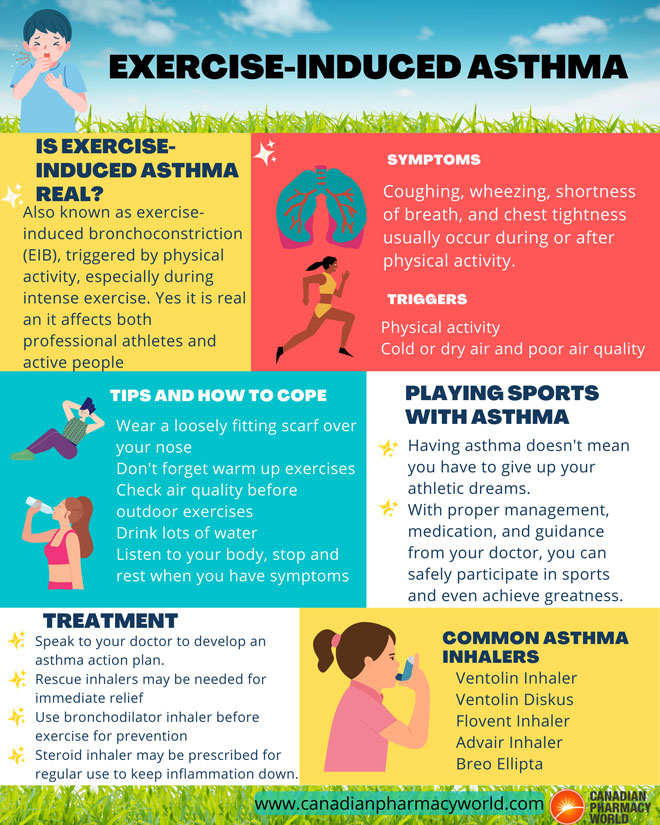
Image Source: www.canadianpharmacyworld.com
How Do You Know If You Have Exercise Induced Asthma? Signs and Symptoms
You might have exercise induced asthma if you experience breathing difficulties, such as coughing, wheezing, or shortness of breath, during or after physical activity. This condition, also known as exercise induced bronchoconstriction (EIB), affects many people, even those without chronic asthma. It’s important to recognize the signs and symptoms to manage it effectively and continue enjoying an active lifestyle.
Deciphering Exercise Induced Asthma: What It Is
Exercise induced asthma, or EIB, is a temporary narrowing of the airways that happens during or after strenuous physical activity. This narrowing makes it harder to breathe. It’s a common problem, and it can affect anyone, not just those who already have asthma. When you exercise, you breathe faster and more deeply. Often, you breathe through your mouth, which bypasses the warming and humidifying functions of your nose. This can lead to the airways in your lungs becoming dry and cold. This dryness and coldness can trigger a response where the muscles around your airways tighten, causing them to narrow. This is the core of exercise induced bronchoconstriction.
Recognizing the Signs: Common Symptoms of EIB
Spotting the signs of EIB is key to getting help. These symptoms often appear within minutes after starting exercise, or they can show up after you finish.
- Shortness of breath: This is a primary indicator. You might feel like you can’t get enough air in or out.
- Wheezing: A whistling sound when you breathe, particularly when exhaling.
- Coughing: A persistent cough that doesn’t seem to have another cause.
- Chest tightness: A feeling of pressure or squeezing in your chest.
- Fatigue: Feeling unusually tired or having less energy during or after exercise.
- Reduced athletic performance: Noticing you can’t keep up as well as you used to, or you tire out much faster.
It’s important to note that the intensity of these symptoms can vary greatly from person to person and even from day to day. Some individuals might experience very mild discomfort, while others have severe breathing difficulties.
Symptoms During and After Exercise
The timing of asthma symptoms during exercise is a crucial clue. While some people feel issues as soon as they start, many experience a delayed reaction, often five to 10 minutes after they’ve stopped exercising. This delayed response can sometimes be mistaken for general fatigue.
- During Exercise: You might feel a slight tightness in your chest or a tickle in your throat. Some people notice they are breathing harder than usual, even for the type of activity they are doing. Coughing might start intermittently.
- Immediately After Exercise: This is when symptoms often become more pronounced. Significant shortness of breath can set in. Wheezing might become noticeable. The coughing can become more frequent and might produce mucus.
- Later After Exercise: For some, symptoms can linger for an hour or more after finishing the activity. This can impact recovery and overall well-being.
Specific Indicators
Let’s break down some of the specific ways these symptoms can manifest:
- Wheezing during physical activity: This sound is caused by air being forced through narrowed airways. It’s often more noticeable when breathing out.
- Chest tightness with exertion: This feels like a band tightening around your chest. It can be uncomfortable and make you want to stop what you’re doing.
- Shortness of breath after exercise: This is a classic sign. You might feel winded and struggle to catch your breath even when resting.
Identifying Triggers for Exercise Induced Asthma
While exercise itself is the primary trigger, certain environmental factors can make EIB worse for some individuals. Knowing these can help in managing symptoms.
Environmental Factors
- Cold, dry air: Exercising in cold weather, especially when breathing through your mouth, is a common trigger. The cold air can irritate and dry out the airways.
- Air pollution: High levels of pollutants like ozone, sulfur dioxide, or particulate matter can irritate the airways and exacerbate EIB symptoms.
- Pollen and mold: If you have allergies, exercising outdoors during high pollen seasons or in areas with high mold counts can trigger a reaction that leads to EIB.
- Chlorine: Swimming pools can sometimes trigger EIB due to the chlorine fumes.
Types of Exercise
The intensity and type of exercise can also play a role:
- Endurance sports: Activities like running, cycling, and soccer, which involve prolonged, strenuous exertion and deep breathing, are more likely to trigger EIB.
- High-intensity interval training (HIIT): While beneficial for fitness, the rapid bursts of intense activity can also lead to rapid breathing and potential airway irritation.
- Cold-weather sports: Sports played in cold environments, like ice hockey or cross-country skiing, present a higher risk due to the cold, dry air.
Diagnosing Exercise Induced Asthma
If you suspect you have EIB, it’s important to see a doctor. They can perform tests to confirm the diagnosis and rule out other conditions.
Medical Evaluation
Your doctor will start by taking a detailed medical history. They will ask about your symptoms, when they occur, and what makes them better or worse. They will also want to know about any family history of asthma or allergies.
Pulmonary Function Tests
These tests measure how well your lungs are working.
- Spirometry: This is the most common test. You’ll be asked to breathe into a device that measures how much air you can inhale and exhale, and how quickly you can exhale. This test is usually done before and after exercise. A significant drop in lung function after exercise suggests EIB.
- Bronchial Provocation Test: In some cases, your doctor might perform a bronchial provocation test. This involves inhaling a substance (like methacholine) that can trigger airway narrowing in people with asthma. While this test can diagnose asthma in general, it’s not always used specifically for EIB.
Exercise Challenge Test
This is a more direct way to diagnose EIB.
- The Test: You’ll perform a specific exercise routine, usually on a treadmill or stationary bike, in a controlled environment. Your lung function will be measured before and at several points after the exercise.
- What Doctors Look For: A diagnosis of EIB is typically made if your forced expiratory volume in one second (FEV1) decreases by 10% or more after the exercise challenge.
Ruling Out Other Conditions
It’s essential for a doctor to differentiate EIB from other conditions that can cause similar symptoms, such as:
- Vocal cord dysfunction: This is a condition where the vocal cords close abnormally during breathing, often mimicking asthma symptoms.
- Cardiac issues: Heart problems can sometimes cause shortness of breath that might be mistaken for EIB.
- Deconditioning: Being out of shape can lead to feeling breathless during exercise.
- Anxiety: Panic attacks can also cause rapid breathing and chest tightness.
Managing EIB Symptoms and Staying Active
Living with EIB doesn’t mean you have to give up sports or exercise. With proper management, you can control your symptoms and enjoy physical activity.
Pre-Exercise Medication
One of the most effective ways to prevent EIB is by using medication before you exercise.
- Short-acting beta-agonists (SABAs): These inhalers, such as albuterol, are typically used 15-20 minutes before exercise. They work by relaxing the muscles around the airways, opening them up and preventing the narrowing that causes symptoms. The effect usually lasts for 4-6 hours.
Long-Term Control Medications
For individuals with persistent asthma that is aggravated by exercise, or if SABAs aren’t enough, other medications might be prescribed.
- Inhaled corticosteroids (ICS): These are taken daily to reduce airway inflammation. While they don’t provide immediate relief, they can make EIB less severe over time by controlling the underlying inflammation.
- Leukotriene modifiers: These oral medications can also help reduce airway inflammation and prevent exercise-induced symptoms. They are typically taken daily.
Lifestyle and Warm-Up Strategies
Beyond medication, several strategies can help manage EIB:
- Warm-up: A thorough warm-up is crucial. Gradually increasing your activity level for 10-15 minutes before more intense exercise can help your airways adjust.
- Cool-down: Just as important as a warm-up, a cool-down period allows your breathing to return to normal gradually.
- Breathing techniques: Learning to breathe through your nose as much as possible during exercise can help warm and humidify the air before it reaches your lungs.
- Choosing the right activity: Some activities are less likely to trigger EIB than others. For example, swimming in a well-ventilated indoor pool might be better tolerated than running in cold, dry air.
- Monitoring weather and air quality: Be aware of pollen counts and air pollution levels. Consider exercising indoors on days with poor air quality or high pollen counts.
- Avoid known triggers: If certain environments or activities consistently worsen your symptoms, try to avoid them or take extra precautions.
When to Seek Immediate Medical Help
While most EIB symptoms are manageable, certain signs warrant immediate medical attention:
- Severe shortness of breath that doesn’t improve with medication.
- Difficulty speaking in full sentences.
- Bluish discoloration of the lips or fingernails.
- Rapid breathing with significant effort.
- Feeling of impending doom.
Frequently Asked Questions (FAQ)
Q1: Can children have exercise induced asthma?
A1: Yes, children can absolutely have exercise induced asthma. It’s actually quite common in childhood. Symptoms might include coughing during play, getting tired quickly, or complaining of chest tightness when active. It’s important for parents to get any persistent exercise-related breathing issues checked by a pediatrician.
Q2: Is exercise induced asthma the same as regular asthma?
A2: Exercise induced asthma is a type of asthma, but not everyone with EIB has chronic asthma. Some people only experience airway narrowing specifically during or after exercise, while others have underlying asthma that is triggered or worsened by physical activity. The underlying mechanism of airway constriction is similar.
Q3: How can I prevent exercise induced asthma symptoms?
A3: The best prevention is often taking a prescribed short-acting bronchodilator inhaler 15-20 minutes before exercise. A good warm-up and cool-down are also very important. Avoiding exercise in very cold, dry air or when air quality is poor can also help.
Q4: Will exercise make my asthma worse in the long run?
A4: No, for most people, regular, well-managed exercise is beneficial for asthma control. By strengthening respiratory muscles and improving overall fitness, exercise can actually help reduce the frequency and severity of asthma symptoms over time, including those related to EIB. The key is proper management and working with your doctor.
Q5: What should I do if I have a severe asthma attack during exercise?
A5: If you experience a severe asthma attack, stop exercising immediately. Use your rescue inhaler as prescribed. If your symptoms do not improve quickly or if they worsen, call for emergency medical help (like 911 or your local emergency number) right away.
By staying informed about the signs and symptoms of exercise induced asthma and working closely with a healthcare provider, individuals can effectively manage this condition and continue to lead active, healthy lives.