
What is gym membership cancellation law? It’s a set of rules that tell you how and when you can end your contract with a gym or fitness center. These laws protect you from unfair practices and help you get out of agreements if your situation changes.
Joining a gym can be a great way to improve your health and well-being. However, situations change, and sometimes you need to end your gym membership. Understanding gym contract cancellation policies is crucial to avoid unnecessary fees and frustration. Many people find themselves confused or stuck with unwanted memberships due to a lack of knowledge about their gym member rights. This guide will help you navigate the process of fitness center termination and ensure you know your options, including how to secure a gym membership refund and what to do if your gym has a strict gym closing policy.
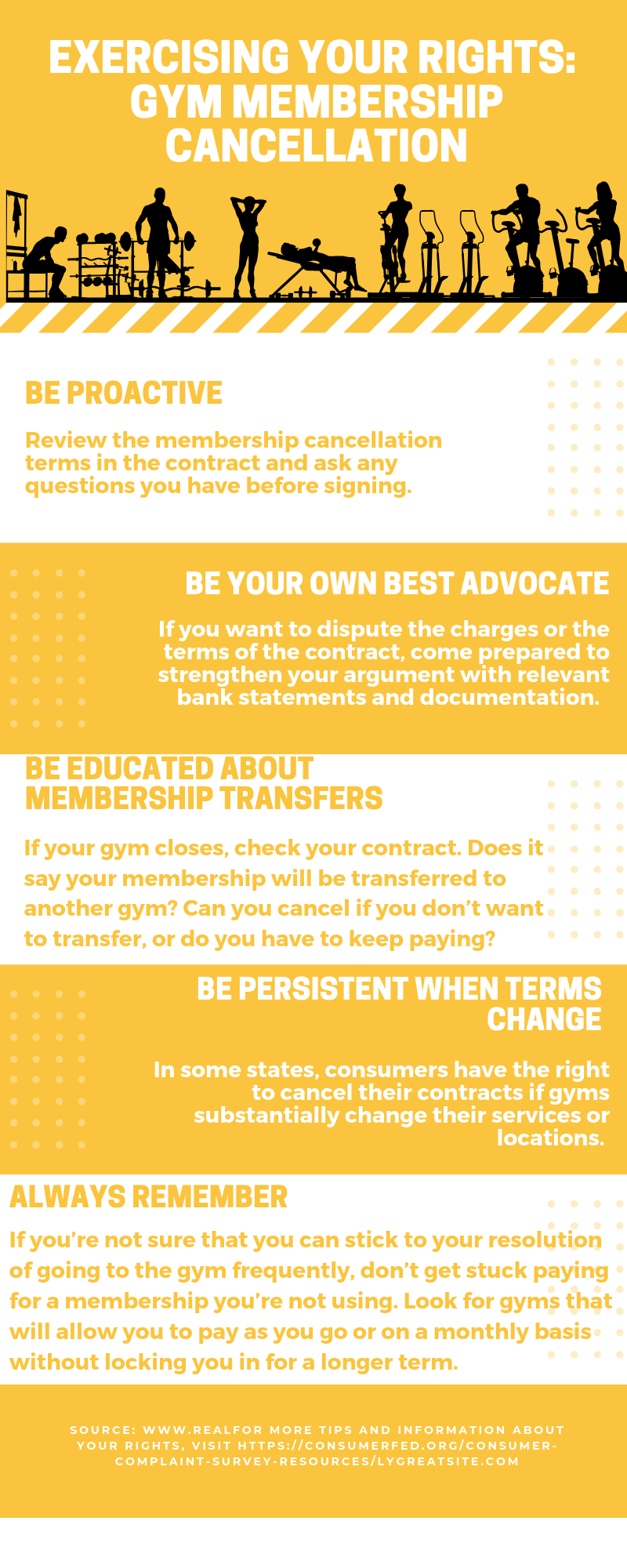
Image Source: consumerfed.org
Deciphering Your Gym Contract
Your gym membership agreement is a legally binding document. It outlines the terms and conditions of your membership, including the duration, payment schedule, and cancellation procedures. It’s essential to read your contract thoroughly before signing. Look out for clauses related to gym cancellation fees, gym membership renewal, and any gym contract loopholes that might work against you.
Key Clauses to Scrutinize
- Membership Term: Is it a month-to-month agreement, or are you locked into a longer term (e.g., 6 months, 1 year)? Longer terms often come with more stringent cancellation policies.
- Cancellation Policy: This section should clearly state how to cancel your membership and any notice periods required.
- Cancellation Fees: Are there penalties for early termination? Some contracts allow cancellation with a fee, while others are stricter.
- Membership Renewal: Does your membership auto-renew? If so, how do you prevent it from renewing if you wish to cancel?
- Transferability/Pausing: Can you freeze your membership if you’re injured or moving? Can you transfer it to someone else?
- Gym Responsibilities: What services are guaranteed? What happens if the gym changes its hours or facilities significantly?
Common Reasons for Canceling a Gym Membership
Life is unpredictable. Here are some common situations where you might need to cancel your gym membership:
- Relocation: Moving to a new city or a significant distance from the gym.
- Health Issues: A new medical condition or injury that prevents you from using the gym.
- Financial Hardship: Losing your job or experiencing a significant decrease in income.
- Gym Closing or Relocation: The gym itself closes down or moves too far away.
- Dissatisfaction with Services: The gym’s facilities are poorly maintained, equipment is frequently broken, or customer service is lacking.
- Change in Lifestyle: Your fitness goals have changed, or you’ve found a more suitable fitness option.
Your Rights as a Gym Member
Most states have laws designed to protect consumers entering into contracts, including gym memberships. These laws often address:
- Cooling-Off Periods: Some states mandate a short period after signing a contract during which you can cancel without penalty, often within 3-7 days.
- Cancellation Due to Relocation: Many laws allow cancellation if you move a certain distance away (e.g., 25-50 miles) from the gym or any of its branches. You’ll usually need to provide proof of your new address.
- Cancellation Due to Disability or Death: Contracts are typically cancellable without penalty if the member becomes disabled and cannot use the facilities, or if the member passes away. Proof will be required.
- Gym Non-Compliance: If the gym fails to provide promised services or significantly changes its operating hours or facilities, you may have grounds for cancellation.
- Unfair Contract Terms: Laws can invalidate certain clauses that are deemed unfair or unconscionable.
Federal and State Regulations
While there isn’t one overarching federal “Cancel Gym Membership Law,” many federal regulations, such as the Truth in Lending Act and Fair Credit Reporting Act, can indirectly apply to gym contracts, especially regarding billing and collections.
However, the most specific protections come from state laws. These vary significantly. For example:
- California: Has specific statutes regarding health studio contracts, including cancellation rights and limitations on contract terms.
- New York: Offers robust consumer protections for gym memberships, including rights related to relocation and incapacitation.
- Florida: Imposes restrictions on contract length and provides cancellation rights under certain conditions.
It’s crucial to research the specific laws in your state. You can often find this information on your state’s Attorney General’s website or by searching for “health club laws” or “gym membership laws” plus your state’s name.
How to Successfully Cancel Your Gym Membership
A well-planned approach can make fitness center termination much smoother.
Step 1: Review Your Contract Again
Before taking any action, re-read your membership agreement with a fine-tooth comb. Pay close attention to the cancellation clause.
Step 2: Identify Your Grounds for Cancellation
Determine which of the valid reasons for cancellation, as outlined by your contract or state law, apply to your situation.
- Example: If you’re moving, find the clause about relocation and what documentation is needed (e.g., a utility bill with your new address).
Step 3: Gather Necessary Documentation
- Proof of Relocation: Utility bills, driver’s license, lease agreement, or mortgage statement showing your new address.
- Medical Documentation: A doctor’s note stating your inability to use the gym due to a disability.
- Death Certificate: If canceling due to the member’s passing.
Step 4: Write a Formal Cancellation Letter
This is often the most critical step. A written letter provides a clear record of your intent.
What to Include in Your Cancellation Letter:
- Your Full Name and Membership Number: Clearly identify yourself.
- Date: Current date.
- Gym’s Name and Address: Ensure it’s sent to the correct department.
- Statement of Intent: Clearly state that you are canceling your membership.
- Reason for Cancellation: Briefly explain why you are canceling, referencing the relevant contract clause or state law.
- Effective Date of Cancellation: State when you want the cancellation to be effective, usually following the notice period in your contract.
- Request for Confirmation: Ask for written confirmation of your cancellation.
- Request for Refund (if applicable): If you believe you are owed a gym membership refund, state this clearly and explain why.
- Your Contact Information: Phone number and email address.
- Signature: Sign and date the letter.
Pro-Tip: Send your cancellation letter via certified mail with a return receipt requested. This provides proof that the gym received your letter and on what date. Many gyms also allow cancellation via email or their online portal, but always get a confirmation.
Step 5: Follow Up
If you don’t receive confirmation within the timeframe specified in your contract or by law (usually 10-30 days), follow up with the gym. Keep records of all your communication.
Common Pitfalls and How to Avoid Them
Auto-Renewal Clauses
Many gym contracts include auto-renewal clauses. If you don’t cancel before the renewal date, you might be locked in for another term.
- Solution: Mark your calendar with the renewal date and the deadline for cancellation. Some states require gyms to provide advance notice before auto-renewal occurs.
Hidden Gym Cancellation Fees
Be aware of fees associated with early termination. While some fees are legal, others might be excessive or not clearly disclosed in the contract.
- Solution: Always clarify cancellation fees upfront. If a fee seems unreasonable, challenge it based on state law.
Gym Contract Loopholes Exploited by Gyms
Gyms might try to use vague language or strict interpretations of contract terms to keep you bound. Examples include:
- Limited Cancellation Windows: Only allowing cancellation during a very specific period.
- Unrealistic Documentation Requirements: Demanding obscure or hard-to-obtain proof.
-
“Any Reason” Cancellation Fees: Charging a hefty fee for canceling for any reason, even if your state allows cancellation with a smaller fee.
-
Solution: If you suspect a loophole is being used unfairly, consult with a consumer protection agency or legal advisor.
Gym Closing Policy Issues
When a gym closes, it can be a chaotic time for members. Your contract might have specific clauses about what happens in this event.
- What to Expect: Some gyms might offer to transfer your membership to another affiliated gym. Others might cease operations entirely.
- Your Rights: If the gym closes and offers no alternative or fails to refund your unused membership dues, you likely have a claim for a gym membership refund. Your ability to get this refund may depend on whether the gym declared bankruptcy or how your state’s laws handle such situations.
- Action Plan:
- Check your contract for the gym closing policy.
- Contact the gym management (if possible) or the corporate office.
- If no resolution is offered, file a complaint with your state’s Attorney General’s office or the Better Business Bureau (BBB).
- Consider a chargeback with your credit card company if you paid with a credit card and the services were not rendered due to closure.
Navigating a Gym Contract Dispute
If the gym refuses to honor your cancellation request or disputes your grounds for termination, you may need to engage in a gym contract dispute.
Steps for Dispute Resolution
- Communicate Clearly and Keep Records: Continue communicating in writing. Save all emails, letters, and notes from phone calls.
- Escalate within the Gym: Speak to a manager or the owner if you haven’t already.
- Send a Demand Letter: A formal letter outlining your claim, the evidence, and what you expect (e.g., cancellation confirmation, refund).
- File a Complaint:
- Better Business Bureau (BBB): A non-profit organization that helps consumers find and recommend businesses, and resolve complaints.
- State Attorney General’s Office: This office often handles consumer protection issues.
- Consumer Financial Protection Bureau (CFPB): If the dispute involves billing or credit practices.
- Mediation or Arbitration: Some contracts may require you to use these alternative dispute resolution methods.
- Small Claims Court: If other methods fail, you might consider suing the gym in small claims court for any fees unjustly charged or refunds owed. The amount you can sue for is limited by state law.
Can I Get a Gym Membership Refund?
You can get a gym membership refund if:
- The gym closes and doesn’t provide services.
- You cancel within a legally mandated cooling-off period.
- You cancel due to a condition outlined in your contract or state law (e.g., relocation, disability), and the gym owes you a refund for prepaid services beyond the cancellation date.
- The gym significantly fails to provide the services promised in the contract.
Important Note: Refunds are generally not given for months you were a member but simply didn’t use the gym. Refunds are typically for services you paid for but did not receive due to cancellation or gym non-compliance.
When to Seek Legal Advice
If your contract is complex, the gym is uncooperative, or the amount of money involved is significant, consulting with a consumer rights attorney is a wise step. They can help you interpret your contract, understand your gym member rights, and guide you through the dispute resolution process.
Making Smart Gym Choices
- Read Everything: Before signing, read the entire contract. Ask questions about anything unclear.
- Negotiate Terms: In some cases, you might be able to negotiate certain terms, like cancellation policies or membership duration.
- Choose Wisely: Opt for gyms with clear, fair cancellation policies and good reviews. Consider month-to-month memberships if you’re unsure about long-term commitment.
- Keep Records: Always keep copies of your contract, payment receipts, and all correspondence.
Table: Common Cancellation Scenarios and What to Do
| Scenario | Contract Clause/State Law to Cite | Required Documentation | Action |
|---|---|---|---|
| Moving Far Away | Relocation Clause (e.g., 25-50 miles) | Proof of new address (utility bill, lease) | Send certified letter with documentation. |
| Serious Injury/Illness | Disability/Incapacity Clause | Doctor’s note | Send certified letter with medical documentation. |
| Gym Closing Permanently | Contractual Gym Closing Policy / State law | None initially, but track payments and services received | Contact gym management. If no resolution, file complaint/credit card dispute. |
| Gym Significantly Changes Services | Breach of Contract / Service Disruption Clause | Evidence of changes (photos, dates, communication) | Send certified letter citing breach of contract. |
| Want to Cancel After Cooling-Off Period | Applicable State Law (e.g., 3-7 day “right to cancel”) | None, just the letter within the timeframe | Send certified letter within the specified cooling-off period. |
| Membership Auto-Renewed Undesirably | Auto-renewal clause / State notice requirements | Proof of non-renewal request (if applicable) | Send certified letter demanding cancellation and refund if charged. |
Frequently Asked Questions (FAQ)
Q1: Can I cancel my gym membership if I just don’t want to go anymore?
A1: Generally, no. If your contract doesn’t have a specific “cancel for any reason” clause with a fee, or if you’re outside of a cooling-off period, you likely cannot cancel simply because you’ve lost interest. However, some state laws might offer limited flexibility, or you might be able to negotiate a buy-out with the gym.
Q2: What if my gym charges a high gym cancellation fee?
A2: Review your contract and your state’s laws. If the fee is not clearly stated or seems excessively high compared to the remaining value of the contract or statutory limits, you may have grounds to dispute it.
Q3: How do I prevent gym membership renewal if I don’t want it?
A3: Check your contract for the specific notice period required before renewal. Send a cancellation letter well in advance of the renewal date, ideally via certified mail.
Q4: What is considered a gym closing policy?
A4: This policy outlines what happens to members’ accounts and contracts if the fitness center ceases operations. It should detail any refunds, membership transfers, or other provisions.
Q5: Are there gym contract loopholes I should be aware of?
A5: Yes, be wary of vague language, automatic renewal clauses you weren’t aware of, and excessively high cancellation fees. Always read carefully.
Q6: Can I cancel my gym membership if I move out of state?
A6: While moving out of state is a significant change, most relocation clauses are specific to moving a certain distance within the state. You’ll need to check your contract and the laws of both states involved, but typically, an out-of-state move doesn’t automatically grant cancellation rights unless your contract or state law specifically addresses it.
Q7: I paid for a year upfront. Can I get a gym membership refund if I move halfway through?
A7: This depends heavily on your contract and state law. Some contracts may allow for a prorated refund upon relocation, especially if it’s a significant distance. Others might consider it a forfeited amount. It’s worth attempting to cancel with proof of relocation and requesting a prorated refund.
By understanding your gym member rights and the specifics of your contract, you can navigate the process of fitness center termination with confidence and avoid common pitfalls. Remember, knowledge is your best tool when dealing with any gym contract dispute.