
Can you exercise with vertigo? Yes, you absolutely can exercise with vertigo, but it requires careful planning, specific exercises, and often, professional guidance. The key is to choose activities that don’t trigger your symptoms and to gradually build up your tolerance.
Living with vertigo can feel like being on a perpetually unsteady ship. The world spins, and even simple tasks can become daunting challenges. For many, the thought of exercise might seem counterintuitive, even dangerous. However, research and countless individuals’ experiences show that movement can actually be a powerful tool for managing vertigo, not a trigger for it. This isn’t about pushing through severe attacks, but about adopting a smart, targeted approach to physical activity.
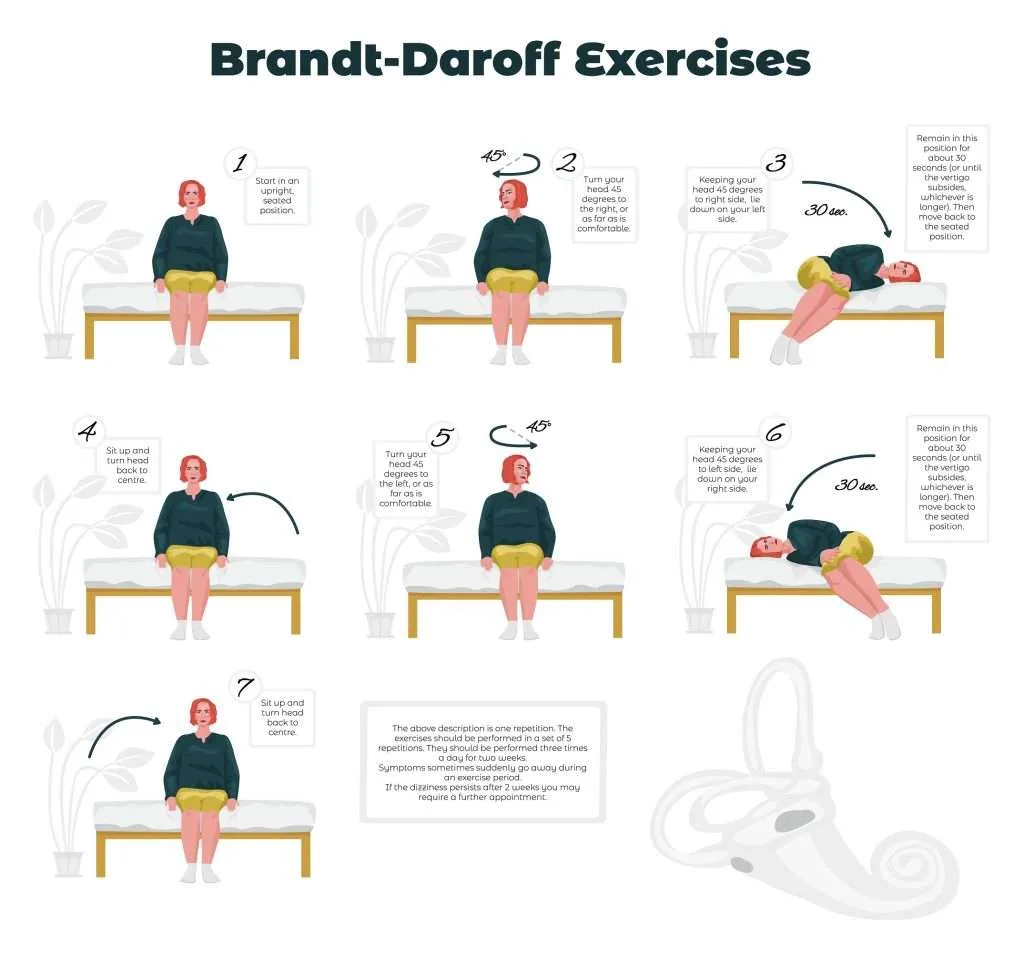
Image Source: rosannaphysio.com.au
Deciphering Vertigo and Movement
Vertigo is the sensation that you, or your surroundings, are moving when there is no actual movement. This unsettling feeling is often caused by problems in the inner ear’s balance system or the brain’s processing of balance information. The primary goal when considering exercise with vertigo is to improve the brain’s ability to process balance signals and to strengthen the systems that maintain stability.
Common Causes of Vertigo
- Benign Paroxysmal Positional Vertigo (BPPV): This is the most common cause, triggered by specific head movements. Tiny calcium crystals in the inner ear become dislodged and move into the semicircular canals, sending false signals to the brain.
- Meniere’s Disease: An inner ear disorder that can cause episodes of vertigo, hearing loss, tinnitus (ringing in the ears), and a feeling of fullness in the ear.
- Vestibular Neuritis and Labyrinthitis: Inflammation of the inner ear nerve, often due to a viral infection, leading to sudden, severe vertigo and sometimes hearing loss.
- Vestibular Migraine: Migraine headaches that include vertigo as a symptom, even without a typical headache.
- Other Causes: Acoustic neuroma (a tumor on the auditory nerve), stroke, head injury, certain medications, and anxiety can also contribute to vertigo.
Why Exercise Can Help
Instead of making vertigo worse, targeted exercises can actually help your body adapt and compensate. This process is often referred to as vestibular rehabilitation exercises. By engaging in specific movements, you retrain your brain and inner ear to better interpret balance signals, leading to dizziness relief exercises. These routines are designed to improve your balance exercises for vertigo and ultimately reduce the frequency and intensity of vertigo episodes.
Starting Your Vertigo Exercise Journey Safely
Before you lace up your sneakers, it’s crucial to have a conversation with your doctor or a physical therapist specializing in vestibular disorders. They can accurately diagnose the cause of your vertigo and recommend a personalized exercise plan. Trying to do the wrong exercises can exacerbate your symptoms.
When to Seek Professional Help
- Diagnosis: A definitive diagnosis is paramount. What works for BPPV might not be suitable for Meniere’s disease.
- Personalized Plan: A therapist can assess your specific limitations and tailor exercises to your needs.
- Progression: They can guide you on how to safely increase the difficulty and duration of your exercises.
- Safety: A therapist can teach you how to perform movements correctly and when to stop if symptoms worsen significantly.
Establishing a Safe Exercise Routine
When starting, the focus is on safe exercises for vertigo. This means:
- Listen to Your Body: If an exercise causes significant dizziness or nausea, stop. Pushing through severe symptoms can be counterproductive.
- Start Slow and Low: Begin with short durations and fewer repetitions. Gradually increase as your tolerance improves.
- Controlled Movements: Perform all exercises with slow, deliberate movements. Avoid sudden head turns or rapid changes in position.
- Supportive Environment: Exercise in a safe space where you can sit or hold onto something if you feel unsteady. Avoid heights or environments that could be dangerous if you experience a vertigo episode.
- Hydration and Nutrition: Stay well-hydrated and avoid exercising on an empty stomach.
Tailored Exercises for Vertigo Management
The types of exercises recommended depend heavily on the cause of your vertigo. For instance, exercises for benign paroxysmal positional vertigo (BPPV) are often specific positional maneuvers designed to move the dislodged crystals back into place. In contrast, other forms of vertigo may benefit more from gaze stabilization and balance training.
Vestibular Rehabilitation Exercises Explained
These exercises are designed to retrain the vestibular system. They typically involve three main categories:
- Habituation Exercises: These involve repeated exposure to movements or positions that provoke dizziness. The goal is to reduce the dizziness response over time.
- Gaze Stabilization Exercises: These aim to improve the ability to keep your gaze steady on a target while your head is moving. This helps reduce blurred vision and dizziness during movement.
- Balance Exercises: These focus on improving your ability to maintain stability in various positions and during movement, often by challenging your balance in a controlled manner.
Gaze Stabilization Exercises
These are fundamental for many types of vertigo and can be considered motion sickness exercises as they help the brain adapt to visual-motion mismatch.
VOR (Vestibulo-Ocular Reflex) Exercises
The VOR helps stabilize your vision during head movements.
-
Head Turns with a Fixed Target:
- Hold a target (like a word on a page or a picture) at arm’s length.
- Keep your eyes focused on the target.
- Slowly turn your head from side to side, keeping your eyes on the target.
- If dizziness occurs, pause until it subsides, then continue.
- Start with slow head turns and gradually increase speed.
- Aim for 10-20 repetitions, 2-3 times a day.
-
Head Tilts with a Fixed Target:
- Similar to head turns, but tilt your head up and down.
- Keep your eyes fixed on the target throughout the movement.
- Proceed with caution, as some people find head tilts more provoking.
Smooth Pursuit Exercises
This involves following a moving object with your eyes.
- Tracking a Moving Object:
- Hold an object (like your finger or a pen) in front of you.
- Slowly move the object horizontally across your field of vision.
- Follow the object smoothly with your eyes, keeping your head still initially.
- As you improve, try to move your head slowly while continuing to track the object.
- Start with slow movements and gradually increase speed and range.
Balance Exercises for Vertigo
These exercises are crucial for improving your proprioception (your body’s sense of its position in space) and your ability to react to imbalances.
Static Balance Exercises
These involve holding a position.
-
Standing with Feet Together:
- Stand with your feet touching each other.
- Hold this position for 30 seconds.
- If stable, close your eyes for a few seconds.
- Repeat 3-5 times.
-
Tandem Stance (Heel-to-Toe Standing):
- Place one foot directly in front of the other, so your heel touches your toe.
- Hold for 30 seconds.
- Repeat with the other foot in front.
- Aim for 3-5 repetitions on each side.
-
Single Leg Stance:
- Stand on one leg.
- Hold for 10-30 seconds.
- Repeat on the other leg.
- As you improve, try closing your eyes or standing on an unstable surface (like a cushion).
Dynamic Balance Exercises
These involve moving while maintaining balance.
-
Weight Shifting:
- Stand with your feet hip-width apart.
- Slowly shift your weight from one foot to the other.
- Keep your core engaged and avoid leaning too far.
- Progress to shifting weight forward and backward.
-
Walking Heel-to-Toe:
- Walk in a straight line, placing the heel of one foot directly in front of the toes of the other.
- Focus on maintaining a steady gait.
- If needed, use a wall or counter for support.
-
Stepping Over Objects:
- Place small objects (like books or cones) on the floor.
- Walk forward, stepping over each object carefully.
- Ensure you lift your knees.
Exercises for Benign Paroxysmal Positional Vertigo (BPPV)
For BPPV, specific canalith repositioning maneuvers are often prescribed. The most common is the Epley Maneuver. It’s essential to have a physical therapist demonstrate and guide you through this, as incorrect execution can worsen symptoms.
The Epley Maneuver (for Posterior Canal BPPV)
Important: This should ideally be performed under the supervision of a trained professional.
- Start Position: Sit upright on a flat surface (like a bed or examination table) with your head turned 45 degrees toward the affected ear.
- Rapid Head Turn: Lie down quickly onto your back, keeping your head turned towards the affected side. Ensure your head hangs slightly off the edge of the surface if possible. Hold for about 30-60 seconds, or until the vertigo subsides.
- Turn to the Other Side: Slowly turn your head 90 degrees to the opposite side, so you are now looking at the unaffected ear. Again, hold for 30-60 seconds, or until the vertigo subsides.
- Turn Your Body: Rotate your body to the side you are now facing, keeping your head turned. Hold for another 30-60 seconds, or until the vertigo subsides.
- Return to Sitting: Gradually bring your head back to center and then sit up.
Post-Maneuver Precautions: After the Epley maneuver, it’s generally advised to avoid lying down on the affected side for 24-48 hours. Your therapist will provide specific instructions.
Other maneuvers, like the Semont Maneuver and Brandt-Daroff Exercises, are also used for different types of BPPV.
Exercises to Reduce Vertigo Symptoms
The overall aim of these exercises is to build resilience in your vestibular system. Even if your vertigo isn’t BPPV, gradual exposure and strengthening can lead to significant dizziness relief exercises.
Habituation Exercises
If certain movements trigger your vertigo, controlled repetition of these movements can help your brain adapt.
- Head Turns in Different Planes: If looking up or down provokes dizziness, practice slow, controlled head turns up and down while seated.
- Bending Over: If bending over causes issues, start by bending a little, then gradually increase the depth as tolerated.
- Rolling in Bed: For those whose vertigo is triggered by rolling in bed, practice slow, controlled rolls.
Key Principles for Habituation:
- Intensity: The provoking movement should cause mild to moderate dizziness (e.g., a 3-5 on a scale of 0-10).
- Frequency: Perform the exercise daily.
- Duration: Repeat the movement until the dizziness subsides, then repeat a few more times.
Home Exercises for Vertigo
Many of these exercises can be safely performed at home once you’ve been taught the correct technique by a professional.
- Eye Exercises: Focus on smooth tracking of objects.
- Balance Challenges: Practice standing on one leg, walking heel-to-toe.
- Positional Changes: If your doctor has prescribed specific positional maneuvers for BPPV, practice those.
- Gentle Aerobics: Once your vertigo is more stable, activities like walking, cycling on a stationary bike, or swimming can be beneficial.
When Exercise Can Be Too Much
It’s important to recognize when to stop or modify your exercise routine.
Red Flags During Exercise
- Severe Dizziness: If dizziness becomes intense and debilitating.
- Nausea and Vomiting: These are clear signs to stop.
- Impaired Vision: If your vision becomes significantly blurred or you experience double vision.
- Sudden Onset of New Symptoms: Any new or worsening neurological symptoms should be reported to your doctor immediately.
- Risk of Falling: If you feel like you are about to fall and cannot regain your balance.
Modifying Your Routine
- Reduce Intensity: Shorten the duration or decrease the speed of movements.
- Increase Support: Use handrails, a cane, or a wall for assistance.
- Take More Breaks: Rest between exercises.
- Avoid Triggers: If specific movements consistently worsen symptoms, temporarily avoid them or perform them under more controlled conditions.
Types of Exercise That May Be Beneficial (with Caution)
Once your vertigo is managed through targeted vertigo physical therapy exercises, other forms of movement can support your overall health and balance.
Low-Impact Aerobic Activities
- Walking: Start on flat surfaces and gradually introduce inclines.
- Stationary Cycling: Provides a good cardiovascular workout without the dynamic head movements of outdoor cycling.
- Swimming: The buoyancy of water can be very supportive for balance.
- Elliptical Trainer: Offers a low-impact cardio option.
Strength Training
- Core Strengthening: Exercises like planks and bird-dog help improve posture and stability.
- Leg Strengthening: Squats, lunges, and calf raises improve leg muscle power, which is crucial for balance. Use support as needed.
- Ankle Strength: Simple calf raises and ankle circles can improve ankle stability.
Flexibility and Mind-Body Exercises
- Yoga: Certain yoga poses can be beneficial for balance and relaxation, but modifications are often necessary. Avoid poses that involve rapid head movements or inversions if they trigger your vertigo.
- Tai Chi: This slow, flowing martial art is excellent for balance and coordination and is often recommended for individuals with balance issues.
Frequently Asked Questions (FAQ)
Q1: How soon can I start exercising after a vertigo episode?
A1: This depends on the cause and severity of your episode. For BPPV, once a repositioning maneuver has been successful, you might be able to resume light activity gradually. For other causes, it’s best to consult your doctor or physical therapist for guidance. The goal is to start gently once your acute symptoms have subsided.
Q2: Will exercising make my vertigo worse?
A2: If you do the wrong exercises or push yourself too hard, it can. However, when done correctly and with appropriate exercises, it can significantly reduce your symptoms and improve your balance over time. It’s about finding the right balance and progression.
Q3: What are the best exercises for motion sickness?
A3: Gaze stabilization exercises, which help your eyes and inner ear communicate better, are often helpful for motion sickness. These include tracking moving objects and performing head movements while keeping your eyes focused on a target.
Q4: Can I do vestibular rehabilitation exercises at home?
A4: Yes, many vestibular rehabilitation exercises can be performed at home. However, it is highly recommended to have an initial assessment and guidance from a physical therapist specializing in vestibular disorders to ensure you are doing the correct exercises safely and effectively.
Q5: What if I feel dizzy during an exercise?
A5: If you experience dizziness during an exercise, stop the movement immediately. Sit or lie down in a safe place until the dizziness subsides. Avoid trying to push through severe dizziness, as this can be counterproductive. It might mean the exercise is too advanced, or you need to adjust your approach.
Q6: How long does it take to see improvement from vertigo exercises?
A6: The timeline for improvement varies greatly depending on the individual and the cause of their vertigo. Some people may notice a reduction in symptoms within a few weeks, while others might take several months. Consistency is key.
Q7: Are there any exercises I should absolutely avoid?
A7: Generally, avoid exercises that involve rapid head movements, jerky motions, strenuous activity that causes significant breathlessness and head position changes, or anything that reliably triggers your vertigo. High-impact activities might also be problematic initially. Always consult your healthcare provider for specific advice.
Q8: What is the role of physical therapy for vertigo?
A8: Physical therapists are experts in movement and balance. They can diagnose the cause of your vertigo, perform specific diagnostic tests, and create a personalized vertigo physical therapy exercises program. This program is designed to reduce dizziness, improve gaze stability, and enhance overall balance, leading to greater independence and quality of life.
Conclusion
Exercising with vertigo is not only possible but often a crucial component of recovery and management. By focusing on vertigo exercises, dizziness relief exercises, and balance exercises for vertigo, you can retrain your vestibular system and regain control over your life. Remember to always prioritize safety, listen to your body, and work closely with healthcare professionals to develop a personalized plan. With the right approach, you can move towards a life with less dizziness and more freedom.