
Yes, you can generally exercise after Botox, but it’s crucial to follow specific guidelines to ensure optimal results and minimize potential side effects. The key is understanding the right post-botox activity and when it’s safe to resume your usual fitness routine.
Botulinum toxin, commonly known as Botox, is a popular injectable treatment used for cosmetic purposes, such as reducing the appearance of wrinkles and fine lines. It works by temporarily blocking nerve signals to the muscles, causing them to relax. While its effects are localized, there are some considerations regarding physical activity after botulinum toxin injections to prevent the neurotoxin from migrating and to avoid complications.
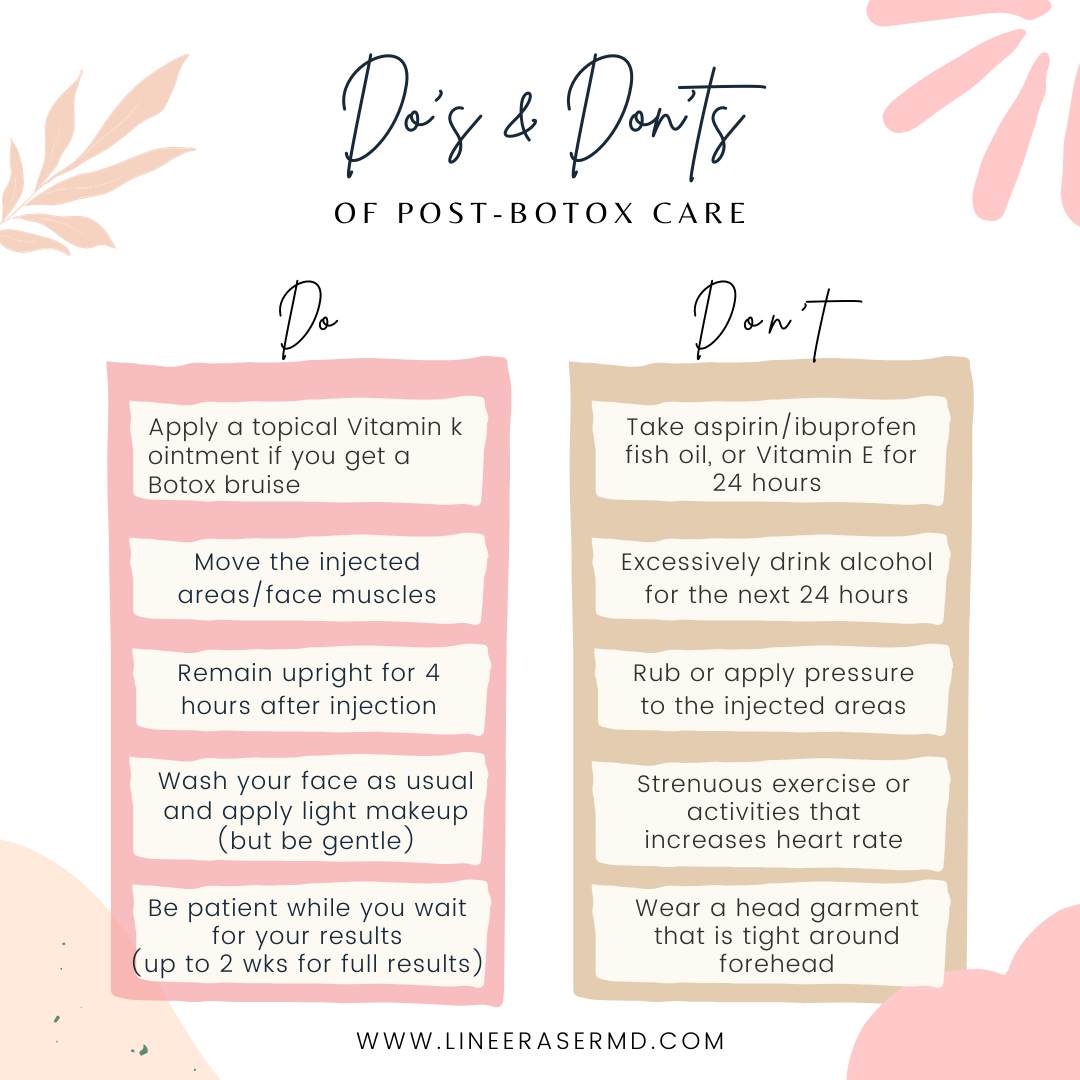
Image Source: www.lineerasermd.com
Why the Concern About Exercise After Cosmetic Injections?
The primary concern with exercising too soon after Botox is the potential for the neurotoxin to spread to unintended areas. When you engage in strenuous physical exertion after botox, your body’s circulation increases. This increased blood flow, coupled with certain movements, could theoretically cause the injected Botox to move from the target muscle to adjacent muscles. This migration could lead to undesirable effects, such as temporary drooping of an eyelid or a weakened smile.
Furthermore, activities that involve significant facial contortions or pressure on the injection sites might also interfere with the Botox settling properly into the muscles. While the exact mechanism of Botox migration is debated, and the risk is generally considered low for most activities, it’s a factor that many practitioners advise clients to be mindful of.
Timing is Everything: Exercise Timing After Botox
The most frequently asked question is: “When can I resume my normal workout routine?” Most experts recommend a waiting period of 24 to 48 hours after your Botox injections before engaging in any vigorous exercise. Some may suggest a slightly longer period of up to 72 hours for maximum caution, especially if you’re prone to bruising or swelling.
Immediate Post-Injection Period (First 24 Hours)
During the initial 24 hours, it’s best to stick to very light post-botox activity. This period is crucial for the Botox to begin integrating with the muscle and for any minor swelling or redness at the injection sites to subside.
- Avoid strenuous activities: High-intensity workouts, heavy lifting, and anything that significantly raises your heart rate or blood pressure should be postponed.
- No bending or lying down excessively: While not directly exercise-related, avoiding prolonged bending over or lying flat can help prevent pressure on the injection sites.
- Gentle movements are okay: Light walking or stretching is generally fine, as long as it doesn’t involve intense exertion or put pressure on the treated areas.
The 24-48 Hour Window
This is the critical period where you need to be most mindful of your post-botox activity.
- Gradual reintroduction: If you’re feeling well and have no significant discomfort or swelling, you can start to slowly reintroduce low-impact exercises.
- Listen to your body: Pay close attention to how your body feels. If any movement causes discomfort or you notice unusual sensations, stop and rest.
- Avoid activities that cause facial flushing: Intense heat or exercise that makes your face very red could potentially affect the Botox.
After 48 Hours (or as advised by your practitioner)
Once the initial 48-hour period has passed, you can typically resume your regular exercise after cosmetic injections. However, it’s still wise to be a bit cautious for the first week.
- Progressive return: Gradually increase the intensity of your workouts. Don’t jump back into the most demanding sessions immediately.
- Monitor for changes: Keep an eye on the results of your Botox treatment. If you notice any asymmetry or unintended effects, contact your practitioner.
What Not to Do After Botox: Essential Workout Restrictions After Botox
To ensure you get the best results from your Botox treatment, certain activities are best avoided, especially in the first 24-48 hours.
Specific Activities to Avoid:
- High-Intensity Interval Training (HIIT): The rapid fluctuations in heart rate and intense bursts of energy can increase blood flow significantly.
- Heavy Weightlifting: Straining and holding your breath during heavy lifts can put pressure on facial muscles and increase blood pressure.
- Running and Intense Cardio: Activities that cause you to sweat profusely and elevate your heart rate considerably should be postponed.
- Hot Yoga and Saunas: The excessive heat can cause flushing and may potentially affect the Botox.
- Activities Requiring Head-Down Positions: Yoga poses like inversions or even prolonged bending over can be problematic.
- Facial Massage or Manipulation: Avoid touching or massaging the treated areas. This can disrupt the Botox before it has settled.
- Alcohol Consumption: While not exercise, consuming alcohol in the first 24 hours can increase the risk of bruising and swelling.
Why These Restrictions?
These workout restrictions after botox are in place to:
- Prevent Botox Migration: As mentioned, increased blood flow and muscle movement can theoretically spread the toxin.
- Minimize Bruising and Swelling: Strenuous activity can exacerbate any minor bruising or swelling that may occur at the injection sites.
- Ensure Optimal Results: Allowing the Botox to settle properly in the target muscles ensures the desired cosmetic effect.
Safe Activities After Botox: Gentle Beginnings
If you’re eager to stay active, there are certainly safe activities after botox that you can engage in during the initial waiting period. The key is to choose activities that are low-impact and do not cause excessive facial flushing or pressure.
Recommended Gentle Activities:
- Walking: A brisk walk is an excellent way to get your body moving without overexerting yourself.
- Light Stretching: Gentle stretching helps improve flexibility and can be done at a slow pace.
- Pilates (Low Intensity): Focus on controlled movements and avoid any strenuous core engagement or inversions.
- Yoga (Restorative or Gentle): Opt for classes that focus on relaxation and gentle poses, avoiding any inversions or poses that put pressure on the face.
- Light Swimming (after 24 hours): Once the initial 24 hours have passed, a gentle swim can be a good option, ensuring you don’t engage in vigorous strokes that strain facial muscles.
Table 1: Post-Botox Activity Guidelines
| Activity Type | Recommended Timing | Notes |
|---|---|---|
| Strenuous Exercise | Avoid for 24-48 hours post-injection | HIIT, heavy lifting, intense cardio, running. |
| Light Walking | Permitted immediately post-injection | Focus on a comfortable pace. |
| Gentle Stretching | Permitted immediately post-injection | Focus on controlled, slow movements. Avoid stretching the face. |
| Yoga/Pilates | Gentle/Restorative: Permitted after 24 hours. | Avoid inversions, strenuous core work, or poses that put pressure on the face. |
| Swimming | Light: Permitted after 24 hours. | Avoid vigorous strokes. |
| Sauna/Hot Tub | Avoid for 24-48 hours post-injection | Excessive heat can cause flushing. |
| Bending Over | Avoid for 24 hours post-injection | Minimize prolonged head-down positions. |
| Facial Massage | Avoid for 48 hours post-injection (or longer) | Do not touch or massage the injection sites. |
Factors Influencing Resuming Exercise Post-Botox
While general guidelines exist, several factors can influence when it’s best for you to start resuming exercise post-botox.
Individual Variability:
- Metabolism: Everyone metabolizes substances differently. Some individuals may process Botox faster than others.
- Injection Site: The areas treated can affect how quickly you can resume physical activity after botulinum toxin. For example, Botox injected around the eyes might require slightly more caution than that injected in the forehead.
- Sensitivity: Some people are more prone to bruising or swelling, which might warrant a more conservative approach to post-botox activity.
Type of Botox Used:
While the core mechanism is the same, different formulations of botulinum toxin might have slightly different onset and duration profiles. However, the general advice regarding exercise remains consistent across most products.
Practitioner’s Advice:
The most critical factor is to always follow the specific instructions provided by your cosmetic injector or dermatologist. They have assessed your individual needs and the treatment administered. They are the best resource for personalized advice on workout restrictions after botox.
Potential Side Effects and How Exercise Can Influence Them
While Botox is generally safe, understanding potential side effects and how physical exertion after botox might influence them is important.
- Bruising and Swelling: These are common and usually subside within a few days. Vigorous exercise that increases blood flow can potentially worsen or prolong bruising.
- Headaches: Some individuals experience mild headaches after Botox. Intense exercise might exacerbate this for a short period.
- Drooping or Ptosis: This is a rare side effect where the Botox affects unintended muscles, such as the eyelid. While migration is the primary concern for exercise, any activity that puts pressure on the treated area could theoretically contribute to this if the Botox hasn’t settled.
- Asymmetry: If the Botox migrates or doesn’t settle evenly, you might notice asymmetry in your facial expressions. Avoiding strenuous post-botox activity helps minimize this risk.
FAQs About Exercise and Botox
Here are answers to some frequently asked questions regarding exercise after cosmetic injections.
Can I go for a run after Botox?
It’s best to wait at least 24 to 48 hours after your Botox injections before going for a run. High-intensity cardio like running can increase blood flow and potentially affect how the Botox settles.
Is it okay to do yoga after Botox?
Gentle or restorative yoga is generally considered safe after 24 hours, provided you avoid inversions and poses that put pressure on your face or require intense facial muscle engagement. Strenuous or hot yoga should be avoided for at least 48 hours.
What are the exercise contraindications after botox?
The main exercise contraindications after botox include high-intensity aerobic activities, heavy weightlifting, hot yoga, saunas, and any activity that involves significant bending over or pressure on the head and face. These should generally be avoided for the first 24-48 hours.
Can I swim after Botox?
Yes, you can swim after Botox, but it’s advisable to wait at least 24 hours. Avoid vigorous swimming that strains facial muscles.
How long should I avoid the gym after Botox?
Most practitioners recommend avoiding the gym for at least 24-48 hours. After this period, you can gradually resume your gym activities, starting with lighter workouts.
Will exercise make my Botox wear off faster?
There is no definitive scientific evidence to suggest that moderate physical activity after botulinum toxin injections will significantly shorten the duration of your Botox results. However, very intense and prolonged strenuous post-botox activity might, in theory, influence the Botox’s effectiveness due to increased muscle activity and circulation.
What if I accidentally exercised too soon?
If you’ve exercised sooner than recommended, don’t panic. The risk of significant migration or adverse effects is generally low for most people. However, monitor the treated areas closely for any unusual changes like drooping or asymmetry. If you notice anything concerning, contact your practitioner immediately.
Can I sweat after Botox?
Sweating itself is not directly a problem. However, activities that cause you to sweat profusely are often high-intensity exercises that are best avoided in the initial period due to increased blood flow.
Deciphering the Dos and Don’ts of Post-Botox Activity
To summarize, here’s a clear breakdown of what you should and shouldn’t do regarding post-botox activity:
Do:
- Follow your practitioner’s advice.
- Engage in light walking or gentle stretching.
- Stay hydrated.
- Monitor for any adverse reactions.
- Resume exercise gradually.
Don’t:
- Engage in strenuous workouts for 24-48 hours.
- Do activities that involve significant bending or head-down positions.
- Massage or apply pressure to the injection sites.
- Expose yourself to extreme heat (saunas, hot tubs).
- Drink alcohol in the first 24 hours.
By adhering to these guidelines, you can help ensure your Botox treatment is successful and you achieve the desired cosmetic results, allowing you to confidently resume your active lifestyle. Remember, a little patience in the initial period can go a long way in maximizing the benefits of your treatment. Always consult your healthcare provider for personalized advice.