
Yes, you can often exercise after shockwave therapy, but it is crucial to do it safely and at the right time. The ability to exercise and the type of physical activity after shockwave treatment depend a lot on what condition was treated, how your body responds, and the specific advice from your healthcare provider. This guide will walk you through when and how to safely start exercising again after receiving shockwave therapy.
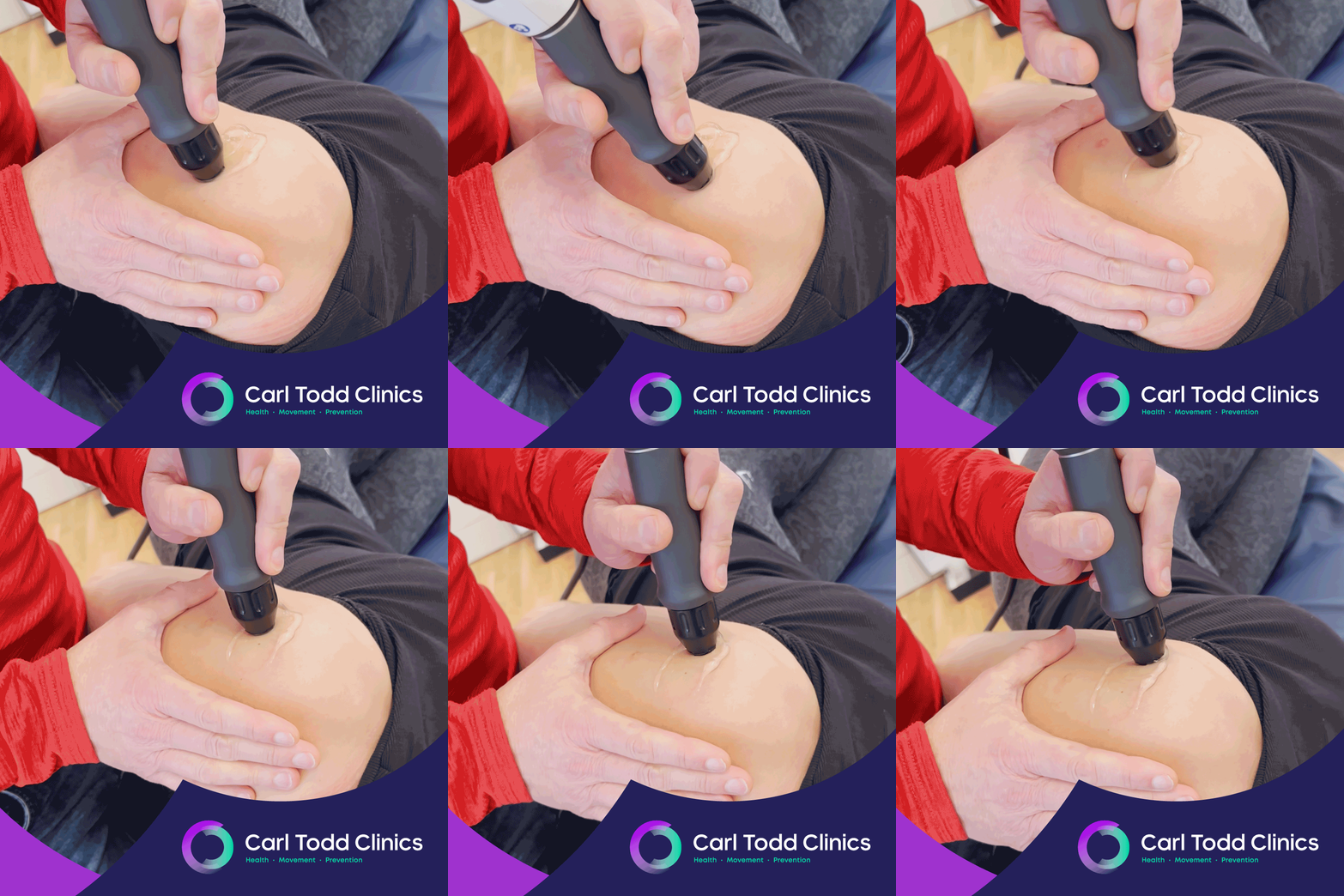
Image Source: thecarltoddclinic.com
What is Shockwave Therapy?
Let’s first look at what shockwave therapy is. It’s a treatment doctors use for pain and injuries. It’s also called Extracorporeal Shockwave Therapy (ESWT).
ESWT sends acoustic waves, or sound waves, into your body. These waves are not like the ones you hear. They are high-energy waves.
Think of them like tiny pulses. They go into the injured area.
People use ESWT for long-lasting tendon pain. Things like:
- Heel pain (plantar fasciitis)
- Achilles tendon pain
- Elbow pain (tennis or golfer’s elbow)
- Pain below the kneecap (jumper’s knee)
- Shoulder pain
The waves help your body heal. They can:
- Increase blood flow
- Help new blood vessels grow
- Break down scar tissue
- Lower pain
It’s a non-surgical option. Many people find it helps when other treatments haven’t worked.
Why Exercise After Shockwave Therapy?
You might think resting completely is best. But often, some physical activity after shockwave treatment is good. Why is this?
Movement helps your body heal. Gentle exercise can:
- Improve blood flow to the area. More blood brings more healing things.
- Keep your muscles strong. Weak muscles can make the problem worse later.
- Maintain flexibility. Stiffness can cause more pain.
- Help your body get back to normal movement.
It’s not about pushing hard. It’s about helping the treated area recover the right way. Your doctor or physical therapist will guide you on this.
When to Exercise After Shockwave Therapy
This is a big question. There is no single answer for everyone. The timeline for when to exercise after shockwave therapy depends on several things.
Factors include:
- What part of your body was treated? A foot is different from an elbow.
- How bad was your injury? More severe problems might need more rest.
- How intense was the shockwave treatment? Higher energy levels might need more downtime.
- How many sessions have you had?
- How does your body feel? Pain is a key signal.
The general rule is: Start slow. Listen to your body. Follow your therapist’s plan.
Let’s look at the typical timeline after a session. This is part of the recovery time shockwave therapy involves.
Immediate Steps After Treatment
Right after your shockwave session, the treated area might feel:
- Sore
- Tender
- A bit bruised
- Swollen
This is normal. It shows the treatment is working. Your body is starting the healing process.
So, what to avoid after shockwave therapy in the first 24 to 48 hours?
- Hard exercise: No intense running, jumping, heavy lifting, or sports.
- Activities that put lots of stress on the treated area: If your heel was treated, avoid long walks or standing for hours. If your elbow was treated, avoid lifting heavy things with that arm.
- Anti-inflammatory medicine: Your doctor might tell you not to take pills like ibuprofen (Advil) or naproxen (Aleve). Shockwaves cause a small, helpful inflammation. These medicines can stop this needed process. Ask your doctor about pain relief options.
- Ice (sometimes): While ice often helps pain, some therapists advise against using it right on the treated spot immediately after ESWT. This is because the temporary inflammation is part of the healing. Again, ask your provider.
Rest is important in this first phase. This doesn’t mean sitting still all day. It means avoiding stress on the treated spot. Gentle movement is often okay.
Starting Gentle Exercise
After the first day or two, if the soreness allows, you can usually start gentle exercise after shockwave. This stage is key. It prepares your body for more activity later.
What counts as gentle exercise?
- Walking: If the treatment was on your lower body. Start with short, easy walks.
- Gentle stretching: Lightly stretch the muscles around the treated area. Do not force stretches into pain.
- Range of motion exercises: Move the joint gently through its normal path.
- Specific rehab exercises: Your therapist might give you special exercises. These are designed to be safe for the treated area.
The goal of gentle exercise after shockwave is to:
- Keep the tissue moving.
- Prevent stiffness.
- Promote blood flow.
- Wake up the muscles softly.
Listen very carefully to your body during this phase. If a movement causes sharp pain, stop. Some mild discomfort or soreness is okay. But increasing pain is a warning sign.
H4 Navigating Initial Discomfort
It is common to feel some pain after shockwave therapy exercise, especially when first starting. This pain is often described as:
- Mild soreness
- A dull ache
- Feeling like you worked out the area
This type of pain is usually fine. It should not get worse with activity and should go away soon after you stop.
However, watch out for:
- Sharp pain
- Pain that gets much worse during the exercise
- Pain that does not go away after you stop
- Pain that is much worse than before the shockwave treatment
If you feel this kind of pain, you are likely doing too much too soon. Stop the exercise and talk to your therapist.
Stepping Up Your Activity
As you heal and your body feels better, you can slowly increase your post-shockwave therapy exercise. This means doing more intense activities.
This progression is not a race. It’s a careful build-up.
How to increase activity:
- Increase duration: Walk for longer periods.
- Increase intensity: Walk faster, add small hills.
- Add new exercises: Your therapist will likely give you exercises to build strength and control. These are important for preventing the injury from coming back.
Examples of progressive exercises might include:
- For heel pain: Heel raises, calf stretches, exercises to improve foot strength.
- For Achilles pain: Eccentric calf lowering (standing on a step and slowly lowering your heel), stretches.
- For elbow pain: Wrist curls, exercises with light weights or resistance bands to strengthen the forearm muscles.
Your therapist will guide you on which exercises to do and how to do them. They will tell you how many sets and reps to do.
Shockwave Therapy Aftercare and Exercise
Good shockwave therapy aftercare is more than just resting. It includes:
- Following therapist advice: This is the most important part. They know your specific situation.
- Managing pain safely: Using methods your doctor approves (not usually NSAIDs).
- Proper nutrition and hydration: Eating well helps your body heal.
- Getting enough sleep: Sleep is when your body repairs itself.
- Doing your prescribed exercises: Even when you don’t have therapy, sticking to your post-shockwave therapy exercise plan is vital.
Skipping your exercises or doing too much too soon can slow down your recovery. It can also make the original problem worse.
Typical Recovery Timelines for Exercise
Again, timelines vary greatly. But here are some general ideas for recovery time shockwave therapy often involves regarding exercise:
| Phase | Time After Treatment | Type of Activity | Things to Watch For |
|---|---|---|---|
| Phase 1: Acute Rest | 0-2 days | Rest, avoid stress on the area, very light movement if no pain. | Sharp pain, increased swelling, bruising |
| Phase 2: Gentle Move | 2-7 days | Short walks, gentle stretches, range of motion, prescribed gentle rehab exercises. | Mild soreness is OK, STOP if sharp pain |
| Phase 3: Progress | 1-4 weeks | Increase length/intensity of walks, start strength/control exercises guided by therapist. | Pain that lingers or gets worse |
| Phase 4: Return | Varies (weeks to months) | Gradually return to normal activities/sports. Follow a planned, step-by-step return. | Pain during or after activity |
This table is a general idea. Your therapist might give you a different plan. Always follow their lead.
Condition-Specific Exercise After ESWT
The injured area makes a big difference in your exercise after ESWT plan.
H4 Exercise After ESWT for Plantar Fasciitis (Heel Pain)
- Early: Short, easy walks on soft surfaces. Gentle calf and plantar fascia stretches. Sitting heel slides.
- Later: Increase walk distance. Start exercises like heel raises (on the floor, then maybe on a step). Pick up marbles with toes. Work on hip and core strength.
- Return to running/impact: Very slow, gradual build-up. Start with short run/walk intervals. Only if pain-free during and after.
H4 Exercise After ESWT for Achilles Tendinopathy (Achilles Pain)
- Early: Gentle ankle range of motion. Non-weight bearing exercises like ankle pumps.
- Later: Standing calf raises (both legs, then one leg if able). Eccentric calf lowering (on a step). Balance exercises. Work on hip and glute strength.
- Return to sport: Needs careful planning, especially for running and jumping sports. Progress from walking to jogging, then running, then sport-specific drills.
H4 Exercise After ESWT for Lateral Epicondylitis (Tennis Elbow)
- Early: Gentle wrist and elbow range of motion. Gentle forearm stretches.
- Later: Isometric holds (contracting muscles without moving the joint). Exercises with very light weights for wrist extension and flexion. Using resistance bands.
- Return to sport/activity: Start with light tasks. For tennis, start with gentle hitting, short periods, maybe forehands only initially. Build up intensity and duration slowly. Focus on proper technique to avoid re-injury.
H4 Exercise After ESWT for Patellar Tendinopathy (Jumper’s Knee)
- Early: Gentle knee bending and straightening exercises. Leg slides.
- Later: Mini-squats. Exercises for quad and hamstring strength (leg press, hamstring curls with light weight). Step-ups. Work on hip and glute strength.
- Return to sport: Gradual return to jumping and landing activities. Start with low jumps, few reps. Increase height and reps slowly.
These are just examples. Your specific post-shockwave therapy exercise plan will be made for you.
Returning to Sport After Shockwave Therapy
Getting back to your sport is a major goal for many people. Return to sport after shockwave therapy takes patience and careful planning.
It’s not just about the treated area feeling okay. Your whole body needs to be ready.
Steps for a safe return:
- Full range of motion: Make sure the injured area can move freely without pain.
- Good strength: The muscles around the area and in your core/hips should be strong. This helps support the injured spot.
- No pain with basic movements: You should be able to do exercises like hopping (for lower body) or light throwing (for upper body) without pain.
- Sport-specific drills: Start practicing movements needed for your sport at a low intensity. For example, short passes, gentle swings, light jogging.
- Gradual increase: Slowly increase how long and how hard you play. Don’t jump straight back into a full game or practice.
- Monitor pain: Pay close attention to how your body feels during and after playing. Some mild soreness might happen, but sharp or worsening pain means you need to back off.
Working with a physical therapist is highly recommended for return to sport after shockwave therapy. They can guide you through each step safely. They can also check if your movement patterns contributed to the injury.
H4 The Importance of Pain Management
We talked about pain after shockwave therapy exercise. It’s worth saying again: pain is your body’s signal.
- Mild, short-lasting pain or soreness is often acceptable.
- Sharp, increasing, or long-lasting pain is not acceptable.
Do not try to push through bad pain. This can cause more harm. It can delay your healing.
If you feel worrying pain during physical activity after shockwave treatment, stop the activity. Rest. If the pain continues or is severe, contact your therapist or doctor.
They might need to adjust your exercise plan. Or they may need to check the treated area again.
What Else is Part of Shockwave Therapy Aftercare?
Beyond exercise, good shockwave therapy aftercare helps the treatment work best.
- Follow Activity Restrictions: Stick to the advice on what to avoid after shockwave therapy, especially in the first few days.
- Avoid Anti-Inflammatories: As mentioned, try to avoid NSAID pain relievers (like ibuprofen) unless your doctor says it’s okay. Paracetamol (acetaminophen) is usually fine for pain relief.
- Stay Hydrated: Drink plenty of water.
- Healthy Diet: Eat nutritious food to support healing.
- Listen to Your Body: This is the golden rule for all of recovery.
Factors Affecting Exercise Timing
To sum up, when can you exercise after shockwave therapy? It depends on:
- The specific injury: What tissue is affected? How bad is it?
- Your individual response: Everyone heals at a different speed.
- The energy level of ESWT: Higher energy might need more rest time.
- Number of sessions: Your plan might change after multiple sessions.
- Your therapist’s guidance: Always follow their personalized plan.
Do not compare your recovery to someone else’s. Focus on your own progress and how your body feels.
Working Closely with Your Healthcare Team
Your doctor and physical therapist are your best resources. They know your history and your treatment plan.
They will tell you:
- Exactly when to exercise after shockwave therapy.
- What types of gentle exercise after shockwave are safe initially.
- How to progress your post-shockwave therapy exercise.
- When you can start planning for return to sport after shockwave therapy.
- What shockwave therapy aftercare looks like for your case.
- How to manage any pain after shockwave therapy exercise.
They will help you make a plan that helps you heal safely and effectively. Do not guess or push yourself too hard.
Comprehending Your Recovery Journey
Recovery from a chronic injury takes time. Shockwave therapy helps kickstart the healing. But exercise and proper physical activity after shockwave treatment are key parts of the journey.
Think of shockwave therapy as giving your body a strong signal to heal. Your exercises help guide that healing in the right way.
By starting with gentle exercise after shockwave, slowly increasing activity, and listening to your body, you give yourself the best chance for a good outcome.
Remember the points about what to avoid after shockwave therapy right away. This protects the healing process.
And always communicate with your healthcare provider. They are there to support you safely getting back to your activities.
Frequently Asked Questions About Exercise After Shockwave Therapy
Here are some common questions people ask about exercise after ESWT.
H5 Can I walk right after shockwave therapy?
Usually, yes, gentle walking is okay right after, especially for lower body treatment. But avoid long distances or power walking. Listen to your body. If it causes sharp pain, stop.
H5 How long after shockwave therapy until I can run?
This varies a lot. For lower body issues treated with shockwave, it might be weeks to months. You need to be able to walk comfortably and do specific strengthening exercises without pain first. Your therapist will guide you through a gradual return-to-running program.
H5 Is it normal to have pain after shockwave therapy exercises?
Some mild soreness or aching is common, especially in the first few days or when you first start exercising the area. But sharp, increasing, or long-lasting pain is not normal and means you should stop and check with your therapist.
H5 Can I lift weights after shockwave therapy?
If the treatment was for an upper body issue like tennis elbow, you will need to avoid heavy lifting with that arm for a while. If it was for a lower body issue, you might be able to lift weights for other body parts sooner. Always follow your therapist’s specific instructions on weight lifting as part of your post-shockwave therapy exercise. Start very light and increase slowly.
H5 What exercises should I avoid after shockwave therapy?
Immediately after treatment, avoid high-impact activities (jumping, running), heavy lifting using the treated area, and activities that put strong, sudden stress on the area. Your therapist will tell you which specific movements or activities are off-limits and for how long. This is part of what to avoid after shockwave therapy.
H5 How long is the recovery time after shockwave therapy before I’m back to normal activity?
Total recovery time shockwave therapy can vary widely, from a few weeks for some mild cases to several months for long-standing, severe issues. It also depends on how many sessions you have and how well you follow the shockwave therapy aftercare, including your exercise plan.
H5 Why shouldn’t I take anti-inflammatory drugs after shockwave therapy?
Shockwave therapy works partly by creating a controlled, mild inflammatory response in the tissue. This inflammation helps start the healing process. Anti-inflammatory drugs (NSAIDs like ibuprofen) can block this helpful inflammation, possibly making the treatment less effective. Always ask your doctor what pain relief is safe for you.
H5 Can I swim after shockwave therapy?
Swimming is often a good form of gentle exercise after shockwave, especially if it doesn’t put direct stress on the treated area. For example, swimming is usually fine after heel treatment once the initial soreness passes. If the treatment was for a shoulder or elbow, some swimming strokes might need to be avoided initially. Ask your therapist if swimming is okay for your specific situation and when you can start.
In Summary
Exercising safely is a vital part of healing after shockwave therapy. It’s not about pushing through pain or jumping back into intense activity right away. It’s about smart, gradual movement guided by your body and your healthcare team.
Start with rest and avoiding stress on the treated area for the first day or two. Then introduce gentle exercise after shockwave, such as easy walks or specific rehab movements your therapist gives you. Slowly increase the challenge of your post-shockwave therapy exercise as your pain allows.
Listen to your body’s signals, especially regarding pain after shockwave therapy exercise. Sharp pain means stop.
Following good shockwave therapy aftercare, including knowing what to avoid after shockwave therapy initially and sticking to your personalized exercise after ESWT plan, gives you the best chance for a successful recovery and a safe return to sport after shockwave therapy or daily activities. Always talk to your doctor or physical therapist about your plan.