
How high should a basketball gym ceiling be? For proper play, a basketball gym ceiling needs to be high enough so shots arc freely and high passes do not hit the roof. While specific needs change based on the level of play, ranging from casual games to professional leagues, there are clear guidelines and minimums to ensure the game can be played well. Getting the height right is key for fairness and good gameplay.
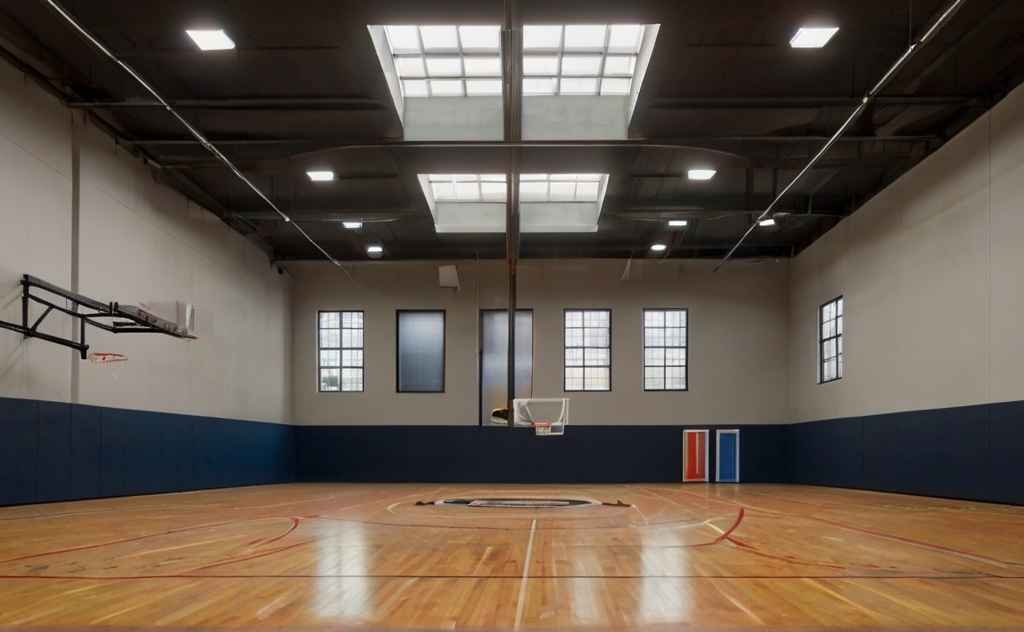
Image Source: basketballinn.com
Why The Sky Matters For Basketball
Playing basketball means throwing a ball into a hoop. The ball travels up and then comes down. This path, or arc, takes up space above the court. If the roof is too low, the ball hits it often. This stops the game. It makes it hard to shoot certain shots, like a high-arcing jump shot or a lob pass.
Think about players trying to score near the basket. Sometimes they shoot the ball high off the backboard. Or they catch rebounds that bounce high up. All these actions need room overhead. A low ceiling can change how the game is played. It can make it harder for taller players. It can make teams use different plays. The overhead clearance needed for basketball is more than just avoiding hitting the roof; it’s about allowing the full range of basketball skills.
A gym with a low ceiling feels small and cramped. A gym with a high ceiling feels open and lets players play freely. This feeling matters, especially in games.
The Basic Need: Overhead Room
At its core, a basketball gym needs enough space above the court. This is the minimum height for basketball court play. What is ‘enough’? It depends on who is playing and how seriously they are playing. For kids playing in a basement, a low ceiling might be okay, even if the ball hits it sometimes. But for any kind of organized game, you need more room.
The hoop is 10 feet (about 3 meters) high. Players jump high. They shoot the ball higher than the hoop. The space above the hoop is used a lot. If the roof is just a little bit higher than the hoop, it’s not enough. You need many more feet (or meters) above the hoop for shots, passes, and rebounds.
The general idea is to give players plenty of space to play the game like it should be played. This means the ball should not hit the roof during normal play.
Official Rules: Different Levels, Different Heights
Basketball is played all over the world by people of all ages and skill levels. Because of this, there are different rules for different groups. The height of the gym ceiling is one of these rules. Big games played by professionals or top college teams need more space than casual games or games played by young kids.
Let’s look at the heights needed for different levels of play. These are the regulation basketball court ceiling height numbers you often hear about.
Interpreting FIBA Standards
FIBA is the group that sets rules for basketball around the world. When countries play each other, or in big international games, they follow FIBA rules.
FIBA rules are clear about the height needed. The FIBA basketball court height regulations say the roof must be at least 7 meters (about 23 feet) high above the playing floor.
This height is seen as the standard for international competitive play. It gives enough room for most shots and plays. Seven meters is quite high. It is much taller than a regular house ceiling. It allows players to shoot with a good arc and make high passes without worry.
- Rule: FIBA requires 7 meters.
- Where: International games, many pro leagues outside the USA.
- Purpose: Ensures fair play with enough overhead room for competitive basketball.
This 7-meter rule is a key number for gyms used for serious basketball outside of the NBA.
Comprehending NBA Rules
The NBA is the top professional basketball league in the United States and Canada. NBA players are the best in the world. They are often very tall and athletic. Their games are played in very large arenas.
The NBA does not have a single strict rule listed in its basic rulebook just for ceiling height like FIBA does. However, NBA arenas are built to handle the highest level of play. They need a lot of space. The unwritten standard, or the practical requirement for NBA basketball gym ceiling height, is much higher than FIBA’s 7 meters.
Most NBA arenas have ceiling heights of at least 25 feet (about 7.6 meters) over the court. Many are much, much higher, often 35 feet (about 10.7 meters) or even 50 feet (about 15 meters) or more. The tall buildings and complex structures for lights, scoreboards, and cameras need a lot of vertical space.
While there might not be a specific number written in the rulebook saying “the ceiling must be X feet high,” the need for high lobs, high-arcing shots from very tall players, and the overall arena structure means NBA gyms are built with very high ceilings. A lower ceiling would simply not work for professional NBA games.
- Rule: No single minimum number listed, but practical need is very high.
- Typical Height: Usually 25 feet (7.6m) minimum, often much higher (35+ feet).
- Where: NBA professional games.
- Purpose: Allows for highest level of play, very tall players, complex arena structures.
So, while FIBA gives a hard number, the NBA’s height comes more from the need to play at the highest level and build large arenas.
Grasping College Standards (NCAA)
College basketball is hugely popular in the USA. The NCAA (National Collegiate Athletic Association) sets the rules for college sports. College players are often very skilled and play at a high level, just below the pros.
Like the NBA, the official NCAA rulebook does not always state a specific minimum ceiling height number for every court. However, there are strong recommendations and practical needs for college basketball court ceiling height standards.
Many sources and best practices suggest a minimum height similar to FIBA, around 23 to 25 feet (7 to 7.6 meters) for college gyms used for competition. New college arenas are often built with much higher ceilings, similar to NBA arenas, sometimes 30 feet (9 meters) or more, to provide the best playing conditions and room for lighting and scoreboards.
For courts used for less competitive practice or intramural games at a college, the height might be less, but for the main competition gym, the need for proper overhead clearance needed for basketball at a high level means a height of at least 23 feet is generally required or recommended.
- Rule: No strict single number in rules, but strong recommendations.
- Recommended Height: Generally 23-25 feet (7-7.6m) minimum for competition gyms. New gyms often taller.
- Where: College basketball games in the USA.
- Purpose: Supports high-level amateur play, allows room for various shots and passes.
College gyms bridge the gap between high school and pro levels in terms of play and facility needs.
Deciphering High School Requirements
High school basketball is played by millions of students. Gyms for high school games need to be safe and allow for a good game. The high school basketball gym height requirements can vary more than college or pro levels. This is because rules might be set by different state or local sports groups, not just one national body like NCAA or NBA.
Often, the recommended height for high school gyms is less than for college or pro. A common recommendation is a minimum height of 20 to 22 feet (about 6 to 6.7 meters). Some older gyms might even be a bit lower, but this can affect play, especially for older, more skilled players.
A height of 20-22 feet usually gives enough space for most high school level shots and passes. It is a practical height for school buildings, balancing the needs of the sport with building costs and other uses of the gym (like volleyball or events).
For competitive high school play, having enough gymnasium height for competitive basketball means hitting at least that 20-foot mark. A ceiling much lower than that, say 15 feet, would likely cause too many balls to hit the roof, disrupting the game too much.
- Rule: Varies by location/state; no single national standard.
- Recommended Height: Often 20-22 feet (6-6.7m) minimum for competition.
- Where: High school basketball games.
- Purpose: Provides adequate space for typical high school level play.
High school requirements are usually the lowest for organized competitive levels.
Fathoming The Absolute Minimum
What is the lowest a basketball court ceiling can possibly be? The minimum height for basketball court depends on what you mean by “play.”
For very casual, fun play where hitting the roof is okay or even part of the game (like in a basement), there is no real minimum. You can play under any height.
But for any kind of serious practice or game where you want to avoid hitting the roof often, even at a low skill level, you need more height. The hoop is 10 feet high. A shot arcs above that. Rebounds go above that. A person jumping reaches above that.
So, the roof must be higher than a player jumping with the ball over the hoop. This might be around 12 to 15 feet (about 3.7 to 4.6 meters) just to make a simple shot without hitting the roof every time. But this would still feel very cramped. Lobs would be impossible. Any high pass would hit the roof.
This kind of height is only okay for very basic, casual practice or very young players. It is not suitable for competitive play at any age group above young children. It is far below any recommended ceiling height for basketball gym designed for real games.
- Absolute Minimum (for casual, limited play): Perhaps 12-15 feet (3.7-4.6m), but not recommended for any real game.
- Why so low? Only for very basic practice or fun, non-game situations.
- Impact: Severely limits shots, passes, rebounds; makes real game impossible.
Any facility wanting to host even low-level games needs to aim much higher than this absolute minimum.
Comparing The Heights
Let’s put the common heights together to see the differences easily. These are general guidelines or requirements, not strict rules for every single court in the world.
| Level of Play | Common/Recommended Ceiling Height | Approximate Meters | Notes |
|---|---|---|---|
| Professional (NBA) | 25+ feet (often much higher) | 7.6+ meters | Practical need, not strict rule number |
| International (FIBA) | 23 feet | 7 meters | Specific rule requirement |
| College (NCAA) | 23-25+ feet | 7-7.6+ meters | Recommended for competition, varies |
| High School | 20-22 feet | 6-6.7 meters | Common range, can vary by location |
| Very Casual/Practice | 12-15+ feet | 3.7-4.6+ meters | Not suitable for games, very limited play |
This table shows how the required height goes up with the level of competition. Regulation basketball court ceiling height for competitive play starts around 20 feet and goes much higher for the top levels.
Why Higher is Often Better
We’ve talked about the minimums and standards. But often, a gym with a ceiling higher than the minimum is better. The recommended ceiling height for basketball gym is usually the minimum plus some extra space.
More height means:
- More Freedom for Shots: Players can shoot with a natural arc without fear of hitting the roof. This is key for jump shots and layups off the backboard.
- Better Lob Passes: High passes over defenders are a big part of offense. More height allows for these plays.
- Easier Rebounds: Rebounds often bounce high off the rim or backboard. A high ceiling gives players room to jump and fight for the ball without hitting the roof.
- Room for Equipment: Scoreboards, lights, sound systems, and cameras all hang from the ceiling. More height makes it easier to put these things in place without getting in the way of the game.
- Better Feeling: A high ceiling makes a gym feel bigger, more open, and more professional. This can be better for both players and fans.
- Less Disruption: Less chance of the ball hitting the roof means fewer stops in play. This leads to a smoother, better game.
So, while 20 feet might be enough for a high school game, a 25-foot or 30-foot ceiling provides a much better playing experience. This extra overhead clearance needed for basketball makes a big difference in the quality of play. The gymnasium height for competitive basketball is not just about meeting a rule; it’s about creating the best environment for the sport.
Building Or Using A Gym: What To Think About
If you are building a new gym or using an old one, the ceiling height is a major point.
Level of Play Matters Most
The first question is: Who will play here?
* Is it for little kids?
* Is it for casual adult games?
* Is it for a high school team?
* Is it for a college team?
* Is it for professional players?
The answer tells you what minimum height you need to aim for. Don’t build a high school gym (20 feet) if you plan to host college tournaments (23-25+ feet). Make sure the height meets or beats the standard for the highest level of play you expect.
Cost and Building Design
Building a higher ceiling costs more money. It needs more materials and different building plans. This is why some older or smaller gyms might have lower ceilings. There is a balance between the ideal height and what is possible to build and pay for.
When designing, think about the structure holding up the roof. Beams and supports take up space. The stated ceiling height is usually the lowest point above the court.
Other Uses of The Space
Many gyms are used for more than just basketball. They might host volleyball, badminton, events, or practices for other sports. Volleyball also needs good ceiling height for serves and hits. If the gym will be used for multiple sports, check the height needs for all of them. Often, the height needed for basketball is enough or close to enough for other indoor court sports.
How Height Changes The Game
Imagine playing in a gym with a 15-foot ceiling. Every jump shot has to be flat. You can’t throw lobs. Rebounds are tricky because the ball hits the roof right away. The game would look very different from an NBA game.
Now imagine a gym with a 40-foot ceiling. Players can shoot with huge arcs. Guards can throw long, high passes to big players near the basket. Players can jump high for rebounds without hitting anything above them. The game is open, fast, and uses the full space.
The height of the ceiling directly affects the strategy and skills used in the game. A low ceiling forces players to adapt in ways that are not natural to the sport at higher levels. That’s why regulation basketball court ceiling height rules exist – to ensure the game is played as it was meant to be.
The overhead clearance needed for basketball is not just a technical detail; it shapes the game itself. A gym designed with the correct gymnasium height for competitive basketball allows players to show their full skills.
What If A Gym Is Too Low?
What happens if a gym ceiling is lower than it should be for the level of play?
* Rule Violations: For official games at higher levels (FIBA, potentially some college/high school), the gym might not be approved for competition.
* Gameplay Problems: As discussed, shots, passes, and rebounds are harder. The game is slower and less free-flowing.
* Player Frustration: Players get annoyed when the ball constantly hits the roof.
* Safety: While less common for just hitting the roof, a very low ceiling could feel unsafe.
If a gym is too low for its intended use, there are few easy fixes. Raising a roof is a very expensive and complex construction project. Often, a gym with a permanently low ceiling is limited to less competitive play or just practice that avoids high balls. It might be used more for sports like volleyball (if the height is okay for that) or other events. The recommended ceiling height for basketball gym isn’t just a suggestion; it’s a practical necessity for hosting proper games.
FAQ – Common Questions About Gym Height
Here are some common questions people ask about how high a basketball gym needs to be.
h4 How high does a basketball rim need to be?
A basketball rim is always 10 feet (3.05 meters) high above the floor for players aged 12 and older in standard competitive play (high school, college, pro). Younger players sometimes use lower hoops.
h4 Does the backboard height matter?
Yes, the backboard is a standard size and placed at a standard height relative to the rim. The bottom of the backboard is 9 feet above the floor for a standard 10-foot rim.
h4 Can you play basketball outside with no height limit?
Yes, outdoor basketball courts have no ceiling! This means players have infinite overhead space, which is great for shooting and lobs. The challenge outside is weather and wind.
h4 Is there a standard size for the basketball court itself?
Yes, the court size is also standard. For NBA and college, the court is 94 feet long and 50 feet wide. For high school and most other levels, it is 84 feet long and 50 feet wide. FIBA courts are slightly different, 28 meters long and 15 meters wide (about 91.9 feet by 49.2 feet).
h4 What is the ideal height for a home basketball court?
For a home court, it depends on space and budget. If possible, aim for at least 20 feet to feel like a real gym. If that’s not possible, get as much height as you can, ideally over 15 feet, but be aware that lower ceilings will limit play. The minimum height for basketball court at home for any useful practice is likely 12-15 feet.
h4 Do gym lights hang from the ceiling affect height?
Yes. The measurement for ceiling height is usually to the lowest point above the court. This includes any lights, speakers, or structures hanging down. These need to be placed high enough so they don’t interfere with the game. The overhead clearance needed for basketball includes avoiding hitting these items, not just the structural roof.
h4 Why are some gym ceilings very dark colored?
Painting the ceiling a dark color, like black, helps players see the ball better against the background. It reduces glare from lights above. It doesn’t change the height, but it improves play visually.
In Simple Terms: Height Is Key
Getting the ceiling height right in a basketball gym is super important. It’s not just a small detail. It changes how the game feels and is played.
For real games, you need more than just a few feet above the hoop. You need room for high shots, fast passes, and big jumps for rebounds.
Rules from groups like FIBA give clear numbers (7 meters or 23 feet). Pro leagues like the NBA use even higher ceilings (often 25 feet or much more) because their players are so good and the arenas are so big. High school needs are a bit less, often around 20-22 feet.
If a ceiling is too low, the game is messed up. It’s hard to shoot, hard to pass high, and frustrating for everyone.
So, when thinking about a basketball gym, the height is one of the first and most important things to get right. It needs to match the level of play for the gym to be truly useful for basketball. The recommended ceiling height for basketball gym depends on who plays there, but hitting the right number ensures great games can happen.