
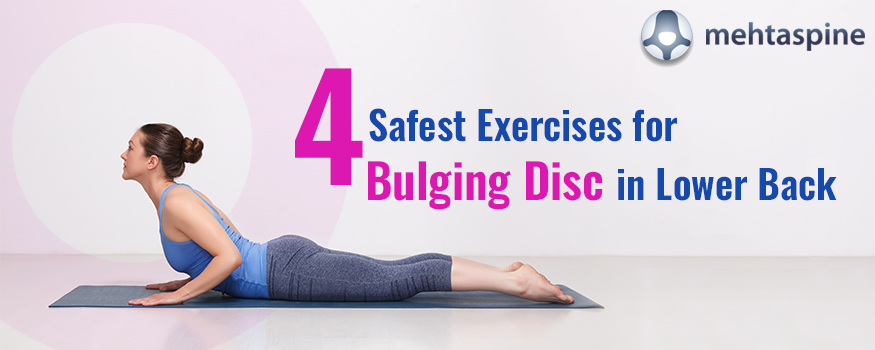
Image Source: www.mehtaspine.co.uk
Can I Exercise With A Bulging Disc Without Making It Worse?
Yes, often you can exercise with a bulging disc, and doing the right kinds of movement can actually help ease your back pain and improve your condition without making it worse. Many people with back pain caused by a bulging disc find relief and strength through safe, targeted exercises. The key is choosing the right activities and doing them carefully, often under guidance.
Deciphering What a Bulging Disc Is
Your spine is made of bones stacked on top of each other. These bones are called vertebrae. Between these bones are soft cushions. Think of them like small, firm jelly doughnuts. These are your spinal discs.
Each disc has two main parts. The outside is tough and fibrous, like the crust of the doughnut. The inside is soft and gel-like, like the jelly filling.
A bulging disc happens when the soft inner part pushes against the tough outer ring. It doesn’t break through the outer ring. It just makes it swell or bulge outward.
This bulge can sometimes press on nearby nerves. Nerves send signals between your brain and body. When a nerve is pressed, it can cause problems. These problems include pain, numbness, tingling, or weakness. The pain is often in your lower back. Sometimes it travels down your leg, which is called sciatica. Or it can be in your neck and go down your arm.
It’s important to know that not all bulging discs cause pain. Some people have them and don’t even know it. But when they do cause pain, finding safe ways to move becomes very important.
Why Moving Helps Your Back
When your back hurts, the last thing you might want to do is move. Staying still might feel safer. But often, gentle movement is much better for a bulging disc than rest alone.
Here’s why exercise can help:
- Better Blood Flow: Movement increases blood flow. Blood carries oxygen and nutrients. These help tissues heal and stay healthy. Good blood flow can help the injured area get what it needs.
- Stronger Muscles: Exercise makes the muscles around your spine stronger. Your core muscles are especially important. Strong back and core muscles act like a natural brace. They support your spine. This takes pressure off the bulging disc. Strengthening exercises bulging disc problems often involve building this support system.
- Less Stiffness: When you don’t move, your back can get stiff. This can make pain worse. Gentle movement keeps your spine flexible. It helps you move more freely.
- Pain Management: Regular, safe exercise can actually lower your pain level over time. It helps your body release natural pain relievers called endorphins.
- Keeping Healthy: Being active helps you stay at a healthy weight. This reduces stress on your spine. It also keeps your whole body healthy.
So, moving is often a good step. But, as mentioned, it must be the right kind of movement.
How to Exercise Safely with a Bulging Disc
The key phrase here is “safe exercises bulging disc.” You need to pick activities that support your spine, not stress it. The goal is to move gently, build strength slowly, and improve flexibility without causing more irritation to the disc or nerves.
Here are the main types of safe exercises often recommended:
- Core strengthening
- Gentle stretching
- Low-impact aerobic activities
- Careful strengthening of supporting muscles
Let’s look at each one.
Key Types of Helpful Exercise
Finding the right mix of activities is important. You want to build support, improve flexibility, and stay active without jarring your spine.
Building Core Strength
Your “core” is a group of muscles. They are in your belly, back, sides, and hips. Think of them as a muscular corset that wraps around your middle. These muscles are vital for spine stability. When they are strong, they help support your spine. This can lessen the load on your discs.
Weak core muscles can make a bulging disc worse. They don’t provide enough support. This lets your spine move in ways that can cause pain.
Specific core exercises bulging disc issues often involve focusing on slow, controlled movements. You don’t need fancy gym equipment. Many effective core exercises use just your body weight.
Here are some examples of simple, safe core moves:
- Pelvic Tilt: Lie on your back with knees bent, feet flat. Tighten your stomach muscles. Press your lower back into the floor. Don’t use your glutes. Hold for a few seconds. Release slowly. This is a small movement. It helps you learn to engage your deep core muscles.
- Cat-Cow Stretch: Get on your hands and knees. Hands under shoulders, knees under hips. As you breathe in, gently drop your belly and lift your head. Your back makes a slight curve like a cow. As you breathe out, round your back upward. Tuck your chin to your chest, like a cat stretching. Move slowly between the two poses. This gently moves your spine.
- Bird-Dog: Get on your hands and knees. Keep your back straight and core tight. Slowly extend one arm forward and the opposite leg back. Keep your back level. Don’t let your hips twist. Hold for a few seconds. Bring them back slowly. Switch sides. This works your core and helps with balance.
- Modified Plank: Start on your hands and knees. Lower onto your forearms. Straighten your body so you’re supported by forearms and knees. Keep a straight line from shoulders to knees. Engage your core. Hold for a short time (start with 15-30 seconds). Don’t let your back sag or arch up. This builds core endurance.
Focus on doing these exercises with good form. Quality is more important than quantity. Start with a few repetitions (5-10) and build up gradually. These are key strengthening exercises bulging disc recovery plans include.
Gentle Stretching for Comfort
Tight muscles can pull on your spine. They can also limit your movement. Gentle stretching helps relax these muscles. It can reduce pain and improve how easily you move.
Focus on stretching muscles that affect the spine. These include your hamstrings, hip flexors, and piriformis (a muscle in the buttock that can irritate the sciatic nerve).
Always stretch slowly. Never bounce. Breathe deeply while holding a stretch. You should feel a gentle pull, not sharp pain. If it hurts, stop.
Here are some stretches often good for bulging disc pain:
- Knee-to-Chest Stretch: Lie on your back. Bend your knees, feet flat. Gently pull one knee towards your chest. Hold for 20-30 seconds. You can do one leg at a time or both together (but be careful with both if your back is very sensitive).
- Piriformis Stretch: Lie on your back. Bend both knees. Place the ankle of one leg on the knee of the other leg. Gently pull the bottom knee towards your chest. You should feel a stretch in the buttock of the leg with the ankle on the knee. Hold for 20-30 seconds. Repeat on the other side.
- Gentle Back Extension (Cobra or McKenzie Press-up): Lie on your stomach. Place your hands flat under your shoulders. Gently push up onto your forearms. Keep your hips on the floor. Your lower back will gently arch. This stretch is very helpful for some people with certain types of disc bulges, but can make others worse. See how it feels. If it increases your leg pain or causes new symptoms, stop. If it centralizes your pain (brings it into the back from the leg) or reduces it, it might be a good stretch for you. This one requires careful attention or guidance.
- Hamstring Stretch: Lie on your back. Loop a towel or strap around the ball of one foot. Gently straighten that leg towards the ceiling. Keep the other leg bent or straight on the floor. Hold the ends of the towel. Gently pull the leg towards you until you feel a stretch in the back of the thigh. Keep the back of your knee relaxed. Hold for 20-30 seconds. Repeat on the other side.
These stretches are part of stretching for bulging disc pain relief. They help keep your muscles loose and reduce stress on your spine.
Getting Active with Low Impact
High-impact activities like running or jumping can send shockwaves up your spine. This can be painful and harmful to a bulging disc. Low impact exercise bulging disc issues benefit from avoids these jarring forces.
These activities raise your heart rate. They improve your overall fitness. They also help with weight management, which lowers stress on your back.
Good low-impact options include:
- Walking: Walking is excellent. It’s a natural movement. It improves blood flow. It strengthens muscles needed for support. Start with short walks. Walk on flat, even surfaces. Pay attention to your posture. Walking with bulging disc problems is often recommended as a first step.
- Swimming: Swimming is one of the best exercises for back pain. The water supports your body. This takes pressure off your spine. Different strokes work different muscles. Backstroke or freestyle are often good choices. Avoid strokes that twist the spine too much if they cause pain.
- Cycling: Riding a bike (either stationary or outdoors) is low impact. Make sure the bike is adjusted correctly. You want to avoid hunching over too much. An upright bike or recumbent bike might be more comfortable for your back.
- Elliptical Machine: This machine gives you a cardio workout. It mimics walking or running but with less impact. Keep your posture upright. Avoid slouching.
These activities help you stay fit and manage weight. They are crucial for overall back health when dealing with a bulging disc.
Careful Strengthening Moves
Beyond the core, strengthening other muscles helps support your back. Muscles in your hips, glutes (buttocks), and legs are important. When these muscles are strong, they help your body move more efficiently. They take some of the workload off your spine.
Again, focus on good form. Use light weights or just your body weight. Do controlled movements.
Examples of careful strengthening exercises:
- Glute Bridges: Lie on your back with knees bent, feet flat. Tighten your glute muscles. Lift your hips off the floor, making a straight line from shoulders to knees. Keep your core engaged. Don’t arch your back too much. Lower slowly. This strengthens your glutes and hamstrings.
- Partial Squats: Stand with feet shoulder-width apart. Keep your back straight. Slowly lower your hips as if sitting in a chair. Only go down part of the way, maybe just a few inches. Don’t go deep if it causes pain. Keep your knees over your ankles. Stand back up slowly. This strengthens legs and glutes.
- Wall Push-ups: Stand facing a wall. Place your hands on the wall, slightly wider than shoulders. Lean towards the wall, bending your elbows. Keep your body straight. Push back to the start position. This strengthens chest and shoulders. It’s much easier on the back than floor push-ups initially.
These contribute to the overall goal of strengthening exercises bulging disc issues require. They build a supportive framework around your spine.
Moves to Stay Away From
Just as some exercises help, others can make a bulging disc much worse. These exercises often involve:
- Heavy lifting
- High impact
- Twisting the spine, especially under load
- Excessive bending or arching
Knowing exercises to avoid bulging disc pain is critical for safety.
Here are some common exercises or activities to avoid or be very careful with:
- Heavy Deadlifts or Squats: Lifting heavy weight, especially with a rounded back, puts huge pressure on your discs. Avoid these unless a physical therapist or doctor specifically clears you and guides you on form.
- Traditional Sit-ups or Crunches (initially): While core work is good, standard sit-ups or aggressive crunches can sometimes put stress on the lower back. Modified core exercises like those mentioned earlier are often safer.
- High-Impact Sports: Running on hard surfaces, jumping, contact sports, or intense aerobics with lots of jumping can jar the spine.
- Bent-Over Rows (heavy): This exercise involves bending forward while lifting weight. It can put a lot of strain on the lower back discs.
- Exercises involving significant spinal twisting: Moves like Russian twists (with or without weight) can sometimes aggravate a disc bulge, especially if not done with strict control.
- Leg Presses (heavy): While seemingly safe for the back, heavy leg press can push the lower back into the backrest in a potentially harmful position, especially under heavy load.
This is not a complete list. Anything that causes sharp pain, numbness, or tingling to increase or spread should be stopped immediately. Listen to your body very carefully.
The Role of a Physical Therapist
Trying to figure out which exercises are safe and which to avoid on your own can be hard. This is where a physical therapist (PT) comes in.
A PT is a movement expert. They can assess your specific condition. They look at how you move, where you feel pain, and what makes it worse. Based on this, they can create a personalized exercise plan for you.
Working with a physical therapy bulging disc specialist offers many benefits:
- Personalized Plan: Your disc bulge is unique to you. A PT designs exercises for your needs and pain level.
- Correct Form: They show you how to do each exercise the right way. Proper form is key to safety and effectiveness. It prevents making your back worse.
- Progression: A PT guides you on how to slowly increase the difficulty of your exercises as you get stronger.
- Other Treatments: PTs might also use other techniques. These could include manual therapy (hands-on treatment), heat or ice, or showing you better ways to sit, stand, and move during your day.
- Education: They teach you about your condition. They explain why certain exercises help. They empower you to manage your back health long-term.
Often, rehabilitation exercises bulging disc recovery includes are best learned and performed under the care of a physical therapist initially. They help build your confidence and ensure you’re on the right track.
Listening Closely to Your Body
This is perhaps the most important rule. Your body has a built-in warning system: pain.
When you exercise with a bulging disc, pay close attention to how your back feels.
- Good Pain vs. Bad Pain: Some muscle fatigue or mild discomfort in the muscles you are working might be okay. This is normal as you build strength. However, sharp pain, shooting pain, pain that travels down your leg (or arm if in the neck), or pain that gets worse during or after an exercise is a bad sign.
- Stop If It Hurts: If an exercise causes increasing pain or new symptoms like numbness or weakness, stop doing it right away. Don’t try to push through bad pain.
- Note What Works: Pay attention to exercises that make your back feel better or less painful. These are the ones to focus on.
- Pain After Exercise: It’s okay to feel a little sore the next day from using muscles. But if your nerve pain or back pain is much worse hours later, you might have done too much. Or maybe the exercise wasn’t right for you.
Learning this “pain language” of your body is crucial for exercising safely and effectively with a bulging disc.
Starting Gentle, Growing Stronger
Don’t expect to jump into a full workout routine right away. With a bulging disc, you need to start very slowly.
- Start Small: Begin with just a few repetitions of a few simple exercises. Maybe only 5-10 reps. Do this a few times a week.
- Short Sessions: Exercise for a short time, maybe 10-15 minutes.
- Focus on Form: Make sure you are doing the exercises correctly. Use a mirror or ask someone to watch you. Or ideally, work with a PT.
- Gradual Increase: As your back feels stronger and pain decreases, you can slowly add more repetitions. You can add more sets. You can also add more exercises. You can increase the duration of low-impact activities like walking.
- Listen and Adjust: If you increase too fast and your pain flares up, back off. Go back to the level where you felt okay. It’s not a race.
Consistency is more important than intensity when you start. Regular, gentle movement is key for long-term improvement. Rehabilitation exercises bulging disc recovery uses are often a slow and steady process.
When to Get Help from a Doctor
While exercise is often helpful, there are times when you need to see a doctor right away.
Seek urgent medical attention if you experience:
- Severe pain that does not improve with rest or changes in position.
- New or worsening numbness or tingling.
- New or worsening weakness in your legs or arms.
- Loss of control of your bladder or bowels (incontinence). This is a serious sign.
- Numbness in the groin or inner thigh area (saddle anesthesia). This is also a serious sign.
These symptoms can point to more severe nerve compression that requires immediate medical evaluation. For typical bulging disc pain, exercise, and physical therapy are often the first line of treatment, but it’s always wise to get a proper diagnosis from a doctor first.
Moving Forward with Confidence
Living with a bulging disc can be challenging. Pain and fear of movement can limit your life. But with the right approach, exercise can be a powerful tool to help you heal and get back to doing the things you enjoy.
Remember that exercising with a bulging disc is possible and often beneficial. Focus on safe exercises bulging disc problems respond well to: core strengthening, gentle stretching, and low-impact movement like walking. Know the exercises to avoid bulging disc symptoms might worsen. Always listen to your body’s signals. Pain means stop or change.
Consider seeking help from physical therapy bulging disc specialists. They can provide expert guidance tailored to your needs.
By starting slow, being consistent, and choosing your movements wisely, you can exercise safely. You can build a stronger, more resilient back and work towards reducing your pain without making your bulging disc worse.
Common Questions Answered
Dealing with a bulging disc brings up many questions about what you can and can’t do. Here are answers to some common ones.
Can walking help a bulging disc?
Yes, absolutely! Walking is one of the best low impact exercise bulging disc issues benefit from. It’s gentle, promotes blood flow, helps maintain mobility, and strengthens the muscles that support your spine without putting excessive stress on the disc. Start with short walks on flat surfaces and gradually increase distance and pace as comfortable. Walking with bulging disc pain is often encouraged.
What are the best core exercises for this?
Safe core exercises bulging disc recovery plans include focus on stability and gentle strength. Good ones are pelvic tilts, cat-cow, bird-dog, and modified planks (on knees). These help build your inner abdominal and back muscles which support your spine like a brace. Avoid aggressive crunches or sit-ups that might strain the lower back.
How often should I exercise?
When you’re starting out with a bulging disc, aim for consistency. Gentle exercises like stretching and core work can often be done daily or most days of the week, as long as they don’t increase your pain. Low-impact cardio like walking or swimming can be done 3-5 times a week. Listen to your body – rest is important too, especially if you have increased pain. Building up slowly is key.
Is swimming good for a bulging disc?
Yes, swimming is an excellent choice. It’s a very low impact exercise bulging disc patients often find helpful. The buoyancy of the water supports your body weight, reducing stress on your spine and joints. It allows you to move freely and strengthen muscles with less pain. Certain strokes might feel better than others; find what is comfortable for you.
Should I use heat or ice?
Both can be helpful. Ice is often used for acute pain and inflammation, usually applied for 15-20 minutes at a time, several times a day. Heat can help relax tight muscles and increase blood flow before exercise. Some people find heat more comforting for chronic stiffness. You might use heat before gentle stretches or exercise and ice afterward if the activity caused some irritation. Ask your doctor or physical therapist what they recommend for your specific situation.
How long until I feel better?
There’s no single answer. Recovery time for a bulging disc varies greatly depending on the severity of the bulge, which nerve is affected, your overall health, and how consistently you follow your rehabilitation plan. Some people feel better within a few weeks with proper rest and gentle movement. For others, it can take several months. Be patient with yourself and consistent with your safe exercises and physical therapy.
Can I lift weights?
You need to be very careful with weight lifting. Heavy lifting, especially exercises that load the spine directly (like squats, deadlifts, or overhead presses) or require significant bending/twisting, should generally be avoided until your disc is much improved and cleared by a professional. Light weight training focusing on good form and strengthening supporting muscles (like glutes, hips, shoulders) can be beneficial as part of strengthening exercises bulging disc recovery includes, but always start light and focus on controlled movement, not heavy weight. Working with a physical therapist can help you determine when and how to safely incorporate light resistance training.