
So you have old exercise equipment taking up space. Maybe you upgraded, or maybe you just don’t use it anymore. Now you need to know how to get it out of your home. There are many ways to do this, like selling it, giving it away, donating it, recycling it, or even paying for disposal. We will look at all your options to help you decide what is best for your old fitness gear.
Getting rid of big, heavy workout machines can feel like a huge task. They are not like old clothes you can just toss in the trash. You need a plan. This guide will walk you through each step. We will cover different methods. We will also talk about specific types of equipment. By the end, you will know exactly what to do. Let’s find the easiest way to clear that space!
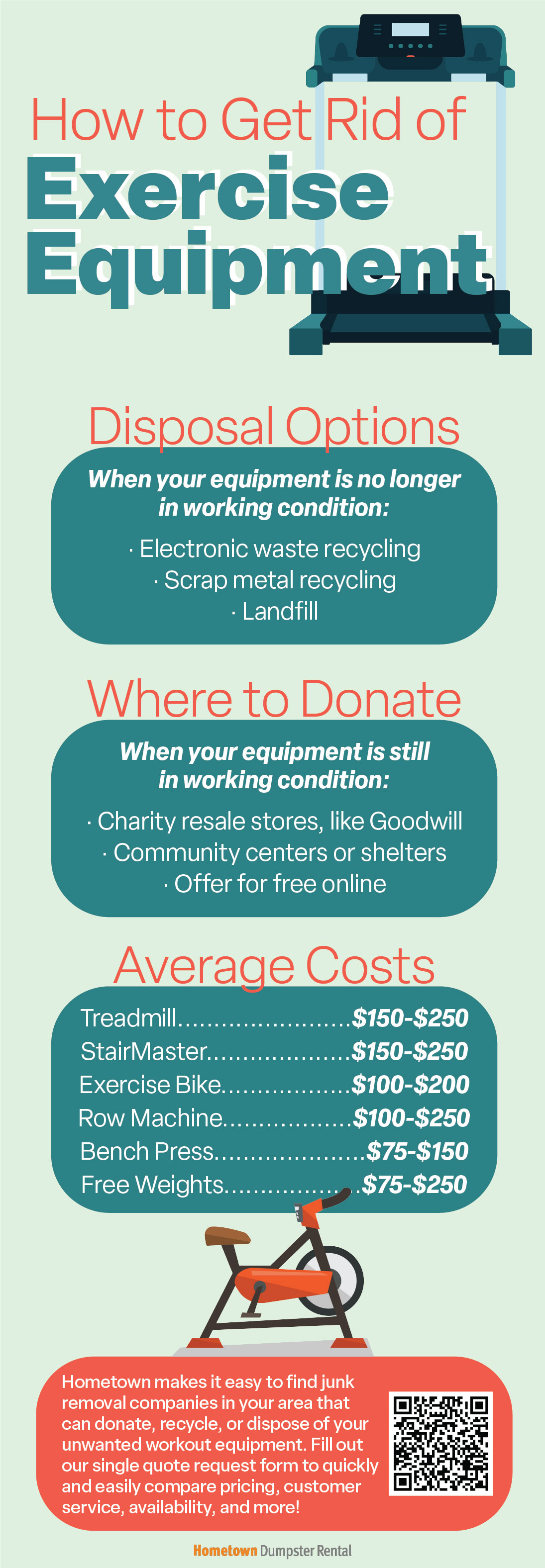
Image Source: www.hometowndumpsterrental.com
Ways to Get Rid of Your Gear
You have a few main choices for your old exercise equipment. Each choice has good and bad points. Think about the condition of your equipment. Also, think about how much time and effort you want to spend.
Here are the main paths you can take:
- Sell it: If your equipment is still in good shape, someone else might want to buy it. This can get you some money back.
- Give it away or Donate it: If you don’t need money, giving it to someone who needs it is kind. Donating can help a local group or charity.
- Recycle it: Some parts of exercise equipment can be recycled. This is good for the planet.
- Dispose of it: Sometimes, equipment is broken or too old to use. Then, throwing it away is the only choice. But you need to do this the right way.
Let’s look at each option closely.
Selling Your Equipment
If your treadmill, elliptical, or weight machine still works well, selling it is a great option. You can make some money. Plus, your equipment gets a new home where it will be used. This is often better than letting it sit or throwing it away.
Pros and Cons of Selling
There are good points and bad points when you decide to sell used exercise equipment.
Good Points:
- You get money back. Even a little bit helps.
- Your equipment gets used again. This is good for the environment.
- You help someone else get fitness gear for a lower price.
Bad Points:
- It takes time and effort. You need to clean it, take pictures, write a listing, talk to buyers, and arrange pickup.
- People might offer very low prices. You might not get what you think it’s worth.
- It can be hard to move the equipment when someone buys it. Buyers often expect you to help load it.
How to Sell Used Exercise Equipment Online
Selling online is a popular way to reach many people. You can list your item from your home. Selling exercise equipment online takes some steps.
- Choose a Platform: There are many websites and apps for selling used items. Popular choices include:
- Facebook Marketplace (local buyers, easy listing)
- Craigslist (local, simple interface)
- eBay (can reach more buyers, good for smaller items or unique pieces, might require shipping)
- Local buy/sell groups on social media
- Apps like OfferUp or LetGo
- Specialized fitness equipment forums or websites (less common for home gear)
- Clean Your Equipment: Make it look its best. Wipe it down. Get rid of dust and sweat marks. Fix anything small if you can.
- Take Good Pictures: Use clear photos. Show the whole item from different sides. Take close-ups of any special features. Also, show any small scratches or wear. Be honest.
- Write a Clear Description:
- Say what the item is (e.g., “ProForm 505 CST Treadmill”).
- List the brand and model number if you know it.
- Tell about its condition (e.g., “Works great, slight scratch on console”).
- Mention key features (e.g., “folds up for storage,” “has incline,” “built-in fan”).
- Say how old it is or how long you’ve had it.
- Give the size or dimensions if possible.
- Be clear about the price and if you will take offers.
- State if the buyer needs to pick it up. Mention if you can help load.
- Set a Price: Look at prices for similar used equipment online. Price yours a little lower if you want to sell fast. Be ready for people to offer less.
- Talk to Buyers: Answer questions quickly. Be polite. Arrange a time for them to see or pick up the equipment. Meet in a safe place if not at your home, though for large equipment, pickup is usually at your place.
- Arrange Pickup: This is key for big items. Make sure the buyer knows they need a truck or large vehicle. Be clear about how much help you can offer with moving it.
- Get Paid: Use a safe payment method. Cash is simple for local sales. Apps like PayPal or Venmo can work, but be careful of scams. Do not let the equipment leave until you have the money.
Selling exercise equipment online takes effort, but it’s a good way to get value from your unwanted items.
Preparing Your Equipment to Sell
Making your item look good helps it sell faster and for a better price.
- Cleanliness: Use basic cleaning wipes. Wipe down the frame, handles, console, and any other parts. Clean the belt on a treadmill. Dust off all surfaces.
- Function Check: Turn it on. Test all the buttons. Try the incline. Listen for strange noises. Make sure it works as it should. If something is broken, say so in your listing.
- Gather Manuals/Tools: If you still have the owner’s manual or any special tools that came with it, include them. This adds value.
- Tighten Bolts: Check bolts and screws. Tighten any that are loose. This makes the equipment feel sturdy and well-cared for.
- Take Clear Photos: We already talked about this, but it’s so important it’s worth saying again. Good pictures sell. Bad pictures make people think the item is not good.
Pricing Your Items
Setting the right price is important. You want to get a good amount, but also be fair so someone buys it.
- Research: Look at similar items on the platforms where you plan to sell. How much are others asking for the same or similar models? Look at items in the same condition.
- Consider Age and Wear: Newer items sell for more. Items with signs of heavy use or cosmetic flaws should be priced lower.
- Original Price: Think about what you paid, but know you will only get a small part of that back. Exercise equipment loses value quickly.
- Condition is Key:
- Like New: Used maybe a few times, looks perfect. Can ask for 50-70% of original price.
- Good: Used regularly but well cared for, minor signs of wear, fully working. Can ask for 30-50% of original price.
- Fair: Used a lot, clear signs of wear, maybe a small issue but still works. Can ask for 10-30% of original price.
- Poor: Has issues, maybe needs repair, best for parts or someone handy. Price very low or give away.
- Be Ready to Negotiate: Most buyers will offer less than your asking price. Decide on the lowest price you will accept before you list it.
Pricing right helps you sell faster and avoid wasted time with buyers who expect a huge discount.
Giving Away or Donating Equipment
If selling seems like too much work, or if your equipment isn’t worth much, giving it away or donating it is a great choice. It helps others and clears your space easily.
Pros and Cons of Donating/Giving Away
Giving away workout machines has its own good and bad points.
Good Points:
- It’s easy and fast. You don’t need to deal with selling or prices.
- You help someone else. Maybe a friend, neighbor, or a group in your town.
- Donating to a charity can sometimes give you a tax deduction.
- It keeps items out of the landfill.
Bad Points:
- You don’t get any money.
- You still might need to help move it or arrange for pickup.
Finding Places to Donate Unwanted Fitness Gear
Many groups accept donations. Finding charities accepting sports equipment can take a little searching.
- Local Community Centers: These often have small gyms or fitness programs. They might need extra equipment. Call and ask.
- Schools: High schools or colleges might use equipment for their fitness classes or sports teams. Reach out to the athletics department.
- Youth Programs: Groups that work with young people might need equipment for healthy activities.
- Homeless Shelters or Rehab Centers: These places often have limited budgets and can use donated fitness gear for residents.
- Churches or Religious Groups: Some have community programs or gyms.
- Used Sporting Goods Stores (Sometimes): Some places that sell used sports gear might take donations, but they might be picky.
- Charity Thrift Stores: Some larger stores like Goodwill or Salvation Army might take equipment if it’s not too big or broken. Call first to check their rules and if they have space. Treadmills and large items are often hard for them to take.
When you contact a place, describe the equipment clearly. Ask if they can pick it up or if you need to bring it. Make sure the equipment is clean and works. Donating unwanted fitness gear is a helpful way to share your unused items.
Giving Away Workout Machines
If you just want it gone quickly, give it away!
- Offer to Friends and Family: Ask people you know if they want it. Post a picture on your social media.
- List it for Free Online: Use the same platforms as selling (Facebook Marketplace, Craigslist, etc.). Make a listing with a price of $0 or “Free”. Be ready for many responses.
- Use Freecycle or Buy Nothing Groups: These are online groups focused on giving things away for free in your local area. They are great for finding someone who truly needs the item.
When giving something away for free, be clear about pickup. Say if it’s curb alert (leave it outside) or if they need to come inside and move it themselves.
Recycling Old Gym Equipment
Exercise equipment is made of metal, plastic, and electronic parts. Some of these materials can be recycled. Recycling old gym equipment helps the environment by reusing materials instead of making new ones.
Why Recycle?
- Saves Resources: Metal and plastic can be melted down and used again.
- Reduces Landfill Waste: Keeping large, bulky items out of trash heaps is good.
- Less Pollution: Recycling often uses less energy and creates less pollution than making new materials.
How to Find Recycling Options
Recycling large exercise equipment can be tricky. You can’t usually just put it in your home recycling bin.
- Check Local Recycling Centers: Call your city or county recycling center. Ask if they accept scrap metal or electronics from residents. Treadmills and ellipticals have a lot of metal and electronics.
- Look for Scrap Metal Yards: These places buy or accept metal. You might even get a small amount of money if it’s mostly metal. You would likely need to take the equipment apart first to separate the metal parts.
- Electronic Waste (E-Waste) Programs: Some cities have special events or centers for recycling electronics. The console on your treadmill or elliptical counts as e-waste.
- Ask the Manufacturer: Some companies have take-back programs, though this is rare for older, residential equipment.
- Private Recycling Companies: Search online for companies that handle large item recycling in your area.
Often, recycling this type of equipment requires you to take it apart to separate the materials (metal, plastic, wires, circuit boards). This can be a lot of work. Because of this, many people look at other options first.
Disposing of Equipment
Sometimes, equipment is too broken to sell, donate, or easily recycle. Or you might just need it gone fast with no hassle. In these cases, disposal is the only way. But improper disposal is bad for the environment.
When is Disposal Necessary?
- Equipment is completely broken and cannot be fixed.
- Repair costs more than buying new equipment.
- No one wants to buy or take it, even for free.
- Local recycling options are too hard to use or don’t accept the item.
Junk Removal for Exercise Equipment
This is often the easiest way to get rid of large, unwanted items like exercise equipment. You hire a service, and they come and take it away for you. This is a good option if you don’t have the time, strength, or vehicle to move it yourself. Junk removal for exercise equipment is a popular choice for heavy items.
- How it Works: You call a junk removal company. They give you a price, usually based on how much space your item takes up in their truck or by the item type. They schedule a time to come to your home. Their crew lifts and carries the equipment out and takes it away.
- Finding a Service: Search online for “junk removal near me” or “haul away exercise equipment service.”
- Get Quotes: Call a few different companies to compare prices. Prices can vary a lot.
- Ask What They Do With It: Good junk removal companies try to donate or recycle items they pick up if possible, before taking them to the landfill. Ask about their disposal practices.
This is often the most convenient disposal option for treadmills, ellipticals, and large weight machines. It costs money, but you save time and effort. A haul away exercise equipment service takes the problem off your hands.
Disposal Options for Treadmills and Other Items
If you don’t use a junk removal service, disposing of large exercise equipment yourself is hard.
- Bulky Waste Pickup: Some cities offer special pickup for large items like furniture and appliances a few times a year, or you can schedule it for a fee. Call your city’s waste department to ask about bulky waste rules and scheduling. You might need to move the item to the curb. Disposal options for treadmills and other large items might fall under this service.
- Taking it to the Landfill/Transfer Station: You can load the equipment yourself and take it to a local landfill or waste transfer station. There will be a fee, usually based on weight. You need a vehicle big enough to carry it. This requires you to do all the lifting and moving.
- Breaking it Down: If allowed by your local trash service, you might be able to break the equipment into smaller pieces that fit in your regular trash bin. This is very difficult and time-consuming, especially for heavy items like treadmills. You also need tools and safety gear.
Knowing where to discard ellipticals, treadmills, and other big items depends on your local waste services. Always check with your city or waste provider first before leaving large items by the curb. There are rules about discarding items like ellipticals.
Getting Ready to Move Your Equipment
No matter which way you choose to get rid of your equipment, you will likely need to move it. Large fitness machines are heavy and bulky. Doing it safely is important.
Clean and Inspect
Before anyone sees your equipment (for selling or giving away) or before you move it for disposal:
- Give it a good clean.
- Check for loose parts.
- See if it still works. Note any problems.
Take Pictures (if selling/giving)
Good pictures are key if you are selling or giving the item away online.
- Take photos in good light.
- Show the whole item.
- Show different angles.
- Show any issues (scratches, wear) clearly.
- Show it working if possible (like the console lit up).
Disassemble Safely (if needed)
Large items like treadmills or weight machines might need to be taken apart to move them. Or you might need to break them down for recycling or disposal.
- Find the Manual: If you have the original manual, it will show how to take it apart.
- Use the Right Tools: You will likely need wrenches, screwdrivers, and maybe other tools.
- Work with Help: Do not try to take apart or move heavy sections alone. Get a friend or family member to help.
- Keep Parts Together: If you are taking it apart to move and put back together (like for a buyer), put bolts and screws in bags and label them.
- Be Careful: Parts can be heavy. Watch your fingers and back.
Some items, like many ellipticals, might not come apart easily. Treadmills often fold up, but taking them completely apart is a bigger job. Weight machines with cables and pulleys can be complex.
Moving the Item
This is often the hardest part. Exercise equipment is heavy!
- Get Help: Always lift heavy items with another person.
- Use Proper Lifting Form: Bend your knees, keep your back straight, and lift with your legs.
- Use Moving Tools: Dollies, furniture sliders, or moving blankets can make it much easier to slide or roll the equipment.
- Plan the Route: Clear a path from the equipment’s location to the door. Make sure hallways and doorways are wide enough. Watch out for stairs!
- Protect Your Home: Put down blankets or cardboard to protect floors. Be careful not to hit walls or door frames.
- Loading: If loading into a truck, use a ramp if possible. Be very careful if lifting it manually. Secure the item well in the vehicle so it doesn’t shift during transport.
Moving heavy exercise equipment is risky. If you are not comfortable or able to do it safely, using a junk removal service is worth the cost.
Handling Different Types of Gear
Not all exercise equipment is the same. The best way to get rid of it might change based on what kind of machine you have.
Treadmills
Treadmills are large, heavy, and have many parts: a frame (metal), a motor, a belt (rubber/plastic), a console (electronics), and a large deck.
- Selling/Donating: Only do this if the motor and belt are working well. Repairs can be costly. Make sure it folds easily if that’s a feature.
- Recycling: Requires significant disassembly to separate metal, electronics, and other materials.
- Disposal Options for Treadmills: Often require bulky waste pickup or a junk removal service due to their size and weight. Landfills accept them, but you must get it there.
Ellipticals
Ellipticals are also bulky, often with large frames and moving arms and pedals. They have electronics too.
- Selling/Donating: Check for smooth movement, noise, and working electronics. Worn-out joints or noisy operation can make them hard to give away.
- Recycling: Like treadmills, they need to be taken apart to recycle different materials.
- Where to Discard Ellipticals: Similar to treadmills, bulky waste services or junk removal are common methods. You can also take them to a landfill if you have the means. Be aware of local rules where to discard ellipticals.
Weight Machines
These vary a lot, from simple benches to complex machines with weight stacks and cables. They are usually very heavy due to metal frames and weights.
- Selling/Donating: Check cables, pulleys, and moving parts for wear. Make sure all weight plates are present if it’s a stack machine. Benches should be stable.
- Recycling: Mostly metal, which is good for scrap metal recycling. You might need to remove padding or plastic parts.
- Disposal: Very heavy. Often needs professional junk removal or breaking down into smaller metal pieces to haul away.
Free Weights (Dumbbells, Barbells, Plates)
These are simple and made of solid metal (iron or steel), often with a coating. They are dense and heavy.
- Selling/Donating: Very easy to sell or give away, especially in sets. They hold their value better than machines. List them on online marketplaces.
- Recycling: Pure metal. Scrap metal yards will take them. This is a good option if they are rusty or damaged.
- Disposal: If you can’t sell or recycle, some can go into regular trash if local rules allow and they don’t make the bin too heavy. But recycling metal is much better.
Smaller Items (Bands, Mats, Balls, Steps)
These are lightweight and made of various materials (rubber, plastic, fabric).
- Selling/Donating: Easy to sell or give away, especially in bundles. List on online sites or offer to friends. Donate to schools or community centers.
- Recycling: Harder. Some plastics might be recyclable if marked. Fabric items usually are not. Rubber bands or mats are often not easily recycled through standard programs.
- Disposal: Can usually go into regular trash bins if local rules allow. Try to donate or give away first.
Thinking About Costs
Getting rid of exercise equipment can cost you time, effort, or money.
Selling (Fees?)
- Listing online is usually free (Facebook Marketplace, Craigslist, etc.).
- Some sites like eBay charge fees when your item sells. Factor this into your price.
- Your time and effort for cleaning, listing, and meeting buyers are also a cost.
Donating (Pickup fees?)
- Giving away is free.
- Donating is free, but sometimes charities might ask for a small fee if they offer pickup. This is rare for large items unless they specialize in it. Most expect you to drop off.
- Your time and transport costs to take it to the donation center are a cost.
Recycling (Fees?)
- Taking metal to a scrap yard might earn you a small amount, but probably not much for residential equipment.
- Some recycling centers or e-waste programs might have a fee for dropping off items.
- Your time and effort to take it apart and transport it are costs.
Disposal/Junk Removal (Costs involved)
- This is usually the most expensive option.
- Junk Removal Service: Prices vary widely. Could be anywhere from $100 to $300 or more for a large machine, depending on your location and the item’s weight/size. Get multiple quotes for haul away exercise equipment service.
- Bulky Waste Pickup: If your city offers it, there might be a flat fee (e.g., $25-$50) per item or pickup.
- Landfill Drop-off: Fees are usually based on weight, e.g., $30-$60 per ton, with minimum fees. You also have fuel costs and your time.
Thinking about costs helps you choose the best option based on your budget and how much effort you are willing to put in. While selling can make money, the time involved might be worth less than the cost of a junk removal service for some people.
Helping the Planet
How you get rid of your equipment affects the environment. Some ways are better than others.
Why Reuse is Best
Selling or giving away your equipment is the best choice for the planet.
- It gives the item a longer life.
- It avoids using energy and resources to make a new item.
- It keeps the item out of the landfill.
Before you think about throwing something away, try hard to sell or give it away first, even for free.
The Value of Recycling
When reuse isn’t possible, recycling is the next best option.
- Recycling metal uses much less energy than making new metal from ore.
- It reduces mining and pollution.
- It saves valuable materials.
Even if you have to pay a small fee or spend time taking the item apart, recycling parts of exercise equipment is a good thing to do for the Earth.
Disposal in a landfill should be the last choice, only when other options are not possible. Landfills take up space and materials buried there can take a very long time to break down, if at all.
In Summary
Getting rid of exercise equipment takes some planning because it’s often big and heavy. Your best path depends on the item’s condition, your need for money, and how much effort you want to spend.
- Sell if it’s in good working order and you want to make some cash. Use online sites but be ready for the work involved.
- Donate or Give Away if the item still works but you need it gone easily and don’t need money. Local charities and online groups for free items are good places to look.
- Recycle parts if the item is broken, especially metal. This often means taking it apart and finding local recycling options or scrap yards.
- Dispose using bulky waste services or a junk removal service if the item is broken and cannot be reused or recycled, or if you need the easiest option.
No matter which method you choose, plan how you will move the equipment safely. Get help or use the right tools.
By thinking through your options, you can find the best way to get rid of that old exercise equipment. You’ll clear space in your home and feel good about doing it the right way, whether that’s selling it, donating it, recycling parts, or using a professional disposal service.
Frequently Asked Questions (FAQ)
Q: Can I just leave exercise equipment on the curb?
A: No, usually you cannot. Large items like treadmills and ellipticals are considered bulky waste. You need to check your city’s rules. Some cities have special pickup days or require you to schedule and pay for a bulky waste pickup. Leaving it out might result in a fine.
Q: Is old exercise equipment worth anything?
A: It depends on the equipment’s age, brand, condition, and features. High-end brands in great condition are worth more used. Older or basic models, or those with problems, might not be worth much, or only worth the value of their metal parts for recycling.
Q: How much does it cost to have a service haul away exercise equipment?
A: The cost varies greatly depending on your location, the size and weight of the item(s), and the company you hire. It can range from around $100 to $300 or more for one large machine. Get quotes from a few different haul away exercise equipment services to compare prices.
Q: Where can I donate a treadmill or elliptical?
A: Finding places to donate large equipment can be hard. Try local community centers, schools, youth programs, or shelters. Call them first to ask if they accept such items and if they have space. Large charity thrift stores might take smaller items, but often cannot handle big machines.
Q: How do I prepare a treadmill for selling or moving?
A: Clean it well, make sure it works, and note any issues. If selling, take good photos. For moving, unplug it, fold it up if it folds, and get help to lift and move it safely. Use a dolly if possible. If disassembling, keep track of all parts.
Q: Can exercise equipment be recycled?
A: Yes, parts of it can be recycled, especially the metal frame. However, it usually requires taking the machine apart to separate materials. You then need to find a scrap metal yard or a recycling center that accepts these materials or electronics (for the console).
Q: Is it better to sell or donate old fitness gear?
A: Sell if the equipment is in good shape and you want money. Donate if you want to get rid of it easily, help others, and don’t need money. Donating is often faster if you find a place that will take it. Selling takes more effort but can give you cash.