
Can you make gynecomastia disappear just by hitting the gym? For many guys, yes, working out and losing weight can make man boobs much less noticeable, but it depends on what is causing them. Gynecomastia is when men get bigger chest tissue. Sometimes it’s mostly fat. Sometimes it’s breast gland tissue. The gym is great for tackling the fat part. It helps a lot with weight loss. But exercise alone usually cannot remove actual gland tissue. So, while the gym is a powerful tool, whether it makes “gyno” go away fully depends on the type you have.
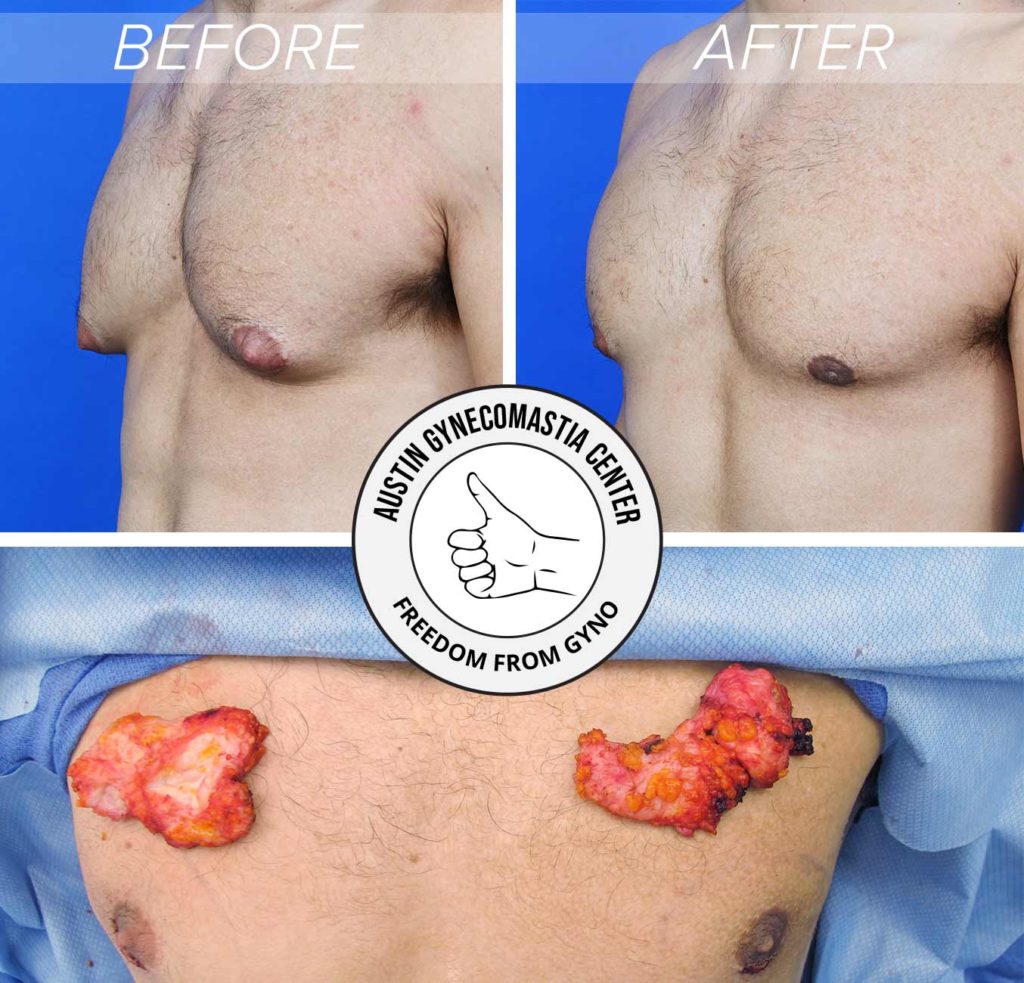
Image Source: austingynecomastiacenter.com
What Causes Bigger Male Chests?
Guys can get chest puffiness. This issue affects many men. It can be a source of worry. It makes some feel self-conscious. There are two main reasons this happens. Knowing the cause is the first step. It helps you find the right solution.
One reason is extra fat. Fat can build up in the chest area. This often happens when someone gains weight. We call this pseudogynecomastia. The word “pseudo” means “false.” So, it’s “false” gynecomastia. It looks like gynecomastia, but it’s just soft fat tissue. This type is very common. It responds well to weight loss.
The other reason is more complex. It involves actual breast gland tissue. Men have breast tissue, just like women. But usually, it stays small. With true gynecomastia, this gland tissue grows bigger. This growth is often felt as a firm lump under the nipple. This is glandular gynecomastia. You can have both types at once. You might have extra fat and bigger gland tissue.
True glandular gyno often comes from hormones. Men have hormones like testosterone and estrogen. Testosterone is the main male hormone. Estrogen is the main female hormone. Men have some estrogen, and women have some testosterone. This is normal. But sometimes, the balance is off. If estrogen levels are too high compared to testosterone, it can cause breast gland growth. This is a hormone imbalance gynecomastia.
This imbalance can happen at different times in life. Puberty is one common time. Hormone levels change a lot then. Baby boys can have it too, right after birth. Older men can get it as hormone levels shift. Certain medicines can also cause it. Some health conditions can affect hormone balance. This type of gyno, the one caused by gland tissue growth, is harder to treat with just diet and exercise.
How the Gym Helps Reduce Chest Size
Working out is great for your body. It burns calories. It builds muscle. These things are key for weight loss. If your bigger chest is due to fat, the gym can help a lot.
Losing weight makes chests smaller if they are mostly fat. This is the core idea behind using the gym for chest fat reduction. When you work out, you use energy. This energy comes from calories in your food. If you burn more calories than you eat, your body uses stored energy. Stored energy is body fat.
So, the gym helps you burn calories. This leads to weight loss over time. Weight loss reduces your overall body fat percentage. As your total body fat goes down, fat shrinks everywhere. This includes the fat in your chest area.
Think of your body’s fat like a big pool. You can’t drain just one corner of the pool. You have to lower the water level of the whole pool. Exercise helps lower the whole body fat level. So, yes, does weight loss help gynecomastia? If your gyno is mostly fat (pseudogynecomastia), then losing weight through the gym and diet is very effective.
The gym also helps build muscle. Muscle burns more calories than fat, even at rest. So, having more muscle helps you burn more energy all day long. This supports weight loss and fat reduction.
Combining cardio and weight training is usually best. Cardio exercises like running or cycling are great for burning lots of calories during the workout. Weight training builds muscle. Both help reduce body fat.
Best Workouts for the Chest Area
While you can’t pick where you lose fat, you can build muscle under the fat. Building chest muscle can make the area look firmer. It can give it a more defined shape. This can help improve the appearance even if some fat is still there. These are specific gynecomastia exercise ideas. They work the chest muscles.
These workouts are often called man boobs workout routines. But remember, they build muscle, not directly remove fat from that spot. The fat removal comes from overall weight loss.
Let’s look at some exercises:
Weight Training Moves
These moves build the pectoral muscles. These are your chest muscles.
- Push-ups: You can do these anywhere. They work your chest, shoulders, and triceps (back of your arms).
- Start on your hands and knees or hands and toes.
- Lower your chest toward the floor. Keep your body straight.
- Push back up.
- Easier version: Do them against a wall or on your knees.
- Bench Press: This uses weights. It’s a classic chest builder.
- Lie on a bench. Hold a barbell or dumbbells over your chest.
- Lower the weight to your chest.
- Push the weight back up.
- Dumbbell Flyes: These focus on the outer and inner chest muscles.
- Lie on a bench. Hold a dumbbell in each hand above your chest. Keep a slight bend in your elbows.
- Lower the weights out to the sides in an arc, like you’re hugging a tree.
- Bring them back up together over your chest.
- Dips: This uses your body weight.
- Use parallel bars or the edge of a sturdy bench/chair.
- Lower your body down, bending your elbows. Keep your body upright to target the chest more.
- Push back up.
- Incline Press: This works the upper part of the chest.
- Similar to bench press, but the bench is set at an angle (inclined).
Do these exercises regularly. Aim for 2-4 times a week. Do 3-4 sets of 8-15 repetitions for each move. Use a weight that challenges you but allows good form.
Cardio Exercise
Cardio is vital for burning calories and reducing body fat. It’s needed for chest fat reduction.
- Running/Jogging: High calorie burn.
- Cycling: Good if running is hard on your joints.
- Swimming: Works the whole body, including the chest muscles.
- Walking: A good start if you’re new to exercise. Aim for brisk walks.
- High-Intensity Interval Training (HIIT): Short bursts of hard effort with short rests. Very efficient calorie burning. (e.g., Sprint for 30 secs, walk for 60 secs, repeat).
Aim for at least 150 minutes of moderate cardio or 75 minutes of vigorous cardio per week. More is better for weight loss.
Combining strength training (the weight moves) and cardio is the best plan for reducing overall body fat and building chest shape.
Why Eating Right Matters Just as Much
Exercise is only part of the picture for weight loss. Diet is hugely important. In fact, many people say weight loss is 80% diet and 20% exercise. This might not be the exact split, but it shows how vital food choices are.
To lose body fat, you must eat fewer calories than your body uses. This is called a calorie deficit. The gym helps you use more calories. Eating less helps you take in fewer calories. Doing both works best.
A good diet for gynecomastia relief (if it’s fat-related) focuses on healthy, whole foods. These foods provide nutrients and make you feel full.
- Protein: Helps build muscle and keeps you feeling full. (Chicken breast, fish, lean meat, beans, eggs, tofu).
- Vegetables: Low in calories, high in vitamins and fiber. Eat lots of different colors.
- Fruits: Natural sweetness, vitamins, and fiber. Eat in moderation due to natural sugars.
- Whole Grains: Provide steady energy and fiber. (Oats, brown rice, whole wheat bread).
- Healthy Fats: Important for hormones and health. (Avocado, nuts, seeds, olive oil).
Foods to limit or avoid include:
- Sugary drinks (soda, juice)
- Fried foods
- Processed snacks (chips, cookies, candy)
- Excessive alcohol (contains many calories)
Eating a balanced diet creates the calorie deficit needed for fat loss. This fat loss reduces the size of pseudogynecomastia. It also reduces the fat part of true gynecomastia. You can work out hard every day, but if you eat too many calories, you won’t lose weight or chest fat. So, link your gym efforts with smart food choices.
Changing Your Body Shape
Going to the gym and eating well doesn’t just make you weigh less. It can change how your body looks. This is called body recomposition. It means changing the mix of muscle and fat in your body.
You might lose fat and gain muscle at the same time. Or, you might lose fat while keeping the muscle you have. This changes your body shape.
For gynecomastia, body recomposition is a great goal.
* Losing fat shrinks the chest area if it’s fat-based.
* Building muscle under the chest fat makes the area look firmer and flatter.
Imagine a balloon filled with jelly (fat) with a board behind it (muscle). If you shrink the jelly (lose fat), the board (muscle) becomes more visible and provides shape.
This takes time. It needs consistent effort at the gym. It needs consistent healthy eating. You might not see the scale drop fast if you are gaining muscle while losing fat. Muscle is more dense than fat. So, check how your clothes fit or how you look in the mirror. These are good ways to track body recomposition progress.
By combining strength training, cardio, and a calorie-controlled, healthy diet, you work towards body recomposition. This strategy is very effective for reducing the appearance of pseudogynecomastia. It also helps minimize the fat part of true gynecomastia.
When Exercise Is Not Enough
We’ve talked about how the gym helps with fat. But what about the actual gland tissue? Can exercise cure gynecomastia caused by this gland growth?
Generally, no. Exercise and diet can help with weight loss. Weight loss reduces fat tissue. But breast gland tissue is different. It does not shrink much, if at all, from diet and exercise.
Think of it like this: you can train your biceps muscle to grow bigger. You can also train your whole body to lose fat. But you can’t train your liver or kidneys to get smaller with exercise. Gland tissue is more like an organ than a muscle or fat store.
If a doctor says your bigger chest is mostly gland tissue, then going to the gym might not make it disappear. It will help reduce any fat around the gland. This might make the gland feel more noticeable as a firm lump. It can improve the overall shape by reducing fat and building muscle. But the core issue – the extra gland tissue – remains.
This is why it’s important to know if you have pseudogynecomastia (mostly fat) or true glandular gynecomastia. A doctor can help figure this out. They might feel the tissue or do tests.
If you have a mix of fat and gland tissue, the gym will help with the fat part. It makes the chest look better. But the hard lump of gland tissue will likely still be there. This is a key truth to grasp. The gym is a powerful tool, but it has limits regarding gland tissue.
Grasping the Hormone Connection
True gynecomastia is often linked to hormones. We touched on this earlier. It’s about the balance of estrogen and testosterone. This is a complex area. Hormone imbalance gynecomastia needs medical attention.
Many things can affect hormone levels:
* Natural life stages: Puberty, aging.
* Medications: Some drugs for heart problems, anxiety, prostate issues, or even some antibiotics can affect hormones.
* Illegal substances: Steroids (anabolic steroids) are well known for causing gyno. Marijuana use has also been linked.
* Health conditions: Liver disease, kidney disease, thyroid problems, certain tumors.
* Being overweight: Fat tissue can actually convert other hormones into estrogen. This is another way weight loss can indirectly help, even with a hormonal component, by reducing fat that makes estrogen.
Exercise itself doesn’t directly fix a deep-seated hormone problem. For example, if a specific medication is causing the issue, stopping or changing the medicine (under doctor supervision) is needed. If a liver problem is causing the imbalance, the liver problem needs treatment.
In cases where a hormone imbalance is the main cause of glandular growth, focusing only on the gym won’t solve the root problem. It might improve body composition and reduce fat, but the hormone-driven gland growth needs medical evaluation.
A doctor can test hormone levels. They can look into possible causes like medications or other health issues. Treating the cause of the hormone imbalance is key for true glandular gyno.
Other Ways to Address Gyno
If gym and diet aren’t enough, or if you have true glandular tissue, there are other options. These are gynecomastia treatment options.
It’s always a good idea to see a doctor first. They can find out if there’s a medical reason for your gyno. They can also tell you if it’s mostly fat or gland tissue.
Here are some common treatment paths:
- Waiting: Sometimes, especially in teenagers, gyno goes away on its own as hormones balance out. Doctors might suggest waiting 6-12 months.
- Changing Medication: If a medicine is causing it, your doctor might switch you to a different drug.
- Hormone Therapy: In some specific cases of hormone imbalance, medication might be used to help balance levels. This is less common and depends on the exact cause.
- Surgery: This is often the most effective treatment for removing gland tissue.
- Liposuction: If the gyno is mostly fat, liposuction can suck out the excess fat tissue. This is less invasive.
- Excision: If there is significant gland tissue, a surgeon cuts it out. This leaves a small scar, often around the nipple area.
Sometimes, both liposuction (for fat) and excision (for gland) are done together.
Surgery is a more permanent solution for gland tissue. It’s usually considered when gyno is causing significant distress and hasn’t gone away on its own or responded to weight loss.
Here’s a simple look at how different methods help:
| Method | Best For | Helps With Gland Tissue? | Helps With Fat Tissue? | Notes |
|---|---|---|---|---|
| Gym & Diet | Pseudogynecomastia (Fat) | No (usually) | Yes | Great for fat loss and body shape. |
| Hormone Therapy | Hormone Imbalance (Gland) | Yes (sometimes) | No (directly) | Needs doctor diagnosis and prescription. |
| Liposuction | Pseudogynecomastia (Fat) | No | Yes | Surgical procedure to remove fat. |
| Excision Surgery | True Glandular Gyno | Yes | No (directly) | Surgical procedure to remove gland. |
| Combined Surgery | Mixed Gyno (Fat & Gland) | Yes | Yes | Addresses both fat and gland. |
Choosing the right treatment depends on the cause and type of gyno. Talking to a doctor or a specialist (like an endocrinologist for hormones or a plastic surgeon for surgery) is crucial.
Bringing It All Together
So, can the gym make gyno go away? The clear answer is: It depends on what’s causing it.
- If your bigger chest is mostly fat (pseudogynecomastia), then yes, hitting the gym hard combined with a good diet for weight loss can make it go away or reduce it greatly. Gynecomastia exercise and chest fat reduction through healthy habits are very effective here. Does weight loss help gynecomastia? Absolutely, if it’s fat.
- If your bigger chest is caused by extra breast gland tissue (true glandular gynecomastia), then the gym alone cannot make the gland disappear. Exercise will help you lose fat around the gland. This improves how the area looks overall. Building chest muscle (man boobs workout) can add shape. But the firm lump of gland tissue remains. You cannot can exercise cure gynecomastia that is primarily glandular.
- If your gyno is due to a hormone imbalance gynecomastia, addressing the hormone issue is key. The gym helps with weight/fat, which can sometimes impact hormones slightly (like reducing fat that makes estrogen). But it doesn’t fix the core imbalance.
- Many guys have a mix of fat and gland. The gym will help with the fat part. It will improve your body shape through body recomposition gynecomastia. But the gland tissue might still be there.
For true gland tissue or hormone issues, gynecomastia treatment options beyond the gym might be needed. These include medical evaluation, potentially medication, or surgery (liposuction for fat, excision for gland).
The gym is an incredibly powerful tool for overall health, fitness, and body composition. It can significantly improve the appearance of man boobs, especially when fat is the main issue. It’s always part of a healthy lifestyle plan. But for many, especially those with significant gland growth, it’s one piece of the puzzle, not the only solution.
Common Questions About Gyno and the Gym
Here are answers to questions many guys ask:
Will chest exercises make my chest look bigger?
No, not in a bad way. Chest exercises build muscle under the skin. This can make the area look firmer and more defined. If you have fat on top, the muscle provides a better shape underneath. It doesn’t add to the puffiness caused by fat or gland tissue. Doing a man boobs workout correctly targets the muscle.
How long will it take to see results from the gym?
This depends on how much weight you need to lose and how consistently you work out and eat right. If you have mostly fat gyno, you might start seeing changes in a few months of consistent effort. Significant changes could take 6-12 months or more. It’s a process. Chest fat reduction happens gradually.
Can being skinny affect gyno?
Yes. Gyno can happen even in thin men. This is often true glandular gynecomastia related to hormones. Weight loss won’t help this type. Also, if a thin person has pseudo-gyno (just fat), it might not be very noticeable unless they gain weight. Or, being very thin can sometimes make a small amount of gland tissue look more prominent.
Is it true that certain foods cause gyno?
No specific food causes true glandular gyno in most cases, unless it’s linked to overall weight gain (which leads to fat gyno) or certain rare things like foods with hormone disruptors (though this is debated and less common than other causes). Diet affects your overall body fat. A poor diet contributes to fat gain, which can lead to pseudogynecomastia. Eating healthy helps with diet for gynecomastia relief by supporting fat loss.
Should I see a doctor before starting a gym routine for gyno?
It’s a good idea. A doctor can help figure out the cause of your gyno. They can rule out any serious underlying health issues. They can tell you if it looks like mostly fat or if there’s significant gland tissue. This helps you know what to expect from exercise and if you might need other gynecomastia treatment options.
In summary, the gym is a powerful ally in tackling the fat part of gynecomastia and improving your overall body shape. It’s essential for chest fat reduction and achieving body recomposition gynecomastia. But if true glandular tissue is present, while exercise helps the overall look, it likely won’t make the gland itself go away. Knowing the truth about your specific situation is key to setting realistic goals and finding the most effective path forward.