
Starting a CrossFit gym, often called a “box,” involves many steps and costs. How much does it cost to start a CrossFit gym? The price tag can differ a lot based on your location, the size of your space, and the quality of equipment you choose. Generally, you might expect the initial investment fitness studio owners face to range from about $50,000 to $200,000 or even more. This covers everything from getting the necessary permissions to buying gear and covering early expenses. This guide will break down the key CrossFit gym startup costs you’ll likely face.
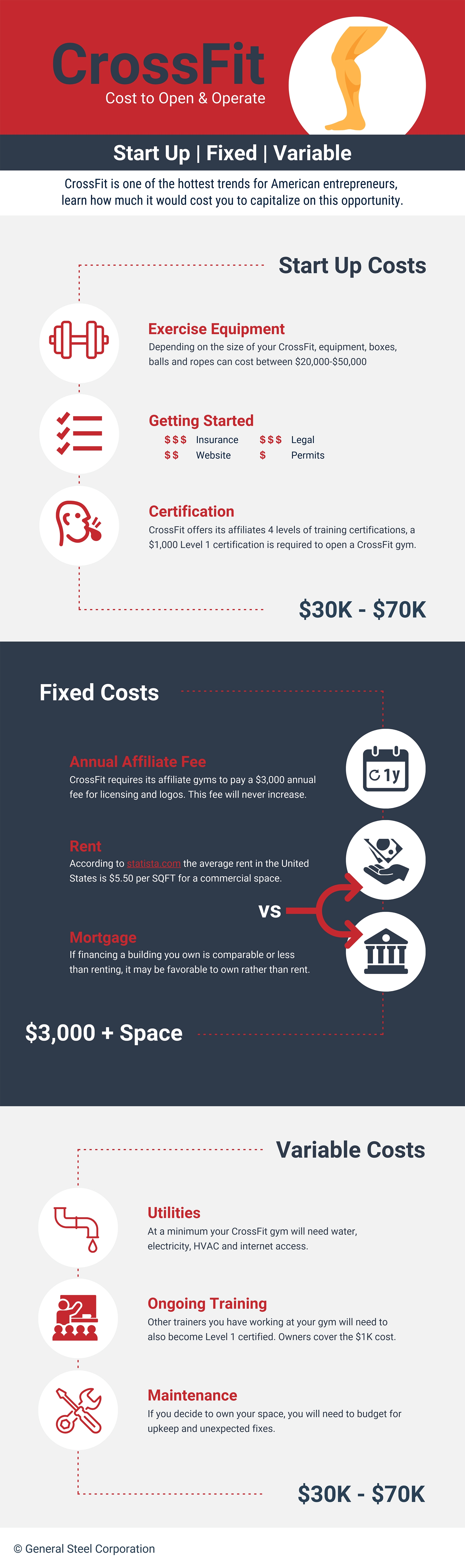
Image Source: gensteel.com
Figuring Out the Core Expenses
Launching a fitness business like a CrossFit gym requires careful planning and a good handle on finances. You need to list out all the costs before you even open the doors. This helps you make a solid financial plan. Let’s look at the main areas where your money will go.
Cost of CrossFit Affiliation
One of the first and non-negotiable costs is the CrossFit affiliation fee. This fee allows you to use the CrossFit name and logo. It connects you to the global CrossFit community.
h4 Getting the Official Stamp
To become an official CrossFit box, you must apply directly to CrossFit, LLC. There are requirements you need to meet. The main one is that at least one owner or head coach must hold a valid CrossFit Level 1 Trainer Certificate.
h4 Annual Fee Structure
The cost of CrossFit affiliation is an annual fee. This fee can change slightly over time, but it is usually a fixed amount per year.
- Current Annual Affiliation Fee: Around $3,000 per year.
This fee is not a one-time payment. You must pay it every year to keep your affiliation status. Think of it as a license to operate under the CrossFit brand. It’s a necessary part of your CrossFit business plan expenses.
Gym Rent and Build-Out Costs
Finding the right place for your gym is a big step. The location and condition of the building will heavily impact your initial costs and ongoing rent. Gym rent and build-out costs are often the largest part of your initial investment.
h4 Picking the Right Spot
CrossFit gyms need specific types of spaces. They need high ceilings for rope climbs and wall balls. They need open floor space for movements like running, jumping, and lifting. Concrete floors are often preferred because they can handle heavy weights being dropped (though proper mats are still needed).
Look for places in areas with good visibility or easy access. Industrial parks, large retail spaces, or even renovated warehouses can work well. The size of the space depends on how many members you plan to have. A common size for a new box is between 3,000 and 5,000 square feet.
h4 What Rent Will Cost You
Rent costs vary greatly by location. Rent is often calculated per square foot per year or month.
- Estimate: $1 to $5+ per square foot per month.
For a 4,000 sq ft space:
* Low end: $4,000 per month ($1/sq ft)
* High end: $20,000+ per month ($5+/sq ft)
You will likely need to pay a security deposit and maybe first and last month’s rent upfront. This could be 2-3 months of rent just to move in.
h4 Building Out Your Space
Most spaces won’t be ready to be a CrossFit gym right away. You’ll need to make changes. This is the build-out cost.
- Flooring: Special rubber or horse stall mats are needed to protect the floor and equipment, and to absorb impact. This is a must-have. Cost can be significant depending on the area you need to cover.
- Walls and Paint: Simple paint might be enough, but some walls might need to be added or removed.
- Restrooms and Changing Areas: You need clean, functional restrooms. Showers are a plus for members but add to costs.
- Office/Lounge Area: A small space for checking people in and for members to relax.
- Rig Installation: If you install a large pull-up/squat rack rig, this needs to be securely anchored to the floor and sometimes the wall.
- HVAC and Lighting: Ensure good heating, ventilation, and air conditioning. Proper lighting is also important.
- Safety Features: Exits, fire extinguishers, first-aid kits.
The cost of build-out varies wildly. If the space is already in good shape, it might be minimal (just flooring, paint). If it needs major work (new walls, plumbing, electrical), it can be very high.
- Estimate for Build-Out: $10 to $50+ per square foot.
For a 4,000 sq ft space:
* Basic build-out (flooring, paint): $40,000 ($10/sq ft)
* Major build-out (walls, plumbing, HVAC): $200,000+ ($50+/sq ft)
These gym rent and build-out costs are a major part of the initial CrossFit gym startup costs. Getting detailed quotes from contractors is crucial.
Figuring Out Equipment Needs
A CrossFit gym needs specific equipment. This equipment is different from a typical globo gym. It focuses on functional movements, weightlifting, and gymnastics. The CrossFit equipment package price can be a large chunk of your initial spending.
h4 Essential Gear
Here’s a list of common equipment needed for a CrossFit box:
- Barbells: Men’s (20kg) and Women’s (15kg) Olympic lifting bars. Need enough for class sizes.
- Weight Plates: Bumper plates are essential as they can be dropped safely. You need a range of weights.
- Dumbbells and Kettlebells: Various weights for different exercises.
- Pull-up Rig/Squat Racks: A central piece of equipment. Needs pull-up bars and often squat rack stations. Can be wall-mounted or free-standing.
- Gymnastics Rings: For movements like muscle-ups and dips.
- Jump Ropes: Speed ropes for double-unders.
- Wall Balls: Weighted balls in different weights.
- Plyo Boxes: For jumping exercises. Different heights are useful.
- Rowing Machines, Assault Bikes, Ski Ergs: Cardio equipment used in many workouts. These are expensive per unit.
- Kettlebells: Various weights.
- Dumbbells: Various weights.
- Medicine Balls: For throws and core work.
- Ab Mats, Resistance Bands, Mobility Tools: Smaller but important items.
- Storage: Racks and shelving to keep the gym tidy and safe.
h4 Equipment Package Price Estimates
The cost depends on the quality of equipment and the number of pieces you buy. You can buy pieces individually or get package deals from suppliers specializing in CrossFit or functional fitness equipment.
-
Basic Setup (Small Space, Fewer Members): You might start with fewer machines and fewer bars/plates.
- Estimate: $20,000 – $50,000
-
Moderate Setup (Medium Space, More Members): More bars, plates, more cardio machines, bigger rig.
- Estimate: $50,000 – $100,000
-
Comprehensive Setup (Large Space, High Capacity): Lots of everything, high-end machines, custom rig.
- Estimate: $100,000 – $200,000+
Consider buying used equipment to save money initially. However, check the condition carefully, especially for items like barbells and machines. The CrossFit equipment package price is a flexible cost depending on your budget and planned capacity.
Considering Staff Costs
You can’t run a gym alone. You’ll need coaches. CrossFit coach salary or pay is another ongoing expense you must factor into your CrossFit business plan expenses.
h4 Finding and Paying Coaches
Good coaches are essential for safety, member retention, and delivering quality training. They need to be certified (CrossFit Level 1 is the minimum standard for leading a CrossFit class). Many coaches hold higher levels (L2, L3, L4) or other specialty certifications.
How you pay coaches can vary:
- Per Class: A set rate for each class they coach.
- Hourly Wage: Pay for time spent coaching and potentially other duties (cleaning, programming).
- Salary: Less common for part-time coaches, more for full-time head coaches or managers.
h4 Coach Salary/Pay Estimates
Pay rates depend on location, experience, certifications, and whether they are part-time or full-time.
- Estimate (Per Class): $25 – $50+ per class.
- Estimate (Hourly): $15 – $30+ per hour.
- Estimate (Salary – Full-time/Head Coach): $30,000 – $60,000+ per year.
In the beginning, you might only need a few part-time coaches plus yourself if you plan to coach. As the gym grows, you’ll need more staff. Don’t forget about potential costs for coach training or continuing education.
Insurance for Your CrossFit Box
Insurance is not optional. It protects your business from potential problems, like a member getting hurt. Insurance for CrossFit box operations is a critical expense.
h4 Types of Insurance Needed
You’ll need several types of insurance:
- General Liability Insurance: This is the most important. It covers claims if someone is injured at your gym or if their property is damaged due to your operations. Given the nature of CrossFit (heavy weights, complex movements), the risk of injury is higher than in a standard gym, so liability insurance is crucial.
- Professional Liability Insurance: Also known as errors and omissions insurance. It covers claims related to professional advice or services you provide, such as a coach giving improper instruction that leads to injury.
- Property Insurance: Covers damage to your building and equipment from things like fire, theft, or vandalism.
- Workers’ Compensation Insurance: Required in most places if you have employees. It covers medical costs and lost wages for employees injured on the job.
- Umbrella Policy: Provides extra liability coverage above the limits of your other policies.
h4 Cost of Insurance
The cost depends on factors like your location, the size of your gym, your services offered, and your claims history.
- Estimate: $1,000 – $4,000+ per year.
Because CrossFit is seen as higher risk by insurers, your premiums might be on the higher side compared to a traditional fitness studio. Getting quotes from insurers who understand the fitness industry, specifically CrossFit, is important. This is a must-have item in your CrossFit gym startup costs.
Marketing Budget for New Gym
You can have the best gym in the world, but people won’t come if they don’t know about it. A marketing budget for new gym owners is essential to attract your first members and keep growing.
h4 Getting the Word Out
Initial marketing is about creating awareness and driving sign-ups.
- Website Development: A professional website is your online storefront. It needs to look good, work well on mobile, and have information about your schedule, pricing, and how to join.
- Social Media Marketing: Set up profiles on platforms like Instagram and Facebook. Post regularly about your workouts, community events, and member successes. Running paid ads on these platforms can target local people.
- Local Advertising: Flyers, posters in local businesses, partnering with other local health/wellness providers.
- Grand Opening Event: An event to introduce your gym to the community. Offer free classes, demos, or special sign-up deals.
- Online Ads: Google Ads to appear in local searches for “CrossFit gyms.”
- Signage: Clear and visible signs for your gym location.
h4 Estimating Marketing Costs
The initial marketing push is often the most expensive.
- Website: $1,000 – $5,000+ (depending on complexity and if you hire a designer)
- Signage: $500 – $3,000+
- Initial Ad Campaigns (Social/Google): $500 – $2,000+ per month for the first few months.
- Grand Opening/Local Events: $500 – $2,000+
An initial marketing budget for new gym startup could range from $3,000 to $10,000 or more, depending on how aggressive you want to be and what channels you use. Don’t forget to set aside a monthly budget for ongoing marketing efforts.
Other Initial Costs
Beyond the big categories, there are many smaller but necessary expenses when starting your box. These are also part of your CrossFit business plan expenses.
h4 Legal and Professional Fees
- Business Registration: Costs to register your business name and structure (LLC, S-corp).
- Legal Review: Hiring a lawyer to review lease agreements, waivers, employee contracts.
-
Accounting Setup: Setting up your chart of accounts, choosing accounting software.
-
Estimate: $1,000 – $5,000+
h4 Licenses and Permits
- Local Business Licenses: Required by your city or county.
- Building/Occupancy Permits: Ensuring your space meets safety codes for a fitness facility.
-
Music Licensing: Fees for playing music in your gym (e.g., ASCAP, BMI).
-
Estimate: $500 – $2,000+ (varies by location)
h4 Initial Supplies and Software
- Cleaning Supplies: Keeping the gym clean is vital.
- Office Supplies: Paper, pens, printer.
- First-Aid Supplies: Well-stocked kit.
-
Gym Management Software: Software for scheduling classes, managing memberships, billing, and communication. This is often a monthly fee but might have a setup cost.
-
Estimate (Initial Supplies): $500 – $2,000
- Estimate (Software Setup): $0 – $1,000 (plus monthly fees)
Operating Expenses and Cash Reserves
Once your doors are open, you’ll have recurring monthly costs. These are your operating expenses. It’s crucial to have cash reserves to cover these for the first few months, as you build up your membership base. This is a key part of your initial investment fitness studio planning.
h4 Monthly Bills
- Rent: The biggest likely cost.
- Utilities: Electricity, water, gas, internet, phone.
- Staff Salaries/Pay: Depending on how many coaches and staff you have.
- Insurance Premiums: Could be monthly or annual payments.
- Marketing: Ongoing social media ads, local promotions.
- Software Subscriptions: Gym management software, accounting software.
- Equipment Maintenance/Repair: Bars bend, machines break, mats wear out.
- Cleaning Services/Supplies: Keeping the gym clean.
- CrossFit Affiliation Fee: Needs to be paid annually.
h4 Importance of Cash Reserves
Many new businesses fail because they run out of money before they become profitable. You need cash on hand to cover your operating expenses until your membership income is greater than your bills.
- Recommendation: Have enough saved to cover 3-6 months of operating expenses.
If your estimated monthly operating costs are $8,000, you would want $24,000 – $48,000 in reserve funds. This is a critical part of your CrossFit business plan expenses and overall financial health.
Tallying Up the Total CrossFit Gym Startup Costs
Let’s put these estimates together to get a range for the total CrossFit gym startup costs. Remember, these are wide ranges, and your actual costs could be lower or higher.
h4 Estimated Startup Cost Breakdown Table
| Cost Category | Low Estimate | High Estimate |
|---|---|---|
| CrossFit Affiliation (1st year) | $3,000 | $3,000 |
| Rent Deposit & First Month | $8,000 | $60,000 |
| Build-Out/Renovations | $40,000 | $200,000+ |
| Equipment Package Price | $20,000 | $200,000+ |
| Initial Staffing Costs (e.g., first month’s pay for a few coaches) | $2,000 | $10,000 |
| Insurance (Annual Premium Estimate) | $1,000 | $4,000+ |
| Marketing Budget (Initial Push) | $3,000 | $10,000+ |
| Legal & Permits | $1,500 | $7,000+ |
| Initial Supplies & Software | $1,000 | $3,000+ |
| Subtotal Initial Costs | ~$79,500 | ~$417,000+ |
| Recommended Cash Reserve (3-6 months operating) | $24,000 | $120,000+ |
| Estimated Total Initial Investment | ~$103,500 | ~$537,000+ |
Note: Rent deposit/first month and cash reserve estimates use a sample monthly operating cost of $8,000 – $20,000 based on the low/high rent and staff cost estimates.
This table shows that starting a CrossFit gym is a significant financial undertaking. The “sweet spot” for many new boxes might fall somewhere in the $100,000 to $250,000 range for initial setup, plus the need for cash reserves.
Funding Options Gym Startup
Coming up with the necessary funds for this initial investment fitness studio can be challenging. Most people use a mix of different sources. Here are some common funding options gym startup owners explore:
h4 Ways to Get Money
- Personal Savings: Using your own money is the most common way. It shows lenders and investors you are committed.
- Loans from Friends and Family: Be careful with this. Treat it professionally with clear terms to avoid damaging relationships.
- Bank Loans: Traditional bank loans can be difficult for new businesses without proven income. You will need a strong business plan and potentially collateral.
- SBA Loans: The U.S. Small Business Administration (SBA) guarantees a portion of loans made by banks, making it less risky for banks to lend to small businesses. These often have favorable terms.
- Equipment Financing: Instead of buying all your equipment upfront, you can finance specific pieces or get a loan specifically for equipment purchases.
- Investor Funding: Bringing in partners or outside investors who provide capital in exchange for a share of the business. This requires giving up some ownership and control.
- Crowdfunding: Raising small amounts of money from a large number of people, often through online platforms. This can also help build early community buzz.
A well-written CrossFit business plan detailing your expected expenses, revenue projections, and how you will attract members is crucial when seeking external funding. Lenders and investors will want to see a clear path to profitability.
Making a Solid CrossFit Business Plan
Putting together a detailed CrossFit business plan is more than just a requirement for funding. It forces you to think through every aspect of your gym. It helps you estimate your CrossFit business plan expenses accurately and plan how you will make money.
h4 What Your Plan Should Cover
- Executive Summary: A brief overview of your business idea, mission, and goals.
- Company Description: What your gym is, your philosophy, your target market.
- Market Analysis: Who are your potential members? Who are your competitors (other gyms, fitness options)? What makes your gym different?
- Organization and Management: Your legal structure, who is involved, their roles.
- Services: What classes will you offer? (WODs, Основы/OnRamp, specialty classes). Pricing structure (monthly memberships, punch passes).
- Marketing and Sales Strategy: How will you reach customers? How will you sell memberships?
- Financial Projections: This is key.
- Startup Costs (all the items we discussed)
- Operating Expenses (monthly bills)
- Revenue Projections (how many members at what price?)
- Break-Even Analysis (when will income cover costs?)
- Cash Flow Statement (tracking money in and out)
- Profit and Loss Statement (projecting profitability)
- Funding Request: If seeking external funds, state how much you need and how you will use it.
Working through these sections helps you refine your budget and strategy. It highlights potential challenges and helps you plan for them. The financial section, especially detailing the CrossFit business plan expenses, is critical for understanding how much capital you truly need.
Ways to Save Money on Startup Costs
Looking at the potential costs, you might wonder if there are ways to reduce the initial financial load. Yes, there are areas where you can save without sacrificing quality or safety too much.
h4 Being Smart with Spending
- Location: Choose a space that requires minimal renovation. A place that was previously a gym or a similar open-plan business might need less build-out. Negotiate rent terms carefully.
- Equipment: Buy a mix of new and high-quality used equipment. Look for package deals from suppliers. Prioritize essential equipment first and add less critical items later as you grow. Consider leasing some expensive machines initially.
- DIY Build-Out: If you have construction or handyman skills (or friends who do), you might be able to do some of the simpler build-out tasks yourself (painting, basic flooring installation in non-lifting areas). However, hire professionals for critical work like rig installation and electrical/plumbing.
- Marketing: Focus on low-cost or free marketing initially. Use social media actively. Partner with local businesses for cross-promotion. Rely on word-of-mouth by creating a great community vibe from day one.
- Staffing: Start with fewer coaches and cover more classes yourself if you are a certified coach. Hire part-time coaches before full-time ones.
- Used Supplies: Look for used office furniture or waiting area furniture.
Saving money on CrossFit gym startup costs requires being resourceful and prioritizing spending on essential items like safe flooring, quality lifting equipment, and proper insurance.
Conclusion: Is It Worth It?
Starting a CrossFit gym is a significant financial and personal investment. The CrossFit gym startup costs are high, covering everything from the cost of CrossFit affiliation and the CrossFit equipment package price to gym rent and build-out costs, insurance for CrossFit box operations, a marketing budget for new gym members, and CrossFit coach salary. Your initial investment fitness studio budget needs to be robust, including enough for operating expenses and cash reserves.
However, for those passionate about CrossFit and building a community, it can be a very rewarding venture. Success depends on many factors: your location, your pricing, the quality of your coaching, your marketing efforts, and your ability to build a strong, welcoming community. A detailed CrossFit business plan expenses breakdown and a solid understanding of your funding options gym startup journey are vital first steps toward turning your dream into a reality.
Frequently Asked Questions
h4 How much money do I need to start a small CrossFit gym?
For a smaller gym in a less expensive area, focusing on essential equipment and minimal build-out, you might be able to start with $50,000 to $100,000 in initial costs, plus 3-6 months of operating expenses in reserve. This could bring the total need to $75,000 – $150,000+.
h4 What is the biggest expense when starting a CrossFit gym?
Typically, the biggest expenses are gym rent and build-out costs, followed closely by the CrossFit equipment package price. Getting the right space ready and filling it with quality gear costs the most money upfront.
h4 How long does it take to make a CrossFit gym profitable?
There is no set time frame. It depends on how quickly you attract and retain members, your operating costs, and your pricing. Some gyms may become profitable within 1-2 years, while others might take longer. Having sufficient cash reserves is crucial to survive until you reach profitability.
h4 Can I start a CrossFit gym without much money?
Starting a fully affiliated CrossFit gym with a dedicated space and all necessary equipment for under $50,000 is extremely difficult. The affiliation fee, basic equipment, and securing a space alone are costly. You might explore coaching at existing gyms or running outdoor/garage gym bootcamps as smaller steps, but a true “box” requires significant capital.
h4 What are the ongoing monthly costs for a CrossFit gym?
Ongoing costs include rent, utilities, staff payroll (CrossFit coach salary), insurance premiums, marketing, software subscriptions, equipment maintenance, and paying the annual CrossFit affiliation fee. These costs need to be covered by membership revenue.
h4 Is the CrossFit affiliation fee worth it?
For most box owners, yes. The affiliation grants you the right to use the widely recognized CrossFit name and logo, which attracts members familiar with the brand. It also connects you to a global network and resources from CrossFit HQ.