
Can you exercise with a herniated disc? Yes, you absolutely can, and often, you should! However, it’s crucial to approach exercise with a herniated disc with caution and specific guidelines. The right exercises can significantly aid in your recovery and pain management, while the wrong ones can worsen your symptoms.
A herniated disc, often referred to as a slipped disc or ruptured disc, occurs when the soft, jelly-like center of an intervertebral disc pushes through a tear in the tougher exterior. This can press on nearby nerves, leading to pain, numbness, and weakness. This guide is designed to provide you with a comprehensive understanding of how to exercise safely and effectively to manage your condition, promote healing, and regain strength.
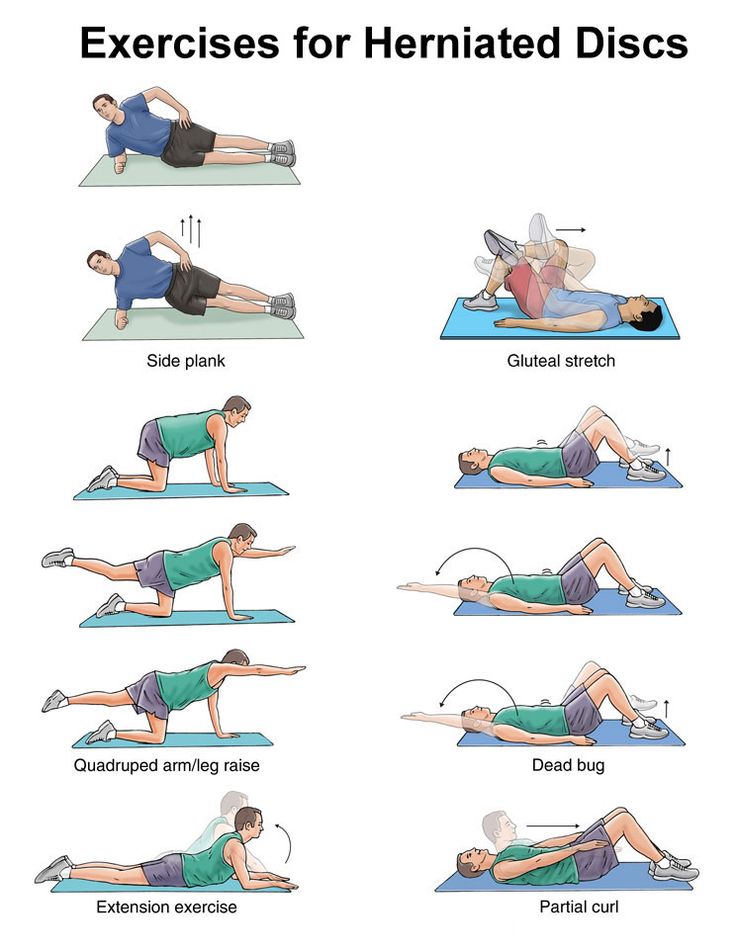
Image Source: tomenybest.com
Why Exercise is Important for a Herniated Disc
Exercise plays a vital role in disc herniation management. It’s not just about alleviating immediate pain; it’s about building a stronger, more resilient body that can better support your spine and prevent future issues.
- Pain Relief: Specific exercises can help reduce pressure on the affected nerve and decrease inflammation, offering significant back pain relief exercises.
- Improved Strength and Stability: Strengthening the muscles that support your spine, especially your core, is paramount. This provides a natural brace for your back, taking stress off the injured disc.
- Increased Flexibility: Gentle stretching can improve mobility and reduce muscle tension that often accompanies a herniated disc.
- Better Posture: Good posture reduces undue stress on the spine, and exercises can help correct postural imbalances.
- Enhanced Blood Flow: Exercise increases blood circulation to the injured area, which is essential for the healing process.
Consulting Your Healthcare Provider
Before embarking on any new exercise program, it is absolutely essential to consult with your doctor or a qualified physical therapist. They can:
- Accurately diagnose the location and severity of your herniation.
- Recommend specific exercises tailored to your condition.
- Advise on exercises to avoid with herniated disc.
- Guide you on the intensity and progression of your workouts.
A physical therapist is your best resource for developing a personalized rehabilitation exercises for herniated disc program. They can teach you proper form and ensure you are performing movements safely.
Principles of Exercising with a Herniated Disc
The cornerstone of exercising with a herniated disc is to focus on movements that decompress the spine and strengthen supporting muscles without causing further irritation.
Key Principles:
- Listen to Your Body: Pain is a signal. If an exercise causes or increases pain, stop immediately. Discomfort is one thing; sharp or worsening pain is another.
- Start Slowly and Gradually Progress: Don’t rush. Begin with a few repetitions and gradually increase as your strength and comfort improve.
- Focus on Proper Form: Incorrect form can do more harm than good. Prioritize quality over quantity.
- Breathe: Proper breathing is crucial for core engagement and relaxation. Exhale on exertion.
- Consistency is Key: Regular, consistent exercise is more beneficial than sporadic intense workouts.
- Hydration: Staying hydrated is important for overall health and muscle function.
Low-Impact Exercises for Herniated Disc
Low-impact exercises are the safest and most effective for individuals with herniated discs. They minimize stress on the spine while promoting healing and strengthening.
1. Core Strengthening for Herniated Disc
A strong core is your spine’s best friend. These exercises help stabilize the spine and reduce the load on the discs.
a) Pelvic Tilts
This is a fundamental exercise for activating core muscles and improving pelvic alignment.
- How to do it:
- Lie on your back with your knees bent and feet flat on the floor.
- Gently flatten your lower back against the floor by tightening your abdominal muscles and tilting your pelvis upwards.
- Hold for 5-10 seconds, then relax.
- Repeat 10-15 times.
b) Transverse Abdominis Activation (Abdominal Bracing)
This exercise targets the deepest abdominal muscle, which is crucial for spinal stability.
- How to do it:
- Lie on your back, knees bent, feet flat.
- Gently draw your belly button towards your spine without moving your pelvis or holding your breath. Imagine you’re trying to zip up tight pants.
- Hold for 5-10 seconds.
- Repeat 10-15 times.
c) Bird-Dog
This exercise improves core stability and balance while strengthening the back extensors and glutes.
- How to do it:
- Start on your hands and knees, ensuring your hands are directly under your shoulders and knees under your hips. Maintain a neutral spine.
- Engage your core.
- Slowly extend your right arm straight forward and your left leg straight back, keeping your hips and shoulders square to the floor. Avoid arching your back.
- Hold for a few seconds, then return to the starting position with control.
- Repeat with the opposite arm and leg.
- Aim for 8-10 repetitions on each side.
d) Bridges
This strengthens the glutes and hamstrings, which are important for supporting the lower back.
- How to do it:
- Lie on your back with knees bent, feet flat on the floor, hip-width apart. Arms by your sides.
- Engage your glutes and lift your hips off the floor until your body forms a straight line from your shoulders to your knees.
- Avoid over-arching your back.
- Hold for a few seconds, then slowly lower your hips back down.
- Repeat 10-15 times.
2. Gentle Stretching and Mobility Exercises
These movements help improve flexibility and reduce stiffness.
a) Knee-to-Chest Stretch (Single Leg)
This stretch can help relieve tension in the lower back and hips.
- How to do it:
- Lie on your back with knees bent and feet flat.
- Gently bring one knee towards your chest, using your hands to assist.
- Hold for 15-30 seconds, feeling a gentle stretch in your lower back and buttock.
- Release and repeat with the other leg.
- Perform 2-3 repetitions on each side.
b) Cat-Cow Stretch
This is excellent for improving spinal mobility and flexibility.
- How to do it:
- Start on your hands and knees, with hands under shoulders and knees under hips.
- Cow Pose (Inhale): Drop your belly towards the floor, arch your back, and lift your head and tailbone.
- Cat Pose (Exhale): Round your spine towards the ceiling, tuck your chin to your chest, and tuck your tailbone under.
- Flow smoothly between these two poses for 5-10 repetitions.
c) Supine Spinal Twist
This gentle twist can help mobilize the lumbar spine.
- How to do it:
- Lie on your back with knees bent and feet flat.
- Keeping your shoulders on the floor, gently let your knees fall to one side.
- Hold for 15-30 seconds, feeling a gentle stretch.
- Return to center and repeat on the other side.
- Perform 2-3 repetitions on each side.
3. Other Beneficial Low-Impact Exercises
a) Walking
Walking is one of the best low-impact exercises for herniated disc sufferers. It improves circulation, strengthens muscles, and can help with pain management.
- Tips:
- Start with short distances (10-15 minutes) on a flat surface.
- Wear supportive shoes.
- Maintain good posture.
- Gradually increase duration and pace as tolerated.
b) Swimming or Water Aerobics
The buoyancy of water significantly reduces stress on the spine, making swimming and water aerobics excellent choices.
- Benefits:
- Allows for a wider range of motion without weight-bearing stress.
- Helps build strength and endurance.
- Can be very soothing for aching muscles.
- Considerations:
- Avoid strokes that involve excessive twisting or arching of the back (e.g., breaststroke kick, butterfly).
- Freestyle and backstroke are generally well-tolerated.
c) Stationary Cycling
A stationary bike can be a good cardiovascular workout if your posture is upright and comfortable.
- Tips:
- Adjust the seat height so your knees are slightly bent at the bottom of the pedal stroke.
- Maintain an upright posture, avoiding hunching over the handlebars.
- Start with low resistance and gradually increase as you build endurance.
Exercises for Lumbar Disc Herniation
Lumbar disc herniation (in the lower back) is the most common type. The exercises above are highly beneficial, but here are a few more specific to this area:
- Mackenzie Exercises (Extension-Based): For some types of lumbar herniation, extension-based exercises can help centralize pain (move it from the leg back to the spine). These should only be performed under the guidance of a physical therapist, as they can worsen some conditions. A common example is the prone press-up.
- Prone Press-Up: Lie on your stomach. Place your hands under your shoulders. Push your upper body up, keeping your hips on the floor. Only move as far as comfortable. If pain increases or moves into your leg, stop. Hold briefly and lower down.
Sciatica Exercises Herniated Disc
Sciatica is a symptom of a herniated disc, where the nerve root is compressed, causing pain that radiates down the leg. Exercises that decompress the nerve and reduce inflammation are key.
-
Nerve Glides (Neurodynamics): These are gentle movements designed to improve the mobility of the sciatic nerve. They should be performed very carefully and only when pain allows. A physical therapist will demonstrate these.
-
Piriformis Stretch: The piriformis muscle can sometimes irritate the sciatic nerve.
- How to do it:
- Lie on your back with knees bent, feet flat.
- Cross your right ankle over your left knee.
- Grasp the back of your left thigh and gently pull it towards your chest until you feel a stretch in your right buttock.
- Hold for 20-30 seconds.
- Repeat on the other side.
- How to do it:
Exercises to Avoid with Herniated Disc
Certain movements can put excessive pressure on the intervertebral discs and exacerbate symptoms.
- High-Impact Activities: Running, jumping, and sports involving sudden stops and starts should generally be avoided, especially in the early stages of recovery.
- Heavy Lifting with Poor Form: Lifting heavy objects, particularly with a rounded back, can be very dangerous.
- Twisting Movements: Sudden or forceful twisting of the torso can put significant stress on the discs.
- Forward Bending with a Rounded Back: Activities like toe touches or even certain abdominal crunches can increase pressure on the front of the disc, potentially pushing the herniation further back.
- Sit-ups and Crunches: Traditional sit-ups and crunches involve significant spinal flexion, which can be detrimental. Modified versions that focus on core bracing are preferred.
- Any Exercise that Causes Increased Pain: This is the golden rule. If an exercise makes your pain worse or causes it to radiate into your leg, stop immediately.
Progressive Disc Herniation Management
As your condition improves, your exercise program can be gradually advanced. This is where the expertise of a physical therapist is invaluable for progression.
Progression Stages:
- Acute Phase: Focus on pain relief and reducing inflammation. Gentle movements like pelvic tilts and basic core activation.
- Subacute Phase: Begin to increase the duration and repetitions of core strengthening exercises. Introduce gentle stretching and walking.
- Chronic/Rehabilitation Phase: Gradually incorporate more challenging core exercises, bodyweight strength training (e.g., modified squats, lunges with good form), and continue with low-impact cardio.
- Maintenance Phase: Continue with a regular exercise routine that includes core strengthening, flexibility, and cardiovascular fitness to maintain spinal health and prevent recurrence.
When to Seek Professional Help
It’s crucial to seek immediate medical attention if you experience:
- Sudden, severe back pain.
- Numbness or tingling that spreads into your legs or feet.
- Weakness in your legs or feet.
- Loss of bowel or bladder control (this is a medical emergency).
Sample Exercise Routine (Consult Your Therapist First!)
Here’s a sample routine that incorporates many of the safe exercises discussed. Remember to modify it based on your pain levels and your therapist’s recommendations.
Frequency: Aim for 3-5 days per week.
Warm-up (5-10 minutes)
- Gentle walking in place or around the room.
- Cat-Cow Stretch (5-8 repetitions).
- Pelvic Tilts (10 repetitions).
Main Workout (Focus on Core Strengthening)
- Transverse Abdominis Activation (10-15 repetitions, hold 5-10 seconds).
- Bridges (10-15 repetitions).
- Bird-Dog (8-10 repetitions per side).
Cool-down and Flexibility (5-10 minutes)
- Single Knee-to-Chest Stretch (2-3 repetitions per side, hold 15-30 seconds).
- Supine Spinal Twist (2-3 repetitions per side, hold 15-30 seconds).
- Gentle Hamstring Stretch (lying on back, using a towel or strap to gently pull one leg towards you).
Progression: As you get stronger, you can:
- Increase the number of repetitions.
- Increase the hold time for exercises.
- Add more challenging variations (e.g., plank variations, side planks – only with therapist approval).
- Increase walking duration or introduce stationary cycling.
The Role of Physical Therapy for Herniated Discs
Physical therapy is not just an option; it’s often a cornerstone of effective disc herniation management.
What Physical Therapy Offers:
- Accurate Assessment: A therapist will assess your movement patterns, muscle strength, and identify specific impairments contributing to your pain.
- Personalized Exercise Prescription: They create a tailored program of rehabilitation exercises for herniated disc based on your specific diagnosis.
- Manual Therapy: Techniques like joint mobilization, soft tissue massage, and traction can help reduce pain and improve mobility.
- Education: Therapists educate you on pain management strategies, proper body mechanics, and how to avoid re-injury.
- Progressive Loading: They guide you through a safe and effective progression of exercises, ensuring you don’t overdo it.
- Addressing Sciatica: Therapists are skilled in treating sciatica exercises herniated disc by addressing nerve compression and muscle imbalances.
Examples of Physical Therapy Interventions:
- McKenzie Method: A common approach that uses specific directional preference exercises to reduce discogenic pain.
- Core Stabilization Exercises: As discussed, building a strong core is paramount.
- Biomechanical Retraining: Teaching you how to move safely in daily activities.
- Modalities: Ultrasound, heat, or cold therapy may be used to manage pain and inflammation in the early stages.
Frequently Asked Questions (FAQ)
Q1: How long does it take to recover from a herniated disc?
A: Recovery times vary significantly depending on the severity of the herniation, your adherence to treatment, and individual factors. Many people experience significant improvement within 4-6 weeks with conservative treatment, including physical therapy and appropriate exercise. However, complete recovery and return to full activity can take several months.
Q2: Can I do yoga or Pilates with a herniated disc?
A: Yes, but with extreme caution and under the guidance of a qualified instructor experienced with spinal conditions. Many yoga and Pilates poses involve spinal flexion or twisting that can be harmful. Focus on gentle, modified poses and core-strengthening exercises. Avoid any poses that cause pain.
Q3: What is the best sleeping position for a herniated disc?
A: Sleeping on your side with a pillow between your knees can help maintain the natural alignment of your spine. If you sleep on your back, placing a pillow under your knees can reduce pressure on your lower back. Avoid sleeping on your stomach, as this can strain your neck and back.
Q4: When can I return to my regular exercise routine?
A: You should only return to your regular exercise routine once you are pain-free during daily activities and have regained good strength and flexibility. This transition should be guided by your doctor or physical therapist. Gradual reintroduction of activities is key to prevent re-injury.
Q5: Are there specific exercises for different types of disc herniation (e.g., cervical vs. lumbar)?
A: Yes. While the principles of core strengthening and low-impact movement apply broadly, the specific exercises will differ depending on the location of the herniation. For cervical disc herniation (neck), exercises will focus on neck stabilization, gentle range of motion, and postural correction. For lumbar disc herniation, the focus is on the lower back and core. Always follow the advice of your healthcare provider for exercises specific to your condition.
Conclusion
Living with a herniated disc doesn’t mean giving up on an active lifestyle. By focusing on low-impact exercises for herniated disc, prioritizing core strengthening herniated disc, and diligently following the advice of your healthcare providers, you can effectively manage your condition. Remember that consistency, patience, and listening to your body are your greatest allies in this journey towards healing and reclaiming your well-being. Embrace a proactive approach to your recovery, and you can build a stronger, more resilient body.