
Can you turn a regular bicycle into an exercise bike? Yes, absolutely! With a few key components and a bit of DIY spirit, you can repurpose your beloved bicycle into a fantastic home gym bike. This guide will walk you through the process of transforming your bike into a DIY stationary bike, offering an affordable and effective way to enjoy indoor cycling. We’ll cover everything from the essential equipment to the setup process, empowering you to create your own indoor cycling setup without breaking the bank.
Image Source: s.yimg.com
Why Convert Your Bicycle?
Many people wonder if converting their bicycle is a sensible choice. The answer is a resounding yes, especially if you already own a bike. Here’s why a bicycle to stationary bike conversion is a smart move:
- Cost-Effective: Dedicated exercise bikes can be expensive. Repurposing your existing bicycle is significantly cheaper.
- Familiarity: You’re already comfortable with your bike’s geometry and riding position, which can make the transition to indoor cycling smoother.
- Space-Saving: When not in use, you can often detach your bike from the trainer for bicycle, freeing up space.
- Convenience: Set up your home gym bike in any room and ride whenever the mood strikes, regardless of weather or time of day.
- Versatility: A well-equipped indoor cycling setup can mimic various road conditions and resistance levels, providing a challenging workout.
Essential Components for Your Conversion
To turn your bicycle into an exercise bike, you’ll need a few crucial pieces of equipment. These are the core elements of any effective bike trainer system.
1. The Bicycle Itself
- Type of Bike: While most bikes can be converted, road bikes and hybrid bikes are generally the best choices. Their slimmer tires create less friction on the roller, and their riding position is closer to that of a typical stationary bike. Mountain bikes can work, but you might experience more noise and vibration due to their knobby tires. If you use a mountain bike, consider swapping your rear tire for a slicker, dedicated indoor trainer tire.
- Condition: Ensure your bike is in good working order. Brakes should function properly, and the drivetrain (chain, gears) should be clean and well-lubricated.
2. The Bike Trainer
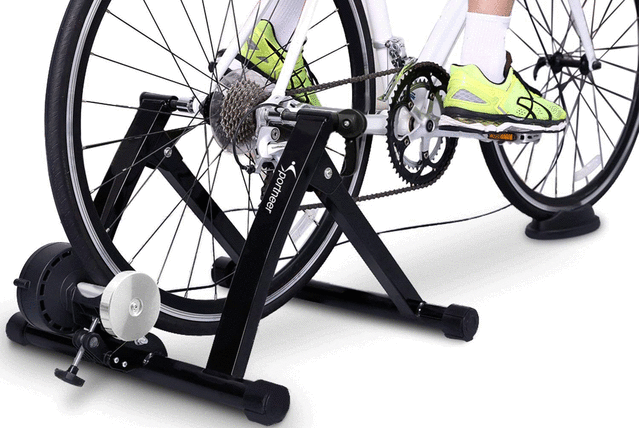
This is the most critical piece of equipment. A stationary bike stand or trainer for bicycle elevates your rear wheel and provides resistance, allowing you to pedal in place. There are several types:
-
Wheel-On Trainers: These are the most common and affordable. The rear wheel of your bicycle sits on a roller driven by a resistance unit.
- Fluid Trainers: These use a sealed unit filled with fluid that heats up as you pedal, creating increasing resistance. They are generally quieter and offer a smoother ride feel than magnetic trainers.
- Magnetic Trainers: These use a magnet and flywheel system to generate resistance. They are usually less expensive than fluid trainers but can be noisier and offer a less realistic feel.
- Wind Trainers: These use a fan to create resistance. They are typically the loudest option and can be quite physically demanding.
-
Wheel-Off Trainers (Direct Drive): These are more advanced and expensive. You remove your rear wheel and attach the bike’s chain directly to a cassette on the trainer. This offers the most realistic ride feel, greater accuracy in power measurement, and is generally quieter.
Choosing the Right Trainer:
| Trainer Type | Pros | Cons | Best For |
|---|---|---|---|
| Fluid | Smooth resistance, quiet, realistic feel | Can overheat with prolonged use, more expensive | Serious cyclists, those prioritizing ride feel and quiet operation |
| Magnetic | Affordable, good resistance range | Can be noisy, less realistic feel | Budget-conscious riders, casual indoor exercisers |
| Wind | Simple design, progressive resistance | Very noisy, less smooth feel | Those not concerned about noise or a smooth feel, looking for a basic workout |
| Direct Drive | Most realistic feel, quiet, accurate power | Expensive, requires cassette installation | Serious cyclists, data-driven athletes, those who want the best indoor experience |
For a DIY stationary bike setup, a good quality wheel-on fluid trainer often strikes the best balance between performance, price, and ease of use.
3. A Skewer
- Most trainers come with a specific skewer that replaces your standard rear wheel skewer. This is designed to securely clamp your bike into the trainer and often has a wider lever for better grip. If your trainer doesn’t include one, you’ll need to purchase one that’s compatible with your bike and the trainer.
4. A Front Wheel Riser Block
- When your rear wheel is elevated by the trainer, your bike will naturally tilt forward. A front wheel riser block lifts your front wheel to level out the bike, creating a more comfortable and natural riding position. Some trainers include these, or you can purchase one separately. You can even improvise with sturdy books or blocks, but a dedicated block is best for stability.
5. A Resistance Knob or Remote (Optional but Recommended)
- Some trainers have a resistance knob directly on the unit. Others come with a handlebar-mounted remote, allowing you to adjust resistance on the fly without dismounting. This is crucial for simulating hills and varying workout intensity. If your trainer doesn’t have one, you might be able to purchase an upgrade.
6. A Sweat Guard (Highly Recommended)
- You will sweat. A lot. Sweat dripping onto your bike frame, especially the bottom bracket and drivetrain, can cause corrosion and damage over time. A sweat guard, often made of absorbent material, straps around your seatpost and covers the top tube and handlebars to catch drips.
7. A Fan
- Indoor cycling can get hot. A fan placed in front of you will help with cooling and make your workout much more enjoyable.
8. A Floor Mat
- A mat underneath your bike and trainer will protect your floor from sweat and vibrations, and it also helps dampen noise.
9. A Trainer Tire (Optional but Recommended for Frequent Use)
- Standard road tires will wear out quickly on the trainer’s resistance roller and can be noisy. A dedicated trainer tire is made of harder rubber, runs quieter, and lasts much longer. If you plan on using your DIY stationary bike frequently, this is a worthwhile investment.
Step-by-Step Conversion Guide
Now that you have your components, let’s get your bicycle ready for indoor duty.
Step 1: Prepare Your Bike
- Clean Your Bike: A clean bike is a happy bike. Wash off any dirt or grime.
- Inflate Your Tires: Ensure your tires are inflated to the recommended pressure. For a trainer tire, follow its specific pressure guidelines.
- Check Your Gears: Make sure your gears shift smoothly.
- Consider a Trainer Tire: If you have a trainer tire, install it on your rear wheel now. This typically involves removing your old tire and tube and mounting the new trainer tire.
Step 2: Install the Trainer Skewer
- Remove Your Existing Skewer: Open the quick-release lever on your rear wheel and carefully remove your existing skewer.
- Insert the Trainer Skewer: Slide the trainer skewer into the hub of your rear wheel. Ensure it’s oriented correctly, usually with the lever on the opposite side of the gear cassette.
- Tighten the Skewer: Close the quick-release lever firmly. It should require a decent amount of force to close, ensuring a secure fit.
Step 3: Mount Your Bicycle onto the Trainer
- Position the Trainer: Place the trainer on a flat, stable surface. Position it so that when your rear wheel is in place, it aligns with the roller.
- Place the Rear Wheel: Lift the rear of your bike and place the rear wheel onto the trainer’s roller.
- Engage the Clamping Mechanism: Most trainers have a clamping mechanism that secures the rear axle. Follow your trainer’s specific instructions to tighten these clamps. Ensure the wheel is centered on the roller.
- Adjust Resistance Unit (Wheel-On Trainers): For wheel-on trainers, you’ll need to bring the resistance roller into contact with your rear tire. There’s usually a knob or lever to adjust this. The goal is firm contact – enough to provide resistance but not so much that it deforms the tire excessively or makes it difficult to turn. Refer to your trainer’s manual for the precise adjustment.
Step 4: Level the Bike
- Place the Front Wheel Riser Block: Position the riser block under your front wheel.
- Adjust Block Height: If your riser block has adjustable heights, select the one that makes your bike feel level. You want your handlebars and saddle to be at a similar height to how they would be on the road.
Step 5: Set Up Accessories
- Attach Sweat Guard: Wrap the sweat guard around your seatpost and ensure it covers the area where sweat might drip.
- Position Fan: Place your fan in front of you.
- Place Floor Mat: Lay down your floor mat.
Step 6: Connect Resistance Controls (If Applicable)
- If your trainer came with a handlebar-mounted resistance remote, attach it securely to your handlebars using the provided strap or clamp. Run the cable neatly along your frame.
Using Your DIY Stationary Bike
Your bicycle conversion kit is now complete! Here’s how to get the most out of your new home gym bike.
Getting Started
- Warm-up: Always start with a 5-10 minute warm-up. This could involve easy spinning at low resistance.
- Shifting Gears: Use your bike’s gears to control resistance. Lower gears (easier) are good for warm-ups and recovery. Higher gears (harder) provide more challenge. If you have a resistance controller, use it to simulate climbs and descents.
- Cadence: Cadence refers to your pedaling speed (RPM). Aim for a consistent cadence between 80-95 RPM for most of your workout. This is more efficient and easier on your joints.
- Workout Intensity: Adjust resistance and cadence to achieve your desired workout intensity. You can follow structured training plans or simply ride at a pace that feels challenging.
- Cool-down: Finish your workout with a 5-10 minute cool-down at a low intensity.
Maximizing Your Experience
- Consider a Power Meter: For serious training, a power meter can provide accurate data on your output, allowing for more precise training. Some advanced trainers have built-in power meters.
- Zwift and Other Apps: To make indoor cycling more engaging, consider using virtual cycling apps like Zwift, TrainerRoad, or Rouvy. These apps connect to your trainer (often via Bluetooth or ANT+) and provide interactive routes, virtual races, and structured workouts. This transforms your bicycle to stationary bike conversion into a dynamic training platform.
- Entertainment: Have something to watch or listen to. A tablet mounted on your handlebars or a TV in front of you can make longer rides much more enjoyable.
- Hydration: Keep water bottles within easy reach.
- Ventilation: Ensure good airflow in the room.
Maintaining Your Converted Bike
Proper maintenance will ensure your DIY stationary bike lasts and continues to perform well.
- Wipe Down After Each Use: Use a towel to wipe off sweat from the frame, handlebars, and trainer.
- Lubricate the Chain: Keep your chain clean and lubricated.
- Check Tire Pressure: Maintain correct tire pressure for optimal performance and to prevent premature wear.
- Inspect the Trainer: Regularly check the trainer’s bolts and clamping mechanisms for tightness. Refer to your trainer’s manual for specific maintenance recommendations.
- Trainer Tire Wear: Keep an eye on your trainer tire. If it shows significant wear, replace it to avoid reduced performance or potential damage to your trainer’s roller.
- Storage: When not in use, you can often detach your bike from the trainer. Store the bike in a dry place. Some trainers can be folded for easier storage.
Converting Your Bike to a Spin Bike
While the basic setup creates a stationary bike, some people want to convert bike to spin bike. A spin bike typically has a heavier flywheel and more robust resistance mechanisms designed for high-intensity interval training (HIIT) and standing climbs.
Can you truly convert a bike to a spin bike with a standard trainer? Not entirely. A traditional bike trainer is designed to replicate cycling on the road, offering resistance through its roller system. A spin bike’s resistance is usually magnetic or friction-based, directly applied to a heavy flywheel.
However, you can achieve a similar feeling of intense resistance and a more spin-bike-like workout by:
- Using a high-quality trainer: Fluid trainers with large flywheels offer a more immersive feel.
- Selecting trainers with strong resistance: Some magnetic and fluid trainers offer very high resistance levels.
- Utilizing virtual training apps: Apps that allow standing climbs and aggressive intervals will push your converted bike to its limits.
- Focusing on high-intensity workouts: Incorporating HIIT sessions will mimic some of the benefits of spin classes.
If your primary goal is to replicate the distinct feel and heavy flywheel of a dedicated spin bike, purchasing a specific spin bike might be a better investment. However, for a versatile indoor cycling setup that allows for various training types, a good bike trainer with your existing bicycle is an excellent starting point.
Troubleshooting Common Issues
| Problem | Cause | Solution |
|---|---|---|
| Noise | Tire friction, worn bearings, loose components | Use a trainer tire, ensure tire pressure is correct, check bike bearings, ensure trainer is on a mat, proper skewer tightness. |
| Wobbly Ride | Uneven floor, trainer not stable, loose skewer | Use a floor mat, ensure trainer legs are stable, re-tighten trainer skewer and clamping mechanisms. |
| Bike Slipping | Insufficient pressure on resistance roller | Increase pressure on the resistance unit (wheel-on trainers), ensure rear skewer is fully tightened. |
| Resistance Feels Too Easy/Hard | Incorrect gear selection, trainer settings | Shift to harder gears, adjust resistance knob/remote, check trainer setup for proper roller contact. |
| Excessive Tire Wear | Using a standard tire, too much roller pressure | Switch to a dedicated trainer tire, reduce roller pressure slightly (if possible without losing resistance). |
The Benefits of a DIY Setup
Creating your own DIY stationary bike offers unique advantages beyond just saving money. It’s a testament to resourcefulness and a commitment to fitness.
- Personalized Setup: You choose the trainer, the accessories, and the bike that best suits your needs and preferences.
- Scalability: As your fitness improves, you can upgrade components, such as adding a power meter or a more advanced trainer, without needing to buy a whole new machine.
- Skill Development: Assembling and maintaining your bicycle conversion kit can give you a better appreciation for your bike’s mechanics.
- Environmental Friendliness: Repurposing an existing item is a more sustainable choice than buying new.
Frequently Asked Questions (FAQ)
Q1: Will using my bike on a trainer damage it?
Generally, no, not if done correctly. The main things to be mindful of are:
- Sweat: Protect your bike from sweat corrosion.
- Tire Wear: Using a dedicated trainer tire minimizes wear on your regular tires.
- Skewer/Axle: Ensure you use the correct skewer and tighten it properly to avoid stressing your hub.
Q2: How noisy is a converted bicycle setup?
The noise level varies significantly by trainer type and tire.
- Wind trainers are the loudest.
- Magnetic trainers are moderately noisy.
- Fluid trainers are the quietest, offering a more pleasant experience.
- Trainer tires are much quieter than standard road tires.
Using a floor mat and a fan will also help manage noise and vibration.
Q3: Do I need a special bike to convert?
No, most standard bicycles can be converted. Road bikes and hybrids are ideal due to their tire type and riding position. Mountain bikes can be used, but knobby tires create more noise and wear.
Q4: Can I use my bike outdoors and indoors interchangeably?
Yes, that’s one of the biggest advantages. You can easily detach your bike from the trainer and go for an outdoor ride. Just remember to swap your skewer back if you use a trainer-specific skewer.
Q5: How much does it cost to convert a bike?
The cost can range from $150 to $700+, depending on the type and quality of the trainer you choose. Accessories like riser blocks, sweat guards, and trainer tires add to the cost, but often under $100 combined.
Q6: What resistance levels can I expect?
This depends entirely on the trainer. Cheaper trainers may offer limited resistance, while high-end fluid or magnetic trainers can provide very challenging levels, simulating steep climbs.
Q7: Can I stand up and pedal on a converted bike?
Yes, you can stand up. However, some trainers, especially basic magnetic ones, might not be stable enough for aggressive standing. Fluid trainers and direct-drive trainers offer better stability for out-of-the-saddle efforts. Make sure your skewer and trainer clamps are very secure.
Q8: What if my bike has disc brakes?
Most modern trainers are compatible with bikes that have disc brakes. However, always double-check the specifications of the trainer you are considering to ensure compatibility with your specific bike frame and brake system.
By following this comprehensive guide, you can successfully repurpose your bicycle and create a versatile and effective indoor cycling setup. Enjoy your new home gym bike and the countless workouts it will provide!