
What are body measurements for fitness?** Body measurements for fitness are a way to track your body’s size and shape over time. They help you see how your fitness plan is working. This includes tracking things like your waist, hips, and chest.
Can I take my own body measurements? Yes, you can take your own body measurements. With a little practice and the right tools, it’s quite straightforward.
Who is this guide for? This guide is for anyone interested in fitness, whether you’re a beginner or an experienced athlete. It’s for anyone who wants to monitor their progress beyond just the number on a scale.
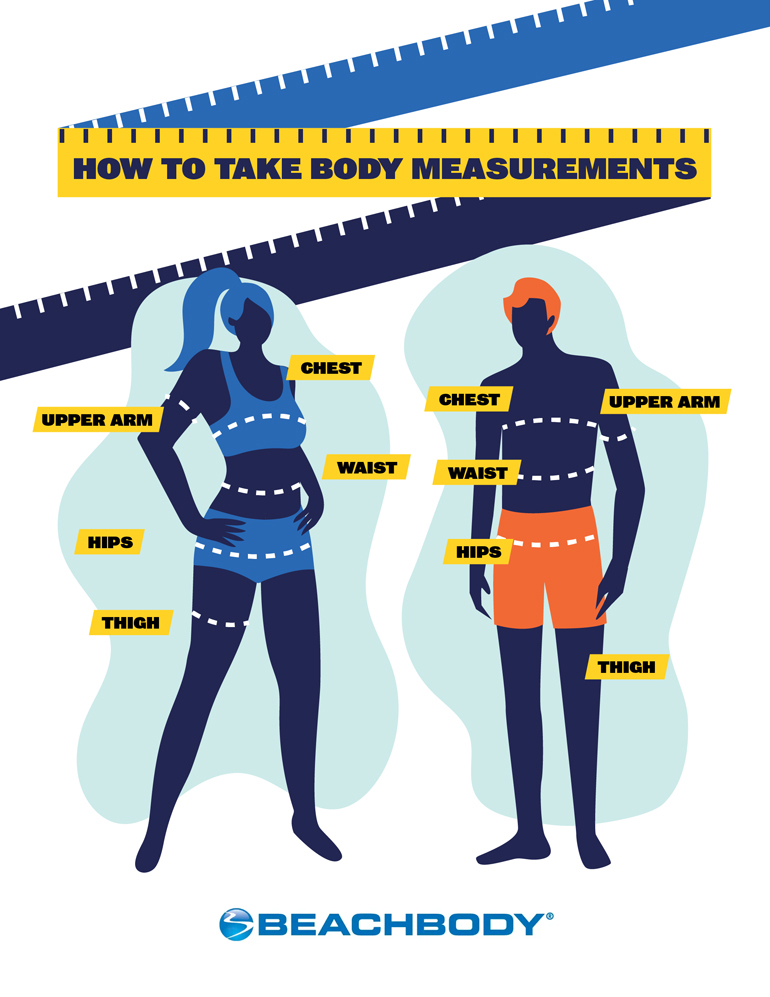
Image Source: bod-blog-assets.prod.cd.beachbodyondemand.com
Why Measure Your Body for Fitness?
When you start a fitness journey, the scale can be your first thought. But sometimes, the scale doesn’t tell the whole story. You might be losing fat and gaining muscle, which means your weight stays the same or even goes up a little. This is where body circumference measurements become invaluable. They offer a deeper insight into your progress and help you in tracking fitness progress more accurately.
Grasping the Importance of Body Measurements:
- Beyond the Scale: Muscles are denser than fat. So, as you build muscle and lose fat, your weight might not change much, but your body shape will. Measurements capture these changes.
- Identifying Body Composition Changes: Are your arms getting leaner? Is your waist shrinking? Measurements help you pinpoint these specific identifying body composition changes.
- Motivation Boost: Seeing your measurements decrease in certain areas or increase in others (like your chest or biceps) can be incredibly motivating. It’s tangible proof that your hard work is paying off.
- Understanding Your Body: Understanding body measurements can help you see where you tend to store fat and where you build muscle more easily. This can inform your training and nutrition.
- Assessing Health Markers: Certain measurements, like your waist size, are linked to health risks. Monitoring them can be a proactive health measure. For example, your waist-to-hip ratio is a key indicator of abdominal obesity, which is associated with increased risk of heart disease and type 2 diabetes.
- Goal Setting: Specific measurement goals can complement weight goals. For instance, aiming to reduce your waist circumference by a certain amount can be a clear objective.
Essential Tools for Accurate Measurement
To get the most out of your measurements, you need the right tools. Using the same tools each time ensures consistency.
The Accurate Body Measuring Tape
The most crucial tool is an accurate body measuring tape.
- What to Look For:
- Flexible and Soft: It should be made of a flexible material like fiberglass or vinyl. Metal tapes are too stiff and won’t conform to your body.
- Clear Markings: Ensure the tape has clear, easy-to-read inch and centimeter markings.
- Locking Mechanism (Optional but helpful): Some tapes have a locking mechanism to hold the measurement in place while you read it.
- Tailor’s Tape: A good quality tailor’s tape is ideal.
Other Helpful Tools:
- Mirror: A full-length mirror can help you ensure you’re placing the tape correctly.
- Notebook or App: Keep a dedicated notebook or use a fitness app to record your measurements. This is vital for tracking progress.
- Pen/Pencil: For recording your measurements.
How to Take Key Body Measurements
Consistency is key! Always measure at the same time of day, preferably in the morning before eating or drinking. Make sure the tape is snug but not digging into your skin.
Chest Measurement
This measurement reflects the size of your upper body, including your chest muscles and back.
- How to Measure:
- Stand tall with your arms relaxed at your sides.
- Wrap the tape measure around the fullest part of your chest, typically just under your armpits and over the fullest part of your bust (for women) or pectoral muscles (for men).
- Ensure the tape is level all the way around your body.
- Take a deep breath and exhale slightly; take the measurement at the end of the exhale.
- Record the measurement.
Waist Measurement
This is a critical measurement for health and fitness, often used in calculating the waist-to-hip ratio.
- How to Measure:
- Stand with your feet shoulder-width apart.
- Find the narrowest part of your torso, usually just above your belly button and below your rib cage. For some people, this might be at their natural waistline.
- Wrap the tape measure around this point.
- Keep the tape parallel to the floor.
- Ensure the tape is snug but not so tight that it’s digging in or causing you to suck in your stomach.
- Record the measurement.
Hip Measurement
This measurement is important for tracking changes in your lower body and is also used in the waist-to-hip ratio.
- How to Measure:
- Stand with your feet together.
- Wrap the tape measure around the fullest part of your hips and buttocks.
- Ensure the tape is level all the way around.
- Record the measurement.
Thigh Measurement
Measuring your thighs can help you track lower body strength and fat loss.
- How to Measure:
- Stand with your feet hip-width apart.
- Wrap the tape measure around the fullest part of one thigh, usually about halfway between your knee and your hip.
- Ensure the tape is level and snug.
- Record the measurement. Repeat for the other thigh.
Calf Measurement
Similar to thigh measurements, calf measurements can indicate changes in your lower leg muscles and fat.
- How to Measure:
- Stand with your feet shoulder-width apart.
- Wrap the tape measure around the fullest part of your calf.
- Ensure the tape is level and snug.
- Record the measurement. Repeat for the other calf.
Arm Measurement (Biceps)
This measurement is excellent for measuring muscle gain in your arms.
- How to Measure:
- Stand with your arm relaxed at your side or slightly bent.
- Wrap the tape measure around the largest part of your upper arm (bicep).
- For a more precise measurement of muscle development, you can slightly tense your bicep and measure at its widest point.
- Ensure the tape is level and snug.
- Record the measurement. Repeat for the other arm.
Upper Arm Measurement (Triceps)
This measurement helps track changes in the back of your upper arm.
- How to Measure:
- Stand with your arm slightly bent and your palm facing forward.
- Find the widest part of your tricep (the back of your upper arm).
- Wrap the tape measure around this point.
- Ensure the tape is level and snug.
- Record the measurement. Repeat for the other arm.
Forearm Measurement
This measurement can indicate changes in your forearm muscles.
- How to Measure:
- Stand with your arm slightly bent and your palm facing down.
- Find the widest part of your forearm.
- Wrap the tape measure around this point.
- Ensure the tape is level and snug.
- Record the measurement. Repeat for the other forearm.
Neck Measurement
While not always a primary focus, neck measurements can be an indicator of overall muscle development or changes in fat distribution.
- How to Measure:
- Stand with your head held straight.
- Wrap the tape measure around the base of your neck, just below your Adam’s apple.
- Ensure the tape is level and snug, but not constricting.
- Record the measurement.
Shoulder Measurement
This measurement can help track upper body width and muscle development.
- How to Measure:
- Stand with your arms relaxed at your sides.
- Wrap the tape measure around the fullest part of your shoulders, from the bony prominence of one shoulder to the bony prominence of the other.
- Ensure the tape is level and snug.
- Record the measurement.
Calculating Key Health and Fitness Ratios
Beyond individual body circumference measurements, calculating ratios provides valuable health insights.
Waist-to-Hip Ratio (WHR)
The waist-to-hip ratio is a simple yet powerful tool for assessing body fat distribution and associated health risks.
-
How to Calculate:
- WHR = Waist Circumference / Hip Circumference
-
Interpreting Your WHR:
- For Women: A WHR of 0.85 or lower is generally considered healthy. A WHR above 0.85 may indicate an increased risk of health problems.
- For Men: A WHR of 0.90 or lower is generally considered healthy. A WHR above 0.90 may indicate an increased risk of health problems.
-
Why it Matters: A high WHR indicates more fat stored around the waist (android or “apple” shape), which is more metabolically active and linked to greater health risks than fat stored around the hips and thighs (gynoid or “pear” shape).
Waist-to-Height Ratio (WHtR)
The waist-to-height ratio is another excellent indicator of central obesity.
-
How to Calculate:
- WHtR = Waist Circumference / Height
-
Interpreting Your WHtR: A commonly recommended target is to keep your waist circumference to no more than half your height. So, a WHtR of 0.5 or lower is generally considered healthy.
Comparing Measurements with Other Fitness Metrics
While measurements are fantastic, they are most powerful when used alongside other key fitness metrics.
Body Mass Index (BMI)
The BMI calculation is a widely used screening tool to categorize a person’s weight relative to their height.
-
How to Calculate BMI:
- BMI = Weight (kg) / [Height (m)]²
- BMI = (Weight (lb) / [Height (in)]²) x 703
-
Categories:
- Underweight: < 18.5
- Normal weight: 18.5 – 24.9
- Overweight: 25 – 29.9
- Obesity: ≥ 30
-
Limitations of BMI: BMI doesn’t differentiate between fat and muscle. A very muscular person might have a high BMI but a low body fat percentage. This is where body measurements become crucial to supplement BMI.
Body Fat Percentage
Body fat percentage is a more direct measure of your body composition than BMI or simple circumference measurements alone. It tells you the proportion of your body weight that is fat.
-
How to Measure Body Fat Percentage:
- Skinfold Calipers: This is a common and relatively inexpensive method. You pinch specific sites on your body with calipers and use a formula to estimate body fat. Requires practice for accuracy.
- Bioelectrical Impedance Analysis (BIA) Scales: These scales send a mild electrical current through your body. Fat impedes the current more than muscle. Accuracy can vary based on hydration levels.
- DEXA Scan: Considered the gold standard, DEXA (Dual-energy X-ray absorptiometry) scans provide a very accurate assessment of body composition, including bone density and fat distribution. This is usually done in a clinical setting.
- Hydrostatic Weighing (Underwater Weighing): This method compares your weight on land to your weight underwater. It’s considered highly accurate but less accessible.
-
Why it Matters: Knowing your body fat percentage helps you understand if your measurements are changing due to fat loss or muscle gain. For instance, if your waist measurement is decreasing but your BMI calculation is staying the same, it likely means you’re losing fat and building muscle.
Tracking Your Progress Over Time
The real power of taking body measurements lies in consistency and diligent tracking.
Setting Up Your Tracking System
-
Frequency:
- Weekly or Bi-weekly: For most people, measuring every 1-2 weeks is a good balance. It’s frequent enough to see trends but not so frequent that minor fluctuations cause concern.
- Monthly: If you’re less concerned with rapid changes or are in a maintenance phase, monthly measurements can suffice.
-
Recording:
- Notebook: A simple, dedicated notebook is excellent. Create columns for the date, each measurement, and any relevant notes (e.g., “felt bloated,” “after heavy workout”).
- Fitness Apps: Many apps allow you to log body measurements and visualize your progress with charts and graphs.
- Spreadsheets: For a more data-driven approach, a spreadsheet program like Excel or Google Sheets works well.
What to Record
Make sure to record:
- Date of measurement
- Chest
- Waist
- Hips
- Any other measurements you choose (thighs, biceps, etc.)
- Weight
- Body Fat Percentage (if you’re tracking it)
- Waist-to-Hip Ratio
- BMI
Tips for Accurate and Consistent Measurements
Even with the right tools, some practices ensure better results.
- Consistency is King: Measure at the same time of day. Avoid measuring immediately after a workout, as your body can be retaining water.
- No Snacking or Drinking Before: Measure first thing in the morning after using the restroom, before eating or drinking anything.
- Proper Tape Placement: Ensure the tape is parallel to the floor and hugs your body without indenting the skin.
- Relaxed Posture: Stand naturally. Don’t suck in your stomach or tense muscles excessively, unless you’re specifically trying to measure that.
- Wear Minimal Clothing: Measure over underwear or thin, form-fitting clothing.
- Use the Same Tape: Don’t switch measuring tapes, as they can have slight variations.
- Don’t Measure Too Tight: The tape should be snug enough to stay in place but not so tight that it leaves marks or changes the shape of the body part.
- Have Someone Help: For measurements like your back or sometimes your chest, having a friend or family member assist can ensure greater accuracy and levelness.
Interpreting Your Measurement Trends
Looking at your measurements over time is more insightful than a single reading.
- Focus on Trends: Don’t get discouraged by slight fluctuations. Look for overall downward trends in waist, hip, thigh, and calf measurements, and upward trends in chest and arm measurements if muscle gain is your goal.
- Connect Measurements to Your Efforts: If you’ve been consistent with your diet and exercise, and your measurements are moving in the desired direction, celebrate that success!
- Adjust Your Plan: If your measurements aren’t changing as expected, it might be time to re-evaluate your nutrition, exercise routine, or sleep habits.
Frequently Asked Questions (FAQ)
Q1: How often should I take my body measurements?
A1: It’s generally recommended to take your body measurements every 1-2 weeks. This frequency is often enough to see noticeable changes without being overwhelmed by minor daily fluctuations.
Q2: What if my weight is the same, but my measurements are changing?
A2: This is a very common and positive scenario! It usually means you are losing body fat and gaining muscle mass. Since muscle is denser than fat, your body composition is improving, even if the scale number remains stagnant. This highlights why tracking measurements is crucial for a complete picture of your fitness progress.
Q3: Can I measure myself accurately alone?
A3: Yes, you can measure yourself accurately, especially for common measurements like waist and hips. However, for measurements like the chest or back, having a partner can significantly improve accuracy and ensure the tape is perfectly level.
Q4: Does the time of day affect my measurements?
A4: Yes, it can. Your body can retain water, especially after meals or exercise. The most consistent time to take measurements is in the morning, after using the restroom and before eating or drinking anything.
Q5: How do I calculate my waist-to-hip ratio?
A5: To calculate your waist-to-hip ratio, you divide your waist circumference by your hip circumference. For example, if your waist is 30 inches and your hips are 40 inches, your WHR is 30/40 = 0.75.
Q6: What’s the difference between BMI and body fat percentage?
A6: BMI calculation is a ratio of your weight to your height and is a general indicator of weight status. Body fat percentage, however, specifically measures the amount of fat in your body relative to your total body mass. A very muscular person might have a high BMI but a low body fat percentage, making body fat percentage a more precise indicator of health and fitness for some.
Q7: Are there specific measurements I should focus on for weight loss versus muscle gain?
A7: For weight loss, focus on measurements like the waist, hips, and thighs, as these areas often store significant body fat. For muscle gain, you’ll want to track measurements that reflect muscle growth, such as biceps, chest, and calves. Ultimately, tracking all key measurements provides a comprehensive view of your body transformation.