
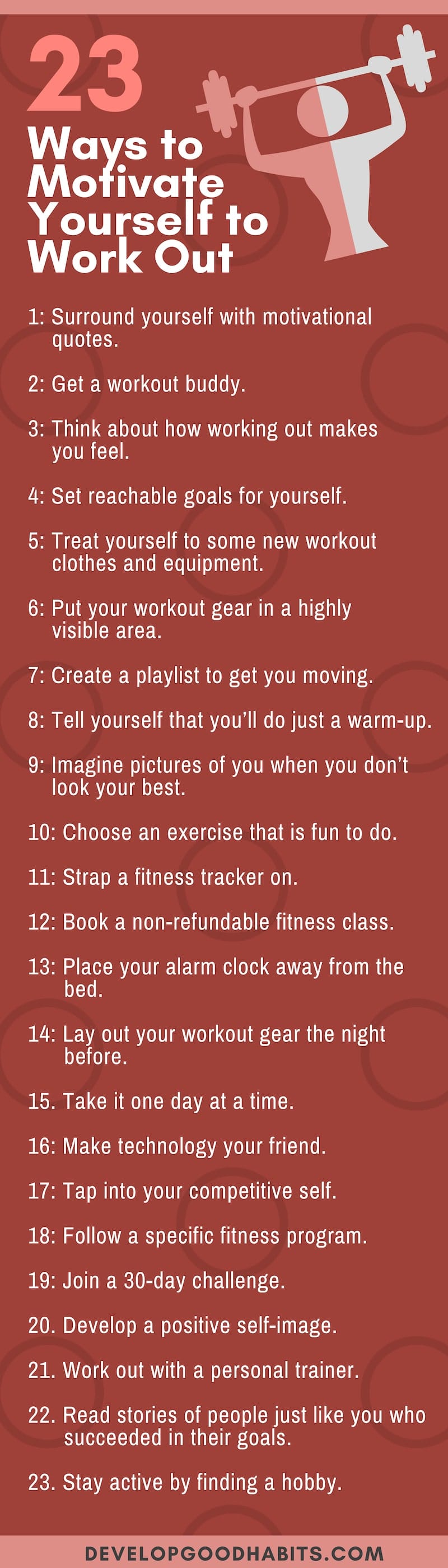
Image Source: www.developgoodhabits.com
How to Motivate Yourself to Go to the Gym: Top Tips
What’s the secret to making yourself go to the gym? It’s a question many ask, and the answer lies in a combination of strategies that tap into your mindset, build positive habits, and make the experience more enjoyable. Can you truly find lasting motivation? Absolutely, by implementing practical techniques and focusing on your personal fitness goals.
So, you’re staring at your workout clothes, feeling that familiar pull of reluctance. The couch looks inviting, and the thought of a strenuous workout seems like a mountain too steep to climb. This is a common battle, but one you can definitely win. Getting to the gym isn’t just about physical strength; it’s about mental fortitude and cultivating a habit that serves your well-being. This in-depth guide will equip you with effective gym motivation tips and exercise encouragement to transform your approach to fitness. We’ll delve into building gym habits, overcoming gym reluctance, and finding genuine joy in exercise, all while keeping your personal fitness goals in sharp focus.
Setting the Stage for Success
Before we even think about stepping into the gym, it’s crucial to lay a solid foundation. This involves a clear understanding of why you want to be there and what you hope to achieve. Without a strong purpose, even the best advice can fall by the wayside.
Defining Your “Why”
Your personal fitness goals are the bedrock of your motivation. What drives you? Is it improved health, increased energy levels, weight management, stress relief, or simply feeling stronger and more capable? Sit down and really think about this. Write it down. Visualize it. The clearer your “why,” the stronger your drive will be.
- Health Improvements: Do you want to lower blood pressure, improve cardiovascular health, or manage a chronic condition?
- Mental Well-being: Are you seeking to reduce anxiety, combat depression, or boost your mood?
- Physical Performance: Do you want to run a marathon, lift heavier weights, or simply have more stamina for everyday tasks?
- Aesthetic Goals: Are you aiming to build muscle, tone up, or achieve a certain body composition?
Crafting Achievable Goals
Once you’ve identified your “why,” it’s time to translate that into concrete, achievable goals. Vague aspirations like “get fit” are unlikely to provide sustained motivation. Instead, use the SMART framework:
- Specific: What exactly do you want to achieve?
- Measurable: How will you track your progress?
- Achievable: Is this goal realistic for your current situation?
- Relevant: Does this goal align with your “why”?
- Time-bound: When do you want to achieve this by?
Example: Instead of “I want to lose weight,” try “I will lose 5 pounds in the next 4 weeks by going to the gym three times a week for 45 minutes each session and focusing on a balanced diet.”
Planning Your Workout Routine
A structured exercise routine consistency is key. Knowing what you’re going to do when you get to the gym removes a significant barrier to entry – decision fatigue.
- Create a Schedule: Block out specific times in your week for workouts. Treat these appointments with yourself as non-negotiable.
- Plan Your Sessions: Decide which muscle groups you’ll work, what exercises you’ll do, and how many sets and reps. You can use apps, online resources, or consult a trainer for ideas.
- Variety is Key: Prevent boredom by mixing up your workouts. Try different types of cardio, strength training, and flexibility exercises.
Strategies to Boost Your Gym Motivation
Now that the foundation is set, let’s dive into actionable strategies to keep you moving towards the gym, even when the couch calls your name. These are practical gym motivation tips designed to build momentum and foster lasting commitment.
1. Make It Easy to Start
The initial step is often the hardest. Reducing friction points can make a huge difference.
- Lay Out Your Gear: The night before, pack your gym bag and lay out your workout clothes. Seeing them ready to go can be a powerful visual cue.
- Choose a Convenient Gym: If your commute to the gym is a hassle, you’re less likely to go. Opt for a gym that’s close to home or work.
- Pre-Workout Routine: Have a simple pre-workout routine, like a specific song you listen to or a quick stretching sequence, to signal to your brain that it’s time to move.
2. Find Your Fitness Inspiration
Sometimes, all you need is a spark. Fitness inspiration can come from various sources.
- Follow Fitness Influencers: Many people find motivation by following individuals who share their fitness journeys and provide tips and encouragement on social media.
- Watch Motivational Videos: There’s a vast library of inspiring videos online that can get you pumped up.
- Read Success Stories: Learning about others who have achieved their goals can be incredibly motivating.
- Create a Vision Board: Compile images and words that represent your fitness aspirations. Keep it somewhere visible.
3. Build a Supportive Environment
Surrounding yourself with support can make sticking to your routine much easier.
- Workout Buddy: Find a friend or family member to exercise with. Knowing someone is counting on you can be a powerful motivator.
- Join a Class: Group fitness classes offer a sense of community and accountability. Plus, the energy of a class can be infectious.
- Consider a Trainer: A personal trainer can provide tailored guidance, accountability, and push you beyond your perceived limits.
4. Track Your Progress and Celebrate Wins
Seeing how far you’ve come is a fantastic motivator.
- Journal Your Workouts: Record your exercises, weights, reps, and how you felt. This helps you see improvements over time.
- Use Fitness Apps: Many apps allow you to track workouts, set goals, and monitor progress.
- Celebrate Milestones: Acknowledge and reward yourself when you reach a goal, no matter how small. This reinforces positive behavior.
Table: Tracking Your Progress
| Metric | How to Track | Frequency |
|---|---|---|
| Weight Lifted | Gym journal, fitness app | Per workout |
| Cardio Duration | Stopwatch, fitness tracker, gym equipment | Per session |
| Distance Covered | GPS watch, treadmill display | Per session |
| Body Measurements | Tape measure, scale (use cautiously) | Weekly/Monthly |
| Energy Levels | Subjective rating (1-10) in journal | Daily/Weekly |
| Mood | Subjective rating (1-10) in journal | Daily/Weekly |
5. Make it Enjoyable: Finding Joy in Exercise
This is perhaps the most sustainable form of motivation. If you dread every minute, it won’t last.
- Listen to Music or Podcasts: Create playlists that energize you or download podcasts that keep your mind engaged.
- Try Different Activities: If treadmills bore you, try swimming, dancing, cycling, or a sport.
- Focus on How You Feel: Pay attention to the post-workout endorphin rush, the feeling of accomplishment, and the increased energy you have throughout the day.
- Gamify Your Workouts: Set personal challenges, compete against yourself, or use apps that turn fitness into a game.
6. Overcome Gym Reluctance and Plateaus
It’s natural to hit slumps. Recognizing and addressing them is crucial for staying committed to fitness.
- Acknowledge the Feeling: Don’t beat yourself up for feeling unmotivated. It happens to everyone.
- Lower Your Expectations (Temporarily): If a full hour feels too much, commit to just 20 minutes. Often, once you start, you’ll want to do more.
- Focus on the Process, Not Just the Outcome: Appreciate the act of exercising itself, not just the results it will bring.
- Seek New Challenges: If you’re bored, try a new exercise, increase the intensity, or set a new personal best.
7. Master Exercise Routine Consistency
Consistency is built through discipline and smart habits.
- Habit Stacking: Link your workout to an existing habit. For example, “After I brush my teeth in the morning, I will put on my workout clothes.”
- Time Blocking: Dedicate specific time slots for your workouts and stick to them religiously.
- Be Prepared for Setbacks: If you miss a workout, don’t let it derail your entire week. Just get back on track with your next planned session.
Building Gym Habits: A Step-by-Step Approach
Building gym habits isn’t an overnight process. It requires patience and a strategic approach.
Phase 1: The Initial Push (Weeks 1-4)
This is where you establish the basic routine.
- Frequency: Aim for 2-3 sessions per week.
- Duration: Start with shorter workouts, 30-45 minutes.
- Focus: Getting to the gym and completing the planned activity, regardless of intensity.
- Motivation Tactics: Rely heavily on external motivators like workout buddies, new gear, and tracking progress.
Phase 2: Reinforcement (Weeks 5-12)
Your habit is starting to solidify.
- Frequency: Increase to 3-4 sessions per week.
- Duration: Gradually increase workout time to 45-60 minutes.
- Focus: Increasing intensity, trying new exercises, and noticing the physical and mental benefits.
- Motivation Tactics: Internal motivation starts to kick in as you feel the positive effects. Celebrate small victories.
Phase 3: Integration (12+ Weeks)
Fitness becomes a natural part of your lifestyle.
- Frequency: 4-5 sessions per week, or as dictated by your goals and recovery.
- Duration: Varies based on your program, but consistency is key.
- Focus: Long-term progress, maintaining exercise routine consistency, and adapting your routine as needed.
- Motivation Tactics: Primarily internal motivation, driven by a love for movement and the results you experience.
Overcoming Gym Reluctance: Troubleshooting Common Barriers
Let’s address some specific challenges people face when trying to get motivated.
Barrier: “I’m too tired.”
- Solution: Even a short, low-intensity workout can boost energy levels. Try a brisk walk or some light stretching. Sometimes, the act of moving is what you need to overcome fatigue.
- Tip: Ensure you’re getting enough sleep and fueling your body with nutritious food.
Barrier: “I don’t have enough time.”
- Solution: Re-evaluate your schedule. Even 20-30 minutes can be effective. Can you wake up earlier, use your lunch break, or cut back on less essential activities?
- Tip: Prepare your gym bag and workout clothes the night before to save time in the morning.
Barrier: “I feel self-conscious.”
- Solution: Most people at the gym are focused on their own workouts. Start in less crowded areas or during off-peak hours. Wear comfortable clothing that makes you feel confident.
- Tip: Remember that everyone starts somewhere. Focus on your own journey and progress.
Barrier: “I’m not seeing results fast enough.”
- Solution: Patience is vital. Results take time. Focus on non-scale victories like increased strength, better endurance, improved mood, and better sleep.
- Tip: Review your “why” and your goals. Are they realistic? Are you consistently sticking to your plan?
The Power of Small Wins and Positive Reinforcement
The journey to consistent gym attendance is paved with small victories. Acknowledge and appreciate each one.
- The “Just Go” Mentality: Sometimes, the best approach is to simply commit to going for 15 minutes. If you’re still not feeling it after 15 minutes, you can leave. More often than not, you’ll stay for your planned duration.
- Reward System: Plan small rewards for hitting weekly or monthly milestones. This could be a new workout top, a healthy meal out, or some downtime.
- Positive Self-Talk: Replace negative thoughts with encouraging affirmations. Instead of “I hate working out,” try “I’m getting stronger and healthier with every session.”
Making Fitness a Lifestyle, Not a Chore
The ultimate goal is to shift your perspective so that going to the gym feels less like a chore and more like a vital part of your day. This is where finding joy in exercise truly shines.
- Experiment: Try different forms of exercise until you find something you genuinely enjoy. Don’t be afraid to step outside your comfort zone.
- Mindfulness in Movement: Instead of just going through the motions, focus on the sensation of your muscles working, your breath, and the rhythm of your movements.
- Connect with Your Body: Appreciate what your body can do. As you build strength and endurance, you’ll likely find a deeper connection and respect for your physical capabilities.
Frequently Asked Questions (FAQ)
Q1: How can I stay motivated if I don’t see results immediately?
A: Focus on non-scale victories and the immediate benefits of exercise, such as improved mood, increased energy, and better sleep. Track your performance metrics (e.g., weights lifted, endurance) rather than just appearance. Remember that sustainable results take time and consistency.
Q2: What if I have a busy schedule and can’t commit to long gym sessions?
A: Even short workouts are beneficial. Aim for 20-30 minutes of focused activity. Prioritize consistency over duration. Prepare your gym bag and clothes in advance to maximize your limited time.
Q3: I feel intimidated by other people at the gym. What should I do?
A: Most gym-goers are focused on their own routines. Wear comfortable clothing, arrive during less crowded times, or consider training in a quieter area of the gym. Focus on your personal fitness goals and remember that everyone starts somewhere.
Q4: How do I overcome the feeling of dread before a workout?
A: Try the “just go for 15 minutes” rule. Often, starting is the hardest part, and you’ll find yourself continuing once you begin. Listen to uplifting music, visualize your success, or have a pre-workout ritual to signal it’s time to move.
Q5: Is it okay to miss a workout?
A: Yes, it’s perfectly okay to miss a workout occasionally. Don’t let it derail your entire fitness plan. The key is to get back on track with your next scheduled session rather than falling into a pattern of missed workouts.
By implementing these gym motivation tips, embracing exercise encouragement, and focusing on building sustainable habits, you can transform your relationship with the gym and unlock the full potential of your personal fitness goals. Remember, consistency, a positive mindset, and finding joy in movement are your most powerful allies.